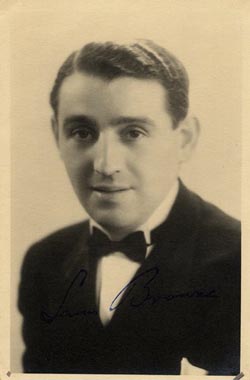
“A Bungalow, a Piccolo, and You!” Words and music by Al Lewis, Al Sherman, and Lee David (1932). Recorded in London at Studio 1, Abbey Road on July 22, 1932 by Ambrose and His Orchestra with vocalists Sam Browne and Elsie Carlisle. HMV B-6218 mx. 0B-2378-1. Personnel: Bert Ambrose dir. Max Goldberg-Harry Owen-t / Ted …
“You’ll Find Out.” Words and music composed by Archie Gottler and Betty Treynor (a pseudonym of Lawrence Wright) for On with the Show. Recorded in London on June 15, 1932 by Ray Starita and His Ambassadors with vocalists Elsie Carlisle and Sam Browne. Sterno 984 mx. S-2477-2. Personnel: Ray Starita-cl-ts dir. Nat Gonella-t / t …
“Won’t You Stay to Tea?” Words by Mack Gordon, music by Harry Revel (1932). Recorded in London on March 3, 1933 by Elsie Carlisle and Sam Browne with orchestral accompaniment. Decca F. 3510 mx. GB-5633-1. Prolific songwriters Mack Gordon and Harry Revel turned out a great many successful tunes in the 1930s, particularly for Hollywood …
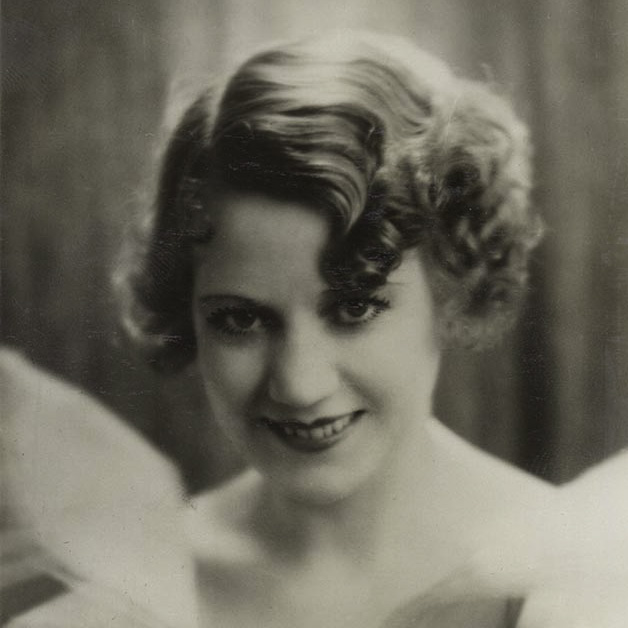
Elsie Carlisle committed her last Decca record to shellac on January 31, 1936 and would not start recording again with HMV until October 25, 1937 — a hiatus of one year and nine months in an otherwise consistently busy period of fifteen years (1926-1942). We must not assume a low point in her career, however, …
“Won’t You Come Home, Bill Bailey?” Originally titled “Bill Bailey, Won’t You Please Come Home?”; words and music by Hughie Cannon (1902). Recorded by Ambrose and His Orchestra with vocalists Sam Browne and Elsie Carlisle in London on March 18, 1932. HMV B-6162 mx. 0B-3048-2. Personnel: Bert Ambrose dir. Max Goldberg-Harry Owen-t / Ted Heath-Tony …
“Da-Dar-Da-Dar (Da-Dar-Da-Dee).” Words by Robert Hargreaves and Stanley J. Damerell, music by Tolchard Evans. Recorded on May 16, 1933 by Maurice Winnick and His Orchestra, with vocal refrain by Sam Browne (and with Elsie Carlisle in a speaking part). Panachord 25529 mx. GB-5875-2. Personnel: Maurice Winnick-vn dir. Charles Price-another-t / 2tb /Harry Hayes-Harry Turoff-as / …
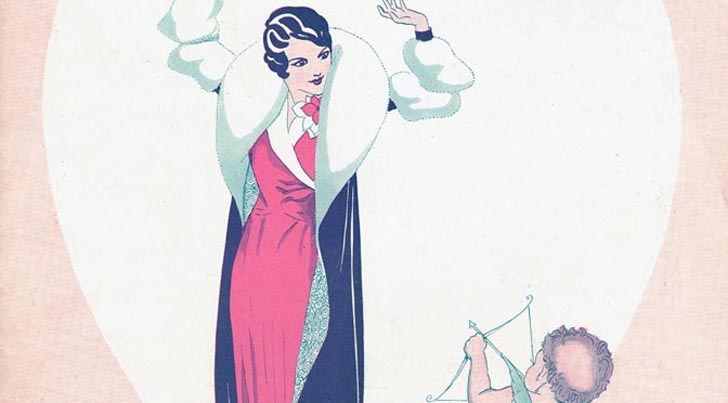
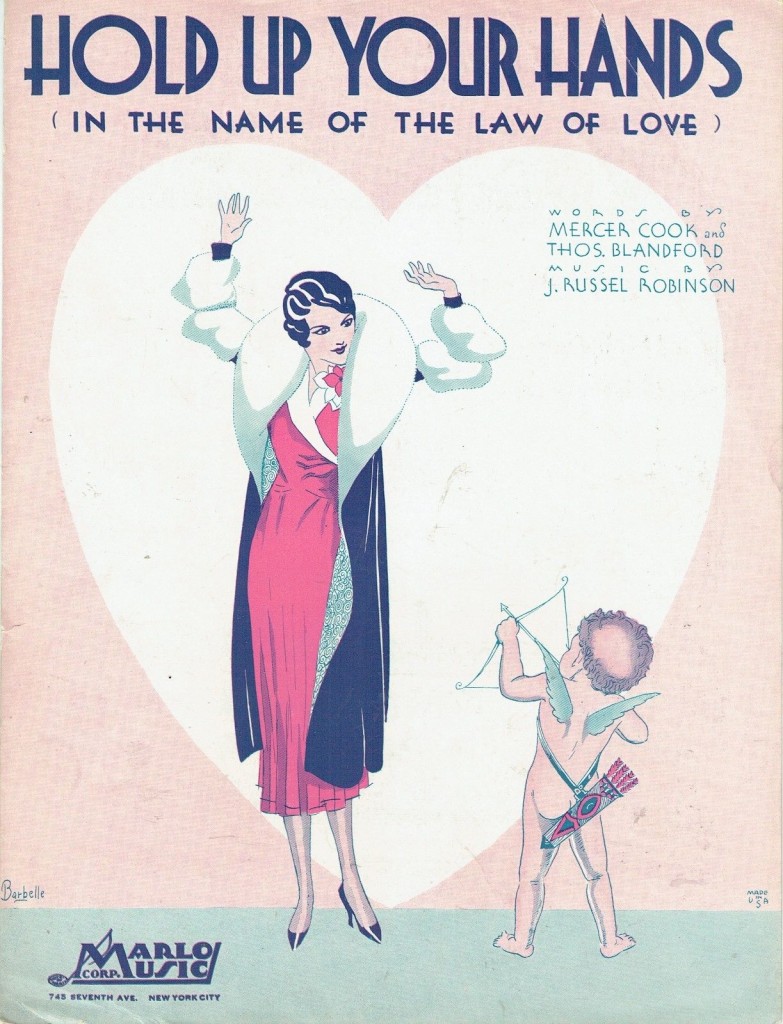
“Hold Up Your Hands (In the Name of the Law of Love).” Words by Mercer Cook and Thomas Blandford, music by J. Russel Robinson (1932). Recorded by Elsie Carlisle and Sam Browne on March 3, 1933. Decca F-3504 mx. GB-5634-2.
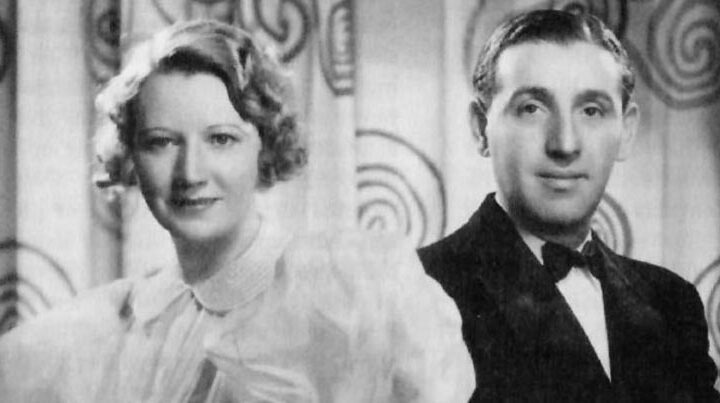
“Hold Up Your Hands (In the Name of the Law of Love)” was written by American songwriters Mercer Cook, Thomas Blandford, and J. Russel Robinson in 1932; that year they also wrote the very successful “Is I in Love? I Is,” as well as “Stop the Sun, Stop the Moon,” which Elsie Carlisle recorded with Ray Starita and His Ambassadors. This duet involves a fanciful metaphor in which it is not clear whether Sam Browne is an agent of “the law” he keeps invoking (viz. the law of love or of Cupid) or a robber carrying out a holdup; he seems to entertain both notions. At any rate, Elsie seems to acquiesce to his demands that she “put up [her] lips, and hold up [her] hands” with little resistance. 1933 was the second year of Sam and Elsie’s recording duets together, and “Hold Up Your Hands” is fairly representative of their duetting style (when they are not bickering, of course).
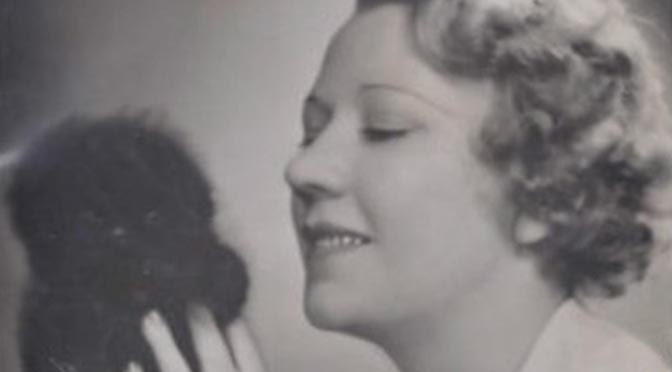
“My Dog Loves Your Dog.” Music by Ray Henderson, lyrics by Jack Yellen and Irving Caesar for the film George White’s Scandals (1934). Recorded by Elsie Carlisle and Sam Browne with orchestral accompaniment on June 22, 1934. Decca F-5079 mx. TB-1332-2.
In June, Elsie Carlisle and Sam Browne would tackle the song themselves, but with less than three minutes to sing it — including an instrumental interlude — they present a considerably abbreviated version. Their male-female duet adds flavor to the song, though, and ultimately allows the entrance of the element of strife between lovers that one would expect in a Sam-and-Elsie bit. When Sam first accosts Elsie and begins to observe the growing familiarity of their respective dogs, she responds, “Yes. Someone mentioned it today. You can see it in their eyes” in a stilted delivery that must either betoken haughtiness on the part of Elsie’s character or perhaps exhaustion on the part of Elsie herself! Either way, I find her awkward beginning intensely funny. Some very nice singing ensues, but Elsie’s observations about the dogs ultimately serve as a riposte to Sam’s advances. The dogs begin to fight, and the two singers conclude “And if our doggies bite each other, why can’t we?” — a comic twist not present in the movie.
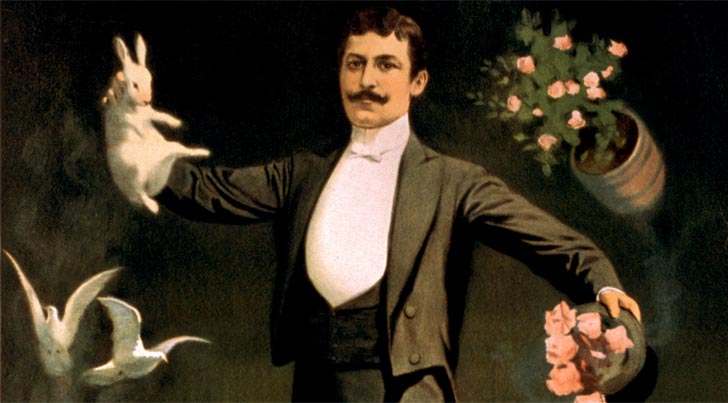
“Mr. Magician (Won’t You Bring My Honey Back to Me?).” Words and music by Charles O’Flynn, James Cavanaugh, and Frank Weldon (1934). Recorded by Elsie Carlisle and Sam Browne with orchestral accompaniment on June 22, 1934. Decca F-5079.
O’Flynn, Cavanaugh, and Weldon were prominent Tin Pan Alley songwriters, but their 1934 “Mr. Magician” does not appear to have inspired many recordings. It may have seemed outrageously corny even by the standards of the time (consider the lines of the refrain: “Hocus, pocus, Mr. Magician, won’t you bring my honey back to me?”). All the same, this melodramatic arrangement (complete with an anonymous carnival barker, with Sam Browne as a grandiose, boasting circus magician, and with Elsie Carlisle as an earnest girl who wants to “find [her] man somehow”) has a certain appeal. Elsie plays the Dorothy to Sam’s Great Oz with a comical insistence; the whole piece is cartoonish, funny, and sweet.