Videos

“I Love My Baby” (1926)

“I Love My Baby (My Baby Loves Me).” Words by Bud Green, music by Harry Warren (1925). Recorded by Elsie Carlisle with piano accompaniment by Carroll Gibbons on May 25, 1926. Zonophone 2772 mx. Bb-8426-2.

Elsie Carlisle – “I Love My Baby” (1926)

Elsie Carlisle made her first commercially successful recording one hundred years ago today. Already an accomplished thirty-year-old actress, she had made her radio broadcasting debut on March 1, 1926. After May 25, 1926, Carlisle would go on to enjoy a fifteen-year recording career, and it is through her records that we still appreciate her artistry.

May 25, 1926, was not actually the first time that she had entered a studio at the Gramophone Company’s facilities in Hayes, Middlesex, to record a song: on March 7, 1918, she had made a test recording of “Some Girl Has Got to Darn His Socks,” but it was never issued as a commercial record, and it remains unclear if a pressing survives. If it seems strange that Carlisle’s first attempt at recording did not result in an issued record, we must remember how greatly technology changed between 1918 and 1926. In 1918, the only way to record sound was using acoustic methods. Carlisle’s talents may simply not have shone under those circumstances. Beginning in 1925, electrical processes rapidly took over the industry, and soon afterwards the crooners emerged, vocal artists who could exploit the microphone’s sensitivity to quiet, intimate singing—something the acoustic horn had never permitted. As a stage actress of that era, Carlisle must have had a powerful voice, but perhaps we can be grateful that her career took off at a time when her softer, subtler efforts could be captured on shellac.

On May 25, then, Carlisle was joined at the Gramophone Company’s B Studio by Carroll Gibbons, who was to be her piano accompanist; he was not yet the famed director of the Savoy Hotel Orpheans. Ralph Graves, in his 1938 journalistic paean to Elsie Carlisle (“Radio Sweetheart No. 1”), recounts how the two first met:

Now for another scene.

This time not a swank lunch, but a very informal party.

Elsie was asked to sing. No, she hadn’t her music, but a quiet, bespectacled young man at the piano knew all the latest numbers, and could instantly transpose into any key Elsie wanted.

She sang several numbers which went down well, but the outstanding thought in Elsie’s mind was what a good accompanist this young man was. And when he played some piano solos on his own afterwards her opinion of him went up.

She asked who he was.

“That chap at the piano? Oh, he’s a Mr. Gibbons. Just come over from the States with Rudy Vallee, you know. Carroll Gibbons I believe his name is….”

That was in the days when Carroll was striving to make a name for himself.

Elsie and Carroll used to meet quite often after that party, as they held each other in mutual esteem. Well, now here’s a secret. Even his best friends will admit that Carroll has a “queer” voice. Those melodious deep tones, so very “Southern” are a characteristic. His announcements are fun, but you can’t imagine him as a singer, can you!

Yet it is a fact that Carroll and Elsie not only made gramophone records together, but on at least one of them Carroll sang part of the vocals! Yes, that vocalist is a fine pianist!1

At this particular session Gibbons did not sing, but his piano accompaniment is flawless, as it would continue to be throughout their collaboration that year.

The pairing of songs recorded that day seems prescient, in retrospect: Harry Warren’s “I Love My Baby” has as its reverse “So Is Your Old Lady,” whose lyrics were penned by Al Dubin—the man now most associated with Warren by lovers of 1930s musical films. The two had collaborated on at least one successful song by 1926, but their celebrated partnership as Warner Bros.’ signature songwriters lay years ahead.

“I Love My Baby” expresses the enthusiasm of giddy young lovers at an insistent tempo that is entirely infectious and is as redolent of the decade of its composition as “The Charleston.” Elsie Carlisle sings the lyrics with a chatty, dramatic delivery, and she adds color with vocal effects such as her husky second repetition of the refrain (most reminiscent, perhaps, of the versions recorded a few months earlier by Aileen Stanley and Lee Morse). The persona Carlisle takes on is one familiar from her later work, an example of brilliant, brainless fun such as we hear in her 1929 “Come On, Baby” with the Rhythm Maniacs. Carlisle would appear on the sheet music for “I Love My Baby” that year.

Noteworthy early American recordings of “I Love My Baby (My Baby Loves Me)” date from the autumn and winter of 1925–26, and include those of Aileen Stanley, Mike Speciale and His Orchestra (v. Jimmy Flynn), Sam Lanin’s Dance Orchestra (v. Irving Kaufman), The University Six (v. Ed Kirkeby), Bailey’s Lucky Seven (v. Arthur Fields), The Little Ramblers, Esther Walker (with the piano accompaniment of Rube Bloom), Lee Morse, Isham Jones, Owen Fallon and His Californians, Peggy English (with Rube Bloom on the piano), Sally Freeman, and Jack Glassner and His Colonial Inn Orchestra.

Other British 1926 versions of the song are those of the New Princes’ Toronto Band (dir. Hal Swain; v. Les Allen) and Don Parker and His Band; Frances White recorded it for HMV with the Kit-Cat Band, but it went unissued.

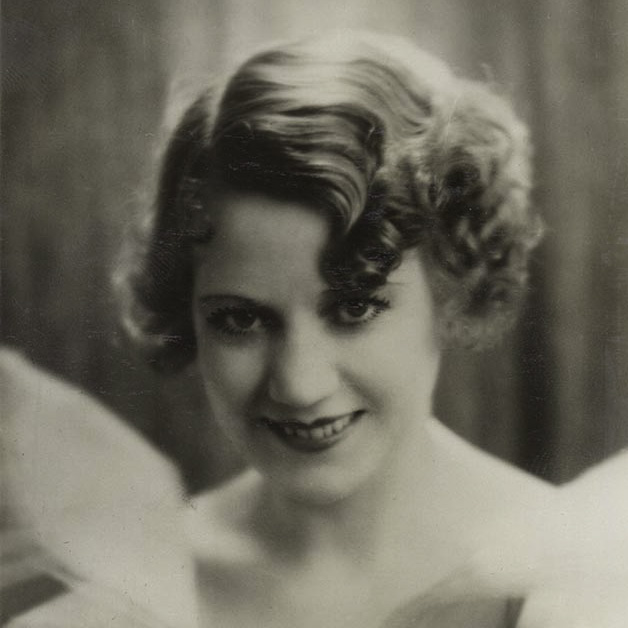
Elsie Carlisle c. 1926

Notes:

  1. Ralph Graves, “Radio Sweetheart No. 1,” Radio Pictorial, no. 251, November 4, 1938, 8. The boldface is Graves’s and typical of the bombastic editorial style of the magazine. Graves is presumably referring to Gibbons’s faint but endearing antiphony in the 1926 “Ya Gotta Know How to Love” (Zonophone 2815), another composition by Bud Green and Harry Warren, as well as in the song on its reverse side, “My Cutey’s Due at Two-to-Two Today”. Gibbons’s “queer” voice (to use Graves’s term) was, I understand, his way of coping with an extreme stutter. Gibbons actually sang quite a bit, but perhaps more so in the period after Graves wrote his piece; I think particularly of “Too Romantic” (1940), “I L-L-Love You So” (1941), and “Elmer’s Tune” (1942).

“A Bungalow, a Piccolo, and You!” (1932)

“A Bungalow, a Piccolo, and You!” Words and music by Al Lewis, Al Sherman, and Lee David (1932). Recorded in London at Studio 1, Abbey Road on July 22, 1932 by Ambrose and His Orchestra with vocalists Sam Browne and Elsie Carlisle. HMV B-6218 mx. 0B-2378-1.

Personnel: Bert Ambrose dir. Max Goldberg-Harry Owen-t / Ted Heath-tb / Joe Crossman-cl-as-bar / Billy Amstell-cl-as-ts / Harry Hines-as / Joe Jeanette-cl-ts-?pic / Ernie Lewis-Teddy Sinclair-Peter Rush-vn / Bert Read-p / Joe Brannelly-g / Don Stutely-sb / Max Bacon-d1

A Bungalow, a Piccolo, and You ! – Ambrose and his Orchestra

The Elsie Carlisle vocal in “A Bungalow, a Piccolo, and You!” has often been overlooked. Edward Walker mentioned it in his 1974 discography, but the attribution was omitted by Rust and Forbes, Johnson, and Laird,2 and even by the first edition of my own Croonette: An Elsie Carlisle Discography, though that oversight has since been remedied.

The songwriters include Al Sherman and Al Lewis, who would later collaborate on “No! No! A Thousand Times No!” and Lee David, who would team up with Darl MacBoyle to write “That Means You’re Falling in Love” (the latter song was recorded in 1933 by Sam Browne and Elsie Carlisle). The 1932 “A Bungalow, a Piccolo, and You!” looks backward to songs with such titles as “A Bungalow, a Radio, and You” (Dempsey-Liebert; 1928) and “A Cup of Coffee, a Sandwich, and You” (Meyer-Dubin-Rose; 1925),3 though doubtless the formula being followed in all three compositions derives from a famous older phrase in Edward Fitzgerald’s various editions of his translation of the Rubáiyát of Omar Khayyám (“A Flask of Wine, a Book of Verse—and Thou,” in the first [1859] and second [1868] editions; “A Jug of Wine, a Loaf of Bread—and Thou” in the third [1872], fourth [1879], and fifth [1889] editions), the joke being that we would not normally expect light modern love songs to compare themselves implicitly to profound medieval Persian philosophical poetry.

Ambrose’s version of the song has a mostly instrumental introduction, except that very near the beginning a piccolo plays three series of notes that Elsie can be heard to mimic vocally. The piccolo continues to intervene playfully, even comically, throughout the song. Then Sam Browne begins to sing, describing himself as standing beneath someone’s window and telling her that all he needs is a bungalow, a piccolo, “and you.” Browne’s fun but comparatively brainless vocal proceeds until the piccolo takes over for a moment. It is at that point that something incredibly cute occurs: Elsie again has an exchange with the piccolo in which she imitates it with her voice, but this time she scats. Even better, she boops (“Boop-a-doo!”), and then repeats Sam’s sentiments about needing a bungalow, a piccolo, “and you.” Overall, her contributions to the recording are brief but bright and joyful.

While the songwriters were all American, I have not been able to locate any American recordings of “A Bungalow, a Piccolo, and You!” There are plenty of other British dance band recordings, however, including those by Henry Hall’s BBC Dance Orchestra (v. Val Rosing)Billy Cotton and His Band (v. Cyril Grantham)Terence McGovern (as Terry Mack and His Boys; v. Joe Leigh)Jack Hylton and His Orchestra (v. Pat O’Malley)Jack Payne and His Band (v. Jack Payne, Bob Manning, and Charlie Asplin), Nat Star (as Billy Seymour and the Boys; v. Fred Douglas), Jay Wilbur and His Band (as Jack Grose and His Metropole Players; v. Leslie Holmes), and Lew Stone and the Monseigneur Band (in a medley).

Notes:

  1. These are the personnel according to Rust and Forbes’s British Dance Bands on Record; for the tentative identification of Joe Jeanette as the piccolo player, I have Nick Dellow to thank. Jeanette apparently played piccolo and flute in the British army years before joining Ambrose’s orchestra.
  2. Edward S. Walker, Elsie Carlisle — With a Different Style: A Discography, published by the author, 1974; Brian Rust and Sandy Forbes, British Dance Bands on Record, 1911 to 1945, and Supplement, Richard Clay, Ltd., 1989; Richard J. Johnson, Elsie Carlisle: A Discography, published by the author, 1994; Ross Laird, Moanin’ Low: A Discography of Female Popular Vocal Recordings, 1920-1933, Westport, Connecticut, 1996.
  3. My thanks to Jonathan David Holmes for reminding me of the latter tune.

“When That Man Is Dead and Gone” (1941)

“When That Man Is Dead and Gone.” Words and music by Irving Berlin (1941). Recorded in London on April 9, 1941 by Elsie Carlisle with orchestral accompaniment directed by Jay Wilbur. Rex 9960 mx. R-5566-1.

Personnel: Jay Wilbur dir. ?Alfie Noakes-?Chick Smith-t / tb / 3 cl-as-bar / Charles Trimby + 1-vn / p / g / sb / d / Elsie Carlisle-v

Elsie Carlisle – “When That Man Is Dead and Gone” (1941)

“When That Man Is Dead and Gone” is a song as edgy as it is catchy, insofar as it expresses a wish that a specific human being will cease to be. We are generally discouraged from making bold predictions that a bright future will definitely result from anyone’s demise, so Irving Berlin’s lyrics seem ethically transgressive and therefore artistically daring. The song’s message is made infinitely more powerful by the fact that its audience is expected to easily identify who “that man” is and thereby to realize that they have had the same dark fantasy themselves. “That man” is never named, although the reference to a “small moustache” makes it clear that he is Adolf Hitler.

“When That Man Is Dead and Gone” was published and released early in 1941, well before the United States entered World War II, but presumably the strong anti-Hitler sentiments of Elsie Carlisle and her countrymen (already engaged in war against the Axis Powers) were shared by most of the Americans who heard the song when it was first recorded and broadcast. Irving Berlin’s only memory of his native Russia consisted of seeing his family home burn down during a pogrom, so his aversion to violent expressions of intolerance may have been intensely personal.

Elsie Carlisle’s version of the song—augmented with a fine arrangement and the adept accompaniment of Jay Wilbur’s band—is a particularly fine example of how the underlying concept can sound rather sinister and conspiratorial. It is as if she is vacillating between slow, methodical plotting and swingy jubilation. Interestingly, some parts of the session were broadcast on the radio in a documentary about the record industry1, but the program has been lost, as far as I know.

Noteworthy American recordings of “When That Man Is Dead and Gone” include those of Glenn Miller and His Orchestra (v. Tex Beneke and The Modernaires), Mildred Bailey (with The Delta Rhythm Boys), and Buddy Clark.

British recordings of the song include versions by Ambrose and His Orchestra (v. Anne Shelton), Geraldo and His Orchestra (v. George Evans and chorus), Carroll Gibbons and the Savoy Hotel Orpheans (v. Anne Lenner), Jay Wilbur and His Band (v. Sam Browne), Joe Loss and His Band (v. Bette Roberts), and Al Bowlly and Jimmy Mesene. Of the latter recording, it is worth noting that it was Al Bowlly’s last; he was killed two weeks later by one of That Man’s parachute mines.

Notes:

  1. “Wax Secrets on Air,” Melody Maker, April 26, 1941, 1, ProQuest.

“Driftin’ Tide” (1934)

“Driftin’ Tide.” Words and music by Pat Castleton and Spencer Williams. Recorded in London on July 18, 1934 by Elsie Carlisle. Decca F-5122 mx. TB-1401-2.

Elsie Carlisle – “Driftin’ Tide” (1934)

Both bluesy and sophisticated, “Driftin’ Tide” is an unusually attractive tune by American Spencer Williams (composer of “Basin Street Blues” and “I’ve Found a New Baby,” among many other well-known successes) and Pat Castleton (the stage name of British actress Agnes Muir Bage). Williams spent a lot of time working in England in the 1930s, and he and Castleton would go on to marry in 1936. The melody is one of those complex ones that defies the listener’s first attempts to hum it, and the lyrics are metrically unusual. On top of all of this, the title of the song appears a number of times in the lyrics, but in a grammatically jarring way — it would appear that the sea, the “driftin’ tide,” is being addressed by the singer in a moving expression of unrequited love — a “torch song.”

It seems appropriate that “Driftin’ Tide” should have been assigned to Elsie Carlisle, a veteran torch singer. She successfully applies her famous talent for sounding intermittently teared-up to the song’s melancholy themes. I was surprised at how difficult it was to locate a copy of Carlisle’s record — it took me nine years — and it might seem that it did not sell very well. Perhaps it was overshadowed by the Ray Noble version of the song recorded the same day with Al Bowlly? The latter recording has a more interesting dance band arrangement, it must be admitted, but all the same, I admire what the anonymous Decca studio band was able to do for Carlisle’s “solo” recording — it is an excellent example of the remarkable elegance one so often finds in her output from that time.

In Britain, in addition to the Elsie Carlisle and Ray Noble/Al Bowlly versions of “Driftin’ Tide,” there was a recording of the song by Pat Hyde made two days later.

In America, an obscure trio named The Aces of the Air recorded “Driftin’ Tide” for radio broadcast in 1934. In 1935, versions were made by Alberta Hunter and Clark Randall (v. Clark Randall).

“Little Man, You’ve Had a Busy Day” (two versions; 1934)

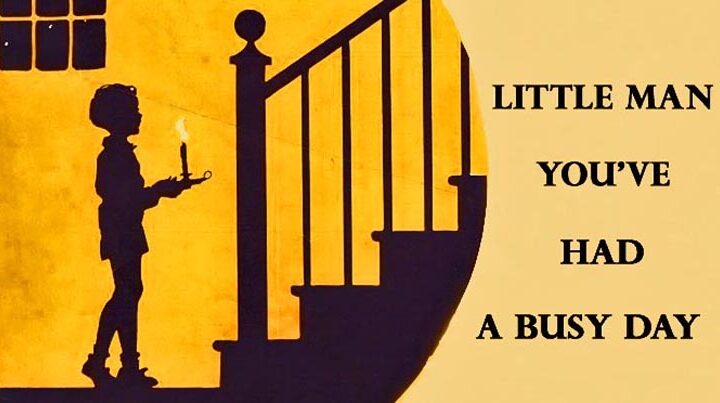
If risqué elements constitute one of the primary attractions of interwar Anglophone popular music for modern audiences (think “Pu-leeze! Mister Hemingway”), perhaps the sentimental might be seen as the ingredient most likely to repel us. Lullabies and songs about nursery rhymes abound, especially in the 1930s: even in Elsie Carlisle’s repertoire, we have “This Little Piggie Went to Market,” “Who Made Little Boy Blue?” “Up the Wooden Hill to Bedfordshire,” and “Little Drummer Boy” — among the more obvious examples. And yet there are very good recordings of these kinds of songs that explore the compelling potential of childhood themes. For me, perhaps, the most moving examples are Carlisle’s two recordings of “Little Man, You’ve Had a Busy Day,” one done with an anonymous studio orchestra, the other with Ambrose.

“Little Man, You’ve Had a Busy Day.”  Words by Maurice Sigler and Al Hoffman, music by Mabel Wayne (1934).  Recorded by Elsie Carlisle with orchestral accompaniment on May 18, 1934.  Decca F-3990 mx. TB-1258-2.

Elsie Carlisle – “Little Man, You’ve Had a Busy Day” (1934)

Because of its “solo” format, Elsie Carlisle’s Decca recording of “Little Man, You’ve Had a Busy Day” has a complete set of lyrics and some additional maternal bedside chatter. This is clearly not a recording aimed at a child audience, however; its evocation of feminine tenderness is the sort of thing that would appeal to grown-ups. Incidentally, the anonymous Decca studio band is particularly good in this number; they achieve memorable instrumental moments without ever upstaging Carlisle.

“Little Man, You’ve Had a Busy Day.” Recorded in London on June 12, 1934 by Ambrose and His Orchestra with vocalist Elsie Carlisle. Brunwick 01790 mx. TB-1295-3.

Personnel: Bert Ambrose dir. Max Goldberg-t-mel / Harry Owen-t / Ted Heath-Tony Thorpe-tb / Danny Polo-Sid Phillips-cl-as-bar / Joe Jeanette-as / Billy Amstell-cl-ts / Ernie Lewis-Reg Pursglove-sometimes others-vn / Bert Barnes-p / Joe Brannelly-g / Dick Ball-sb / Max Bacon-d / Elsie Carlisle-v

Ambrose and His Orchestra (v. Elsie Carlisle) – “Little Man, You’ve Had a Busy Day”

Ambrose’s version of “Little Man” benefits from a particularly sophisticated arrangement and a predictably elegant execution. Carlisle’s vocal refrain is incredibly precious and memorable. I would have imagined this record was a best-seller if I did not know how hard it was to find it! Admittedly, that seems to be a general problem with Ambrose’s Brunswick issues.

Elsie Carlisle does appear to have succeeded in being linked in the public’s mind with “Little Man, You’ve Had a Busy Day,” as it appears in her 1937 Elsie Carlisle Medley, which functions as a sort of “greatest hits” compilation.

In America that year, “Little Man” was made popular by the Pickens Sisters, Isham Jones and His Orchestra (with vocals by Eddie Stone),  Connee Boswell, and Paul Robeson.  Interpretations by British orchestras include those by Roy Fox and His Band (with vocals by Denny Dennis, in a Jack Nathan arrangement; they would revisit the song later in the year in a “Fox Favourites” medley), Billy Cotton and His Band (with vocalist Alan Breeze), Ray Noble and His Orchestra (with Al Bowlly), Jack Payne and His Band (with Jack Payne providing the vocals), The Casani Club Orchestra (directed by Charlie Kunz, with vocalist Dawn Davis)The BBC Dance Orchestra (directed by Henry Hall, with vocals by Kitty Masters, in a Phil Cardew arrangement), Harry Leader and His Band, and Eddie Wood and His Band.  Other British vocalists who recorded “Little Man” that year include Phyllis Robins, Gracie Fields, and Donald Peers.

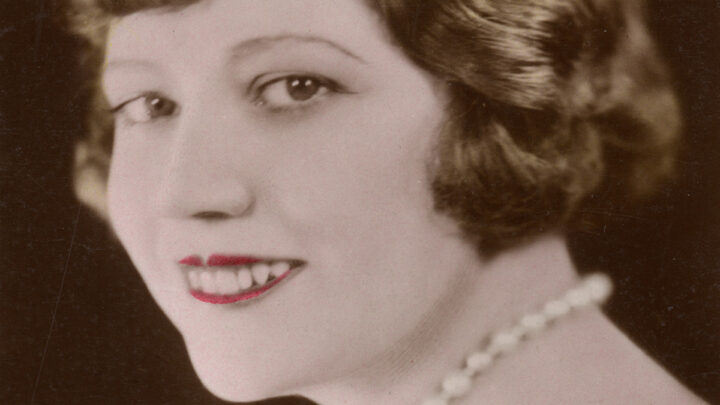
"The Idol of the Radio." British dance band singer of the 1920s, 1930s, and 1940s.