


Biography & Career

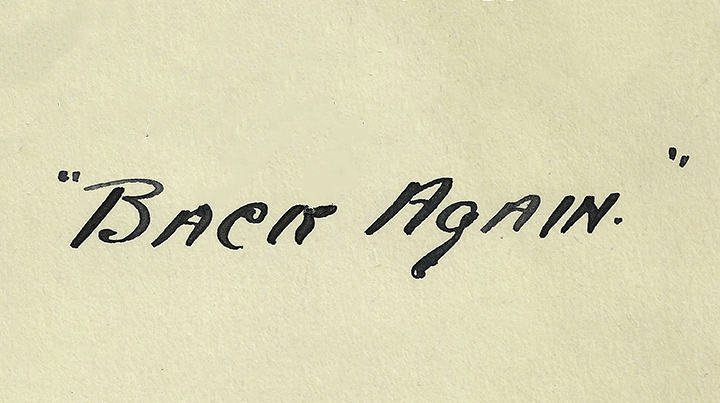
“Back Again” (1919)

It is easy enough to find Elsie Carlisle autographs. Usually they take the form of photographs or postcards that she signed, often hastily and even sloppily. Occasionally one finds a little more than just her name; for example, I have a small photograph of Carlisle on which she has written “Home, James” (referring to her …

Biography & Career

Elsie Carlisle’s 128th Birthday

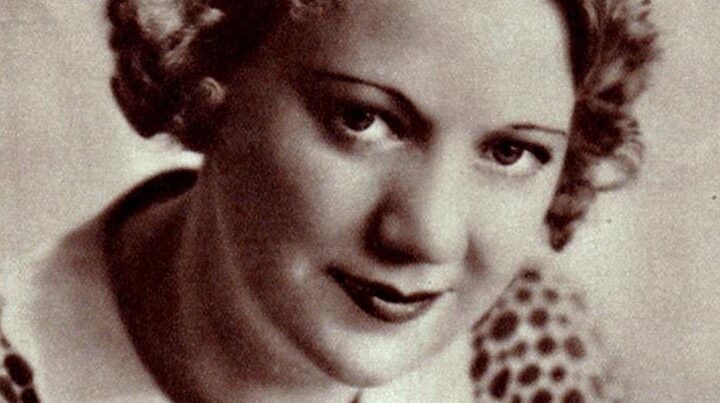
Elizabeth Carlisle was born on January 28, 1896 in Manchester, England to James Carlisle and Mary Ellen Carlisle (née Cottingham). Elsie was not the only member of her family to show a knack for show business; her brothers James (“Jim”) and Albert (“Tim”) were both singers who worked with the great composer, publisher, and impresario …

Biography & Career

Anniversary of Elsie Carlisle’s Death

Elsie Carlisle passed from this world on September 5, 1977, dying of cancer at the age of 81 in the Royal Marsden Hospital, Chelsea, London. The informant who signed the death certificate was Wilfred “Willie” Ypres Carlisle, one of her two sons, who gave as his own address the same one that she had been living …

Biography & Career

Elsie Carlisle in America

I have been postponing writing about Elsie Carlisle’s 1923-1924 stay in America for eight and a half years now, nearly the entire time that I have been running this website. Originally, I hesitated to comment simply because I was not sure the trip had happened. Later, it became clear that she had spent a few …

Biography & Career

Elsie Carlisle’s 103rd Wedding Anniversary

Elsie Carlisle’s public persona was always that of a coquettish single girl. A 1935 human-interest piece begins with the sentence “Miss Elsie Carlisle, ace woman crooner, has no time for introspection, no time to marry…” (emphasis mine). Her friends and associates seem to have known little that suggested otherwise. Particularly poignant and somewhat intriguing is …

More on this topic

Biography & Career

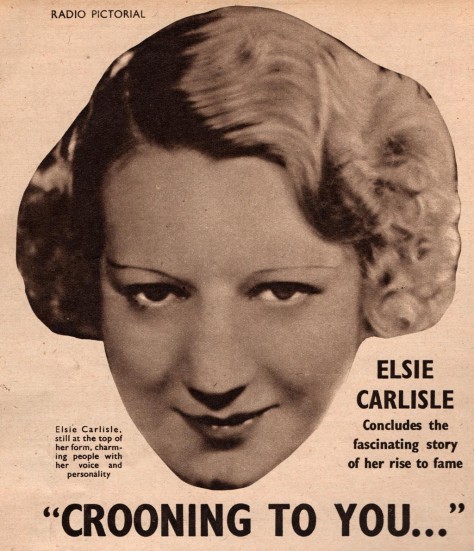
“Crooning to You…” (Radio Pictorial, 1937)

Radio Pictorial, a weekly publication for wireless aficionados, carried in its October 15, 1937 issue the final installment of an interview with Elsie Carlisle entitled “Crooning to You…”  House style seems to have demanded that it take the form of redacted answers to suppressed questions; it is Elsie who does all the talking, and she appears to prattle on endlessly without any prompting, which was no doubt the intended effect.  One may divine the glorious sort of fluff included in the item from highlights printed in bold at the top of the page:

When I Was Electrocuted—But The Show Went On  ::  Footballs Are SO Hard !  ::  My Greyhounds  ::  Off to America

And who could argue with Elsie regarding the famed hardness of footballs, when — what, electrocuted???  Actually, that was rather a favorite story of Elsie’s, or perhaps of the magazine’s editors, for it would appear again in the 1938 Ralph Graves article “Radio Sweetheart No. 1.”

The salient points of the interview are that

  • Elsie Carlisle is a normal human being, like you or I.  She has nightmares about plane crashes — that sort of thing.
  • Elsie is an absurdly resilient performer, utterly loyal to her fans.  She insists that “[t]he show must go on,” even after a car accident or an accidental electrocution; regarding the latter she reports: “I got through the broadcast somehow, and I flatter myself that no listeners noticed any difference in my performance.  But, it is a fact, I was in a coma the whole time.”
  • She is comically impractical: “Nothing, however, could have been so painful as the first time I ever kicked-off at a football match.  I was asked by the Variety Artistes Ladies’ Guild to start a match between Dick Kerr’s Ladies’ Football team and a team of French lady footballers.  I went along in a small pair of silk shoes, and under-estimated the hardness of a football.  I gave it a good kick, and for the rest of the day I could hardly feel my toes.”
  • She is “passionately fond of dogs.”  She tells a very sad story of one of her dogs being hit by a bus.  She has started to keep greyhounds but is usually too busy performing to see them race.
  • After a decade of turning down offers to come and perform and America, she…actually, it is hard to piece together if she has agreed to anything specific.  “[I]f nothing crops up to frustrate my present plans, I shall soon be on my way to America,” she claims.  She expresses hopes that the American public will be as welcoming to her as the British one, but that is as much as we get, and I have never seen anything to suggest that she ever did travel to America.

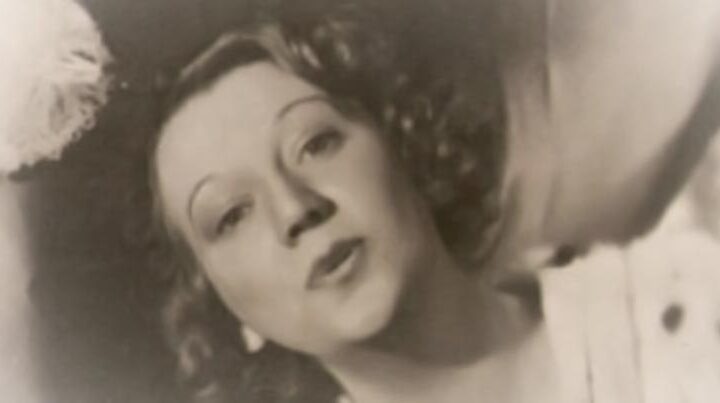
This is a fundamentally very silly article overshadowed by a not-very-flattering disembodied Elsie head — which is to say that it is exceedingly fun!  Elsie seems to have been just as good at working the press as she was at singing, and she clearly worked hard to earn such commonly repeated epithets as “Idol of the Radio,” “Radio Sweetheart No. 1,” and, on a rare occasion when she was not feeling up to talking to the press, “Distinguished Woman Invalid” (The Dundee Evening Telegraph, January 4, 1939).

Biography & Career

Elsie Carlisle in Radio Pictorial No. 1

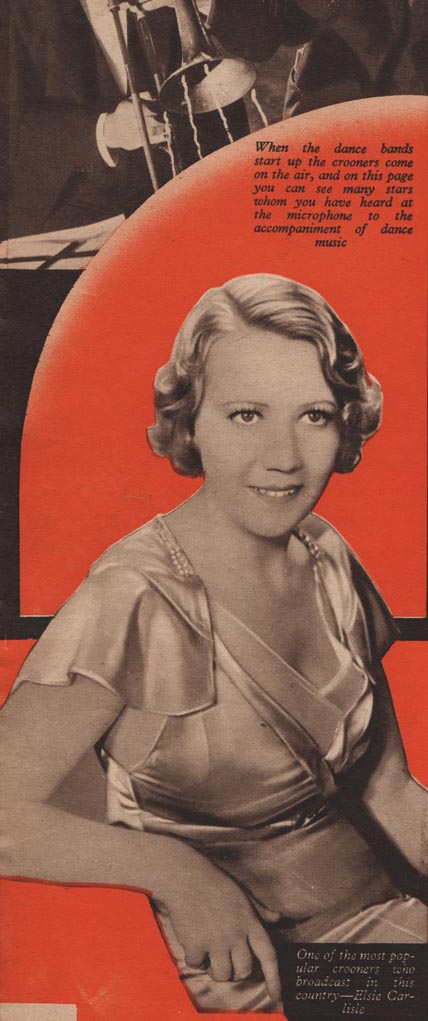
Elsie Carlisle appears prominently in the center spread of the first issue of Radio Pictorial (January 19, 1934), a weekly publication.  The item is entitled “CROONERS!” and it also depicts the Boswell Sisters, Edith Baker, Hildegarde, Gertrudge Lawrence, Eve Becke, and Sheila Borrett (the first female national radio announcer).  Elsie would record “Without That Certain Thing” and “Who Walks In When I Walk Out?” that same month.

Biography & Career

“CROONING IS TOUGH WORK”

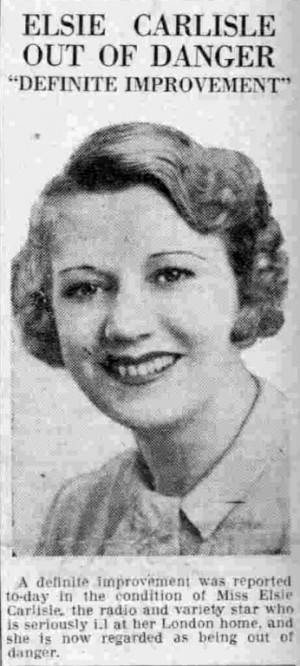
Elsie Carlisle recorded “Joseph, Joseph” and “Change Partners” in November, 1938, and then had to stop work entirely for many weeks due to ill health. While her malady is unknown, her absence was noticed, with the Daily Mail describing her has having been “seriously ill”:

A week earlier, the Gloucestershire Echo had described her condition as “critical.” Whatever the affliction, Elsie did recover, and she went back to recording, broadcasting, and performing publicly in February. In an interview with a reporter, she attributed the causes of her illness to the stress of her professional obligations.

From the Newcastle [New South Wales, Australia] Morning Herald and Miners’ Advocate, Tuesday, February 21, 1939:

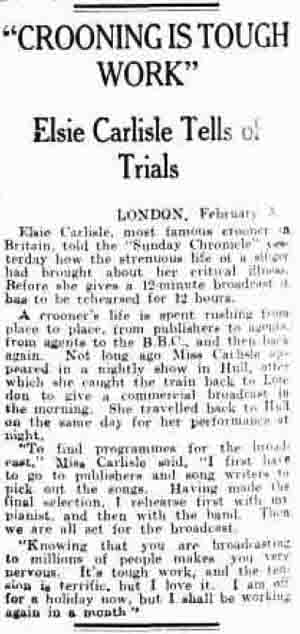
“CROONING IS TOUGH WORK”

Elsie Carlisle Tells of Trials

LONDON, February 5.

Elsie Carlisle, most famous crooner in Britain, told the “Sunday Chronicle” yesterday how the strenuous life of a singer had brought about her critical illness. Before she gives a 12-minute broadcast, it has to be rehearsed for 12 hours.

A crooner’s life is spent rushing from place to place, from publishers to agents, from agents to the B.B.C., and then back again. Not long ago Miss Carlisle appeared in a nightly show in Hull, after which she caught the train back to London to give a commercial broadcast in the morning. She travelled back to Hull on the same day for her performance at night.

“To find programmes for the broadcast,” Miss Carlisle said, “I first have to go to publishers and song writers to pick out the songs. Having made the final selection, I rehearse first with my pianist, and then with the band. Then we are all set for the broadcast.

“Knowing that you are broadcasting to millions of people makes you very nervous. It’s tough work, and the tension is terrific, but I love it. I am off for a holiday now, but I shall be working again in a month.”