Partners & Accompanists

“I Love My Baby” (1926)

“I Love My Baby (My Baby Loves Me).” Words by Bud Green, music by Harry Warren (1925). Recorded by Elsie Carlisle with piano accompaniment by Carroll Gibbons on May 25, 1926. Zonophone 2772 mx. Bb-8426-2.

Elsie Carlisle – “I Love My Baby” (1926)

Elsie Carlisle made her first commercially successful recording one hundred years ago today. Already an accomplished thirty-year-old actress, she had made her radio broadcasting debut on March 1, 1926. After May 25, 1926, Carlisle would go on to enjoy a fifteen-year recording career, and it is through her records that we still appreciate her artistry.

May 25, 1926, was not actually the first time that she had entered a studio at the Gramophone Company’s facilities in Hayes, Middlesex, to record a song: on March 7, 1918, she had made a test recording of “Some Girl Has Got to Darn His Socks,” but it was never issued as a commercial record, and it remains unclear if a pressing survives. If it seems strange that Carlisle’s first attempt at recording did not result in an issued record, we must remember how greatly technology changed between 1918 and 1926. In 1918, the only way to record sound was using acoustic methods. Carlisle’s talents may simply not have shone under those circumstances. Beginning in 1925, electrical processes rapidly took over the industry, and soon afterwards the crooners emerged, vocal artists who could exploit the microphone’s sensitivity to quiet, intimate singing—something the acoustic horn had never permitted. As a stage actress of that era, Carlisle must have had a powerful voice, but perhaps we can be grateful that her career took off at a time when her softer, subtler efforts could be captured on shellac.

On May 25, then, Carlisle was joined at the Gramophone Company’s B Studio by Carroll Gibbons, who was to be her piano accompanist; he was not yet the famed director of the Savoy Hotel Orpheans. Ralph Graves, in his 1938 journalistic paean to Elsie Carlisle (“Radio Sweetheart No. 1”), recounts how the two first met:

Now for another scene.

This time not a swank lunch, but a very informal party.

Elsie was asked to sing. No, she hadn’t her music, but a quiet, bespectacled young man at the piano knew all the latest numbers, and could instantly transpose into any key Elsie wanted.

She sang several numbers which went down well, but the outstanding thought in Elsie’s mind was what a good accompanist this young man was. And when he played some piano solos on his own afterwards her opinion of him went up.

She asked who he was.

“That chap at the piano? Oh, he’s a Mr. Gibbons. Just come over from the States with Rudy Vallee, you know. Carroll Gibbons I believe his name is….”

That was in the days when Carroll was striving to make a name for himself.

Elsie and Carroll used to meet quite often after that party, as they held each other in mutual esteem. Well, now here’s a secret. Even his best friends will admit that Carroll has a “queer” voice. Those melodious deep tones, so very “Southern” are a characteristic. His announcements are fun, but you can’t imagine him as a singer, can you!

Yet it is a fact that Carroll and Elsie not only made gramophone records together, but on at least one of them Carroll sang part of the vocals! Yes, that vocalist is a fine pianist!1

At this particular session Gibbons did not sing, but his piano accompaniment is flawless, as it would continue to be throughout their collaboration that year.

The pairing of songs recorded that day seems prescient, in retrospect: Harry Warren’s “I Love My Baby” has as its reverse “So Is Your Old Lady,” whose lyrics were penned by Al Dubin—the man now most associated with Warren by lovers of 1930s musical films. The two had collaborated on at least one successful song by 1926, but their celebrated partnership as Warner Bros.’ signature songwriters lay years ahead.

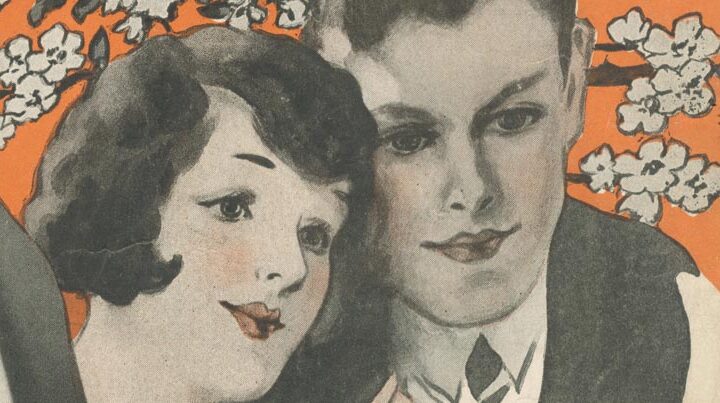
“I Love My Baby” expresses the enthusiasm of giddy young lovers at an insistent tempo that is entirely infectious and is as redolent of the decade of its composition as “The Charleston.” Elsie Carlisle sings the lyrics with a chatty, dramatic delivery, and she adds color with vocal effects such as her husky second repetition of the refrain (most reminiscent, perhaps, of the versions recorded a few months earlier by Aileen Stanley and Lee Morse). The persona Carlisle takes on is one familiar from her later work, an example of brilliant, brainless fun such as we hear in her 1929 “Come On, Baby” with the Rhythm Maniacs. Carlisle would appear on the sheet music for “I Love My Baby” that year.

Noteworthy early American recordings of “I Love My Baby (My Baby Loves Me)” date from the autumn and winter of 1925–26, and include those of Aileen Stanley, Mike Speciale and His Orchestra (v. Jimmy Flynn), Sam Lanin’s Dance Orchestra (v. Irving Kaufman), The University Six (v. Ed Kirkeby), Bailey’s Lucky Seven (v. Arthur Fields), The Little Ramblers, Esther Walker (with the piano accompaniment of Rube Bloom), Lee Morse, Isham Jones, Owen Fallon and His Californians, Peggy English (with Rube Bloom on the piano), Sally Freeman, and Jack Glassner and His Colonial Inn Orchestra.

Other British 1926 versions of the song are those of the New Princes’ Toronto Band (dir. Hal Swain; v. Les Allen) and Don Parker and His Band; Frances White recorded it for HMV with the Kit-Cat Band, but it went unissued.

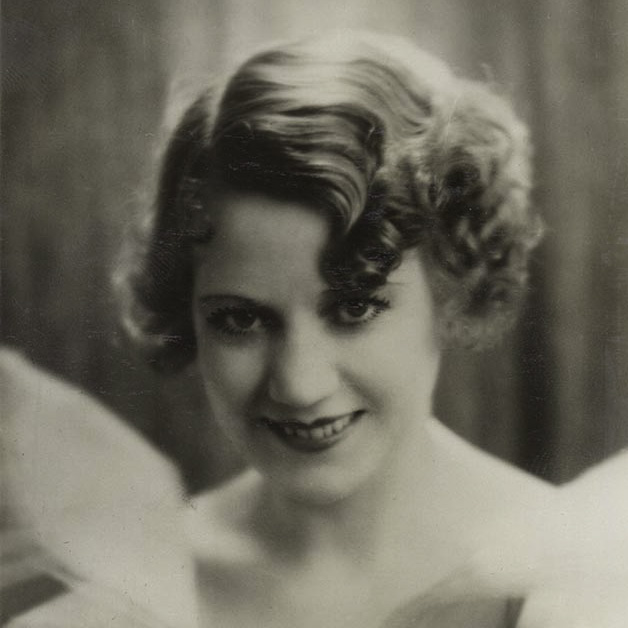
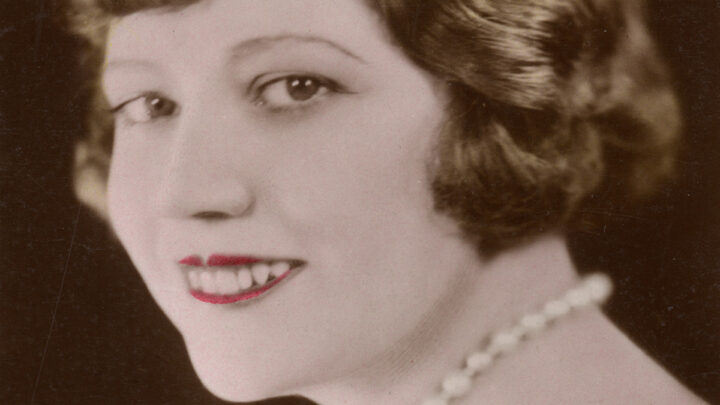
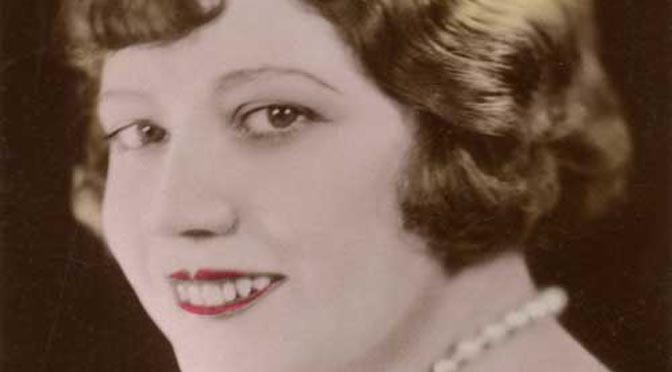
Elsie Carlisle c. 1926

Notes:

  1. Ralph Graves, “Radio Sweetheart No. 1,” Radio Pictorial, no. 251, November 4, 1938, 8. The boldface is Graves’s and typical of the bombastic editorial style of the magazine. Graves is presumably referring to Gibbons’s faint but endearing antiphony in the 1926 “Ya Gotta Know How to Love” (Zonophone 2815), another composition by Bud Green and Harry Warren, as well as in the song on its reverse side, “My Cutey’s Due at Two-to-Two Today”. Gibbons’s “queer” voice (to use Graves’s term) was, I understand, his way of coping with an extreme stutter. Gibbons actually sang quite a bit, but perhaps more so in the period after Graves wrote his piece; I think particularly of “Too Romantic” (1940), “I L-L-Love You So” (1941), and “Elmer’s Tune” (1942).

“Babyin’ You” (1926)

“Babyin’ You.” Music and lyrics by Bert Kalmar and Harry Ruby; included in the London show Princess Charming (1926). Recorded by Eddie Morris and Elsie Carlisle (as Lena Barton) in London on November 24, 1926. Regal G-20196 (an Australian issue derived from the British Regal G-8762).


“Babyin’ You” – Eddie Morris and Lena Barton (Regal G-20196)

The business of writing discographies really needs no defense, as these reference works are indispensable tools for understanding the history of music, theater, film, and television. Why someone would personally want to compile a discography is another question. Brian Rust, the twentieth century’s best known discographer, described having heard his favorite activity labelled by detractors as “analytical bookkeeping” or even “mere musical philately,” i.e., stamp collecting.1 Today, on the eve of Elsie Carlisle’s 129th birthday, I have the opportunity to describe a breakthrough that I hope will convey how thrilling assembling lists of records can really be.

In an addendum to his discography of female popular singers from 1920–1933, Ross Laird records

LENA BARTON: It has been reported that this is a pseudonym for Elsie Carlisle (but this is unconfirmed).2

If we look back at his entry for “Lena Barton,” we find the following:

EDDIE MORRIS & LENA BARTON        London, Nov 24, 1926

WA4513-1 Cross your heart Re G8762
WA4514-1 Babying you Re G8762

So a record exists, attributed to Eddie Morris and Lena Barton; we know the date it was recorded; and we know the two songs that are on it.3 Eddie Morris is the name of a real singer, but Lena Barton is an otherwise unknown artist.

I first noticed Laird’s addendum reporting the rumor that “Lena Barton” was really Elsie Carlisle a few years ago, but I was not able to find anyone who actually owned the record, and I decided to wait for more information. That information came to me last week, in the form of pages of addenda that discographer Richard J. Johnson had made but never issued for his own Elsie Carlisle discography.4 Johnson listed much the same information as Laird, but added in pen:

Lena Barton is Elsie Carlisle.

I took it that he had heard the record himself and felt comfortable identifying the voices. Clearly, it was time for me to update my discography (I was planning to release a new edition in the next few months anyway).

But it so happened that since the last time I looked into the matter, a transfer had surfaced on the Internet Archive, not of Regal G-8762 (the record mentioned by Laird and Johnson), but of the Australian Regal G-20196, which has one of its sides: “Babyin’ You.” One play was enough to convince me that the rumors had been correct: this was an Elsie Carlisle record, made during her first year of recording.

Why “Lena Barton”? Up to this point, Carlisle had been working exclusively for the Gramophone Company’s Zonophone label. It was not until February 1927 that she would do work under her own name for Columbia, which also owned Regal. I can only guess that some contractual requirement prevented her from appearing as herself on Regal in November 1926.

Eddie Morris, though, was the very real name of an American actor, billed as “The Kid from Kentucky,” who appeared regularly on the London stage and also on BBC radio. In fact, he had performed during Elsie Carlisle’s first radio broadcast, as is attested by several newspapers.5

“Babyin’ You,” a catchy song about the relationship between infantilization and affection, is a Kalmar and Ruby ditty. It was apparently added to an originally Hungarian operetta with an Albert Sirmay score, Princess Charming, which was playing in London at the time. Some noteworthy recordings of “Babyin’ You” were made by:

Notes:

  1. Brian Rust, Brian Rust’s Guide to Discography, Greenwood Press, 1980, 4.
  2. Ross Laird, Moanin’ Low: A Discography of Female Popular Vocal Recordings, 1920–1933, UCSB Historical Discography Series, 1996, 606.
  3. Laird, Moanin’ Low, 19.
  4. Richard J. Johnson, Elsie Carlisle: A Discography, published by the author. My thanks to Peter Johnson for supplying me with his father’s papers on Elsie Carlisle, and to Steve Paget for having put me in touch with him.
  5. E.g., “Broadcasting: Programmes for To-Day,” Northern Whig, March 1, 1926, 10, British Newspaper Archive.

“You’ll Find Out” (1932)

“You’ll Find Out.” Words and music composed by Archie Gottler and Betty Treynor (a pseudonym of Lawrence Wright) for On with the Show. Recorded in London on June 15, 1932 by Ray Starita and His Ambassadors with vocalists Elsie Carlisle and Sam Browne. Sterno 984 mx. S-2477-2.

Personnel: Ray Starita-cl-ts dir. Nat Gonella-t / t / tb / prob. Chester Smith-cl-as-bar-o / Nat Star-cl-as / George Glover-cl-ts-vn / George Hurley-vn / Harry Robens-p / George Oliver-bj-g / Arthur Calkin-sb / Rudy Starita-d

Ray Starita and his Ambassadors – You’ll Find Out – 1932

Transfer by Henry Parsons

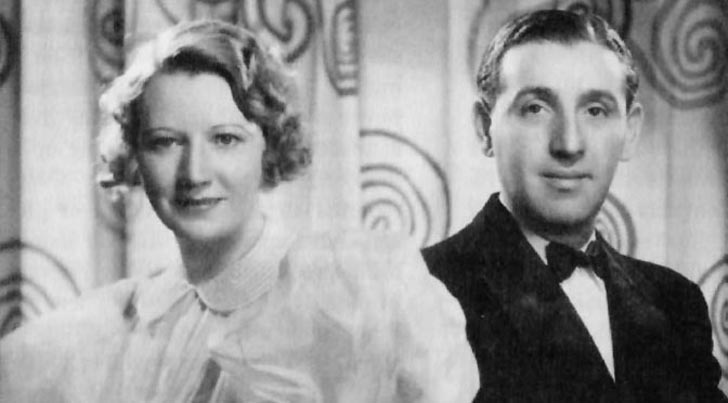
Between 1932 and 1937, Elsie Carlisle would make some 42 record sides with Sam Browne, most famously with Ambrose and His Orchestra, but occasionally also with other bands. The two singers became best known for on-shellac vituperative bickering (the best examples being found in “Seven Years with the Wrong Woman,” “What’s Good for the Goose Is Good for the Gander,” and “I’m Gonna Wash My Hands of You”). But their fictional relationships could be much more playful and subtle, as we see here in “You’ll Find Out,” which they recorded with Ray Starita’s band.

“You’ll Find Out” was a joint composition of American songwriter Archie Gottler and the prolific British composer Lawrence Wright, who most frequently used the pseudonym “Horatio Nicholls.” (His pseudonym used here — “Betty Treynor” — may have been a one-off.) As far as I can tell, this West End musical song was only recorded one other time; that recording, from April 1932, featured Sam Browne with Billie Lockwood under the Zonophone pseudonyms “Jack and Jill.” Now, “Jack and Jill” numbers, while delightful, tend to be comparatively sedate, and that is definitely the case with the Browne-Lockwood version. The two singers slowly take their turns delivering the increasingly suggestive lyrics, leaving the song’s comic sensibility underdeveloped.

Browne and Carlisle, in the Ray Starita recording of the song, uncover the composition’s potential. Part of their success is due to an audible chemistry that few duettists could match. But just as important is their phrasing as they deliver the lyrics. The joke of the song is that the young couple asks each other questions that seem to answer themselves: “What do lovers do out in the moonlight?” “What will we do evenings when it’s raining?” Supposing I must leave you for a week or two / And you haven’t got as single thing to do / How would you spend all those lonesome evenings?” Answered with “You’ll find out!” the questions suggest sex, infidelity, and the like.

The repeated punchline risks seeming monotonous. But we hear Sam and Elsie breaking up that monotony by altering the line “You’ll find out” in such a way as to dramatize it. “You’ll find out” gives way to “Ah! You’ll find out…”; “Could I? You’ll find out!”; “Oh, but…you’ll find out!”; “It is! You’ll find out…”; “Hmm… You’ll find out!” and finally, “Try and find out!” By varying the response, they produce something resembling a witty, funny conversation.

The vocal chorus is unusually long in this dance band recording, and the arrangement is remarkably sophisticated. Ray Starita’s musicians remain comparatively quiet during the vocal refrain, but as it progresses they build momentum and come in strong at the end. Starita’s band was brassless at the time, and one gets the sense from the powerful sax section work in “You’ll Find Out” that the orchestra could execute a dynamically scored arrangement without  trumpets and trombone — instruments added only for recording purposes in Starita’s 1932 British Homophone sessions.1

Notes:

  1. My thanks to Henry Parsons for reminding me of this latter point.

“Won’t You Stay to Tea?” (1933)

“Won’t You Stay to Tea?” Words by Mack Gordon, music by Harry Revel (1932). Recorded in London on March 3, 1933 by Elsie Carlisle and Sam Browne with orchestral accompaniment. Decca F. 3510 mx. GB5633-1.

Elsie Carlisle and Sam Browne – “Won’t You Stay to Tea?” (1933)

Prolific songwriters Mack Gordon and Harry Revel turned out a great many successful tunes in the 1930s, particularly for Hollywood movies, and three of them made it into Elsie Carlisle’s discography. “Did You Ever See a Dream Walking?” (1933) and “With My Eyes Wide Open I’m Dreaming” (1934) were both written for Paramount films and were recorded by artists on both sides of the Atlantic. Elsie’s other Gordon-Revel song, “Won’t You Stay to Tea?” only saw treatments in Britain (as far as I know), no doubt because of its culturally specific premise.

The question “Won’t You Stay to Tea?” is an amusingly pedestrian suggestion, but Gordon and Revel turn it into the occasion for a somewhat awkward romantic encounter. The impending rainstorm that prompts the social invitation transforms itself straightway into what the singer or singers describe as an indoor shower of “the loveliest love.” In this Sam Browne/Elsie Carlisle version of the song, the drama is allowed to play itself out fully, with Elsie lightly rejecting Sam’s various advances long enough that the outdoor weather actually improves — and yet she agrees to stay to tea anyway, signalling her genuine affection for him.

Other versions of “Won’t You Stay to Tea?” were recorded in 1933 by Lew Stone and the Monseigneur Band (v. Al Bowlly), Harry Roy and His Orchestra (v. Bill Currie), The Blue Mountaineers (v. Tom Barratt and Phyllis Robins), Ray Noble and His Orchestra (with vocalists Ace Roland and Frances Day, the latter of whom does an impressive Helen Kane-style warble at one point), and Syd Liption’s New Grosvenor House Band (v. Cyril Grantham).

“So Is Your Old Lady” (1926)

“So Is Your Old Lady.” Words by Al Dubin, music by Joe Burke (1926). Recorded by Elsie Carlisle with piano accompaniment by Carroll Gibbons on May 25, 1926. Ariel 940 mx. Bb8427-1 (also on Zonophone 2757 and Ariel 1006).

Elsie Carlisle – “So Is Your Old Lady” – (1926)

“So’s your old man!” is a somewhat dated rejoinder to an insult, a suggestion that one’s interlocutor can take what he has said and apply it to his own father. One still hears the term “old lady” used to refer to a man’s wife or girlfriend. In this playful 1926 song, lyricist Al Dubin combines the two expressions in an exchange between a wife and a husband, the latter of whom has been philandering a little too obviously. The wife tells him to do as he likes, but to remember that while he is pursuing his affairs, “so is [his] old lady” — a suggestion of reciprocal infidelity. At this recording session in 1926 (which was her first), Elsie Carlisle handled the quick patter and formulaic repetition in the lyrics deftly, bringing something both cute and slightly titillating to the taunting threats of the wife. Carroll Gibbons’s piano playing complements Elsie’s quick, crisp delivery quite nicely. The recording was made for Zonophone but also appeared on the Ariel label under Elsie’s first known pseudonym: “Maisie Ramsey.”

Other versions of “So Is Your Old Lady” were done in 1926 in America by the Original Indiana Five, Ruth Etting,  and Warner’s Seven Aces. In Britain the song was recorded by Jack Hylton and His Orchestra, Teddy Brown and His Café de Paris Band (with vocalist Lionel Rothery), Bert Firman (under the pseudonym of Newton Carlisle’s Dance Orchestra), Hilda Glyder, Victor Sterling and His Band (directed by Nat Star), and the Edison Bell Dance Orchestra (with vocals by Tom Barratt).

"The Idol of the Radio." British dance band singer of the 1920s, 1930s, and 1940s.