Solo Recordings

“Who Walks In When I Walk Out?” (1934)

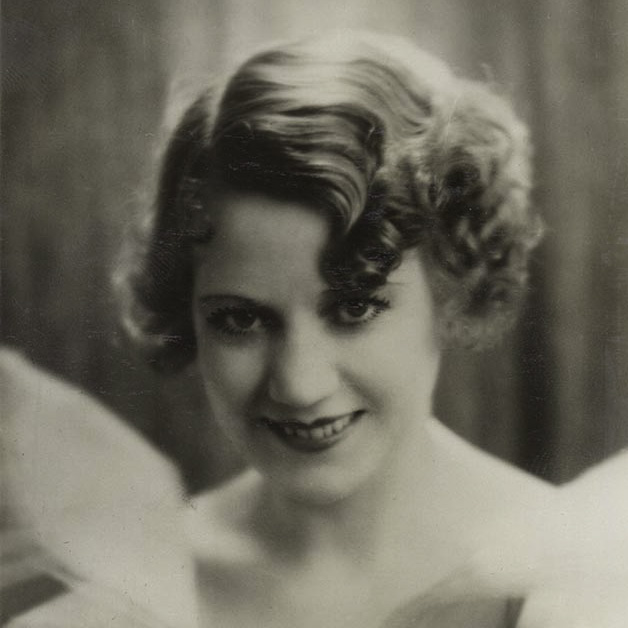
“Who Walks In When I Walk Out?” Words by Ralph Freed, music by Al Goodhart and Al Hoffman (1933). Recorded on January 2, 1934 by Elsie Carlisle. Decca F-3838 mx. GB-6451-2.

Elsie Carlisle – “Who Walks In When I Walk Out?” (1934)

One might think, from its credits, that this “Goodhart-Hoffman-Freed” song was written by the composers of “Fit as a Fiddle,” which Elsie Carlisle had recorded a year earlier, and one would be just slightly more than two-thirds correct. The music was composed by the same two men, while it was Arthur Freed’s somewhat less famous brother Ralph who penned the lyrics to “Who Walks In When I Walk Out?” The latter song would fit in nicely in a soundtrack for a film about American gangsters, although I am not aware of anyone’s actually having used it that way. It was versatile enough to have crossed generic boundaries early, with a 1935 country version by Bob Wills and His Texas Playboys. For Elsie Carlisle, it provided an opportunity to explore a slightly lower area of her vocal range than usual, and her voice has a brooding quality to it as she makes a series of jealous accusations of infidelity, along with what appears to be a physical threat (“I’m gonna give you the third degree…”).

In 1934 there were American versions of “Who Walks In When I Walk Out?” by Adrian Rollini and His Orchestra (Herb Weil, vocalist), and Paul Whiteman and His Orchestra (with Ramona Davies). In Britain artists were more prolific, with recordings by Harry Roy and His Orchestra (with vocals by Bill Currie), Scott Wood and His Orchestra (with vocalist Sam Browne), Jack Payne and His Band (who made one record with Billy Scott-Coomber and one for a German label that was entirely instrumental), The New Mayfair Dance Orchestra, under the direction of Ray Noble, with vocals by Al Bowlly (who curiously talks his way through the lyrics — but to great effect), Jock McDermott’s Silver Serenaders (with vocalists Fred and Leslie Douglas), Harry Leader and His Band (as Joe Taub and His Melodians, with Leslie Holmes), Aileen Stanley (who had relocated to London and was accompanied on this recording by Max Goldberg and other British artists), Madame Tussaud’s Dance Orchestra (with vocalist Annette Keith), Dare Lea’s Band, and the Astorians Dance Band.
Jay Wilbur

“Dreaming of Tomorrow” (1929)

“Dreaming of Tomorrow.” Words and music by Eddie Pola and Phil Cardew. Recorded by Elsie Carlisle under the musical direction of Jay Wilbur in London c. March 1929. Dominion A-83 mx. 1147-3.

Personnel: Jay Wilbur dir. Max Goldberg-Bill Shakespeare-t / Tony Thorpe-tb / Laurie Payne-Jimmy Gordon-George Clarkson-reeds / Norman Cole-vn / Billy Thorburn-p / Dave Thomas or Bert Thomas-bj-g / Harry Evans-bb-sb / Jack Kosky-d-x

Elsie Carlisle – “Dreaming of Tomorrow”

The “Dreaming of Tomorrow” that Elsie Carlisle recorded c. February 1929 is sometimes incorrectly identified as the 1925 composition of the same name by Benny Davis and Joe Sanders (of the Coon-Sanders Original Nighthawk Orchestra, who recorded the earlier song). Elsie’s song was actually composed in 1928 by Eddie Pola and Phil Cardew (the latter a prolific arranger for the BBC Dance Orchestra, amongst other things). It is a song that starts out melancholy but eventually becomes rather upbeat. The title and, for that matter, the lyrics, are apt to be misinterpreted as some form of optimism for the future (so common a theme in the songs of the decade to come), when really they express an intense happiness and satisfaction with the present. The singer contrasts her past infelicity with the bliss that she has found in a new relationship:

It seems to me my dreams
Will all materialize,
Since I got a glimpse
Of the love in your eyes.

Dreaming of tomorrow,
Why should I be blue?
When I know tomorrow's
Gonna give me you?

The song is a suitable vehicle for Elsie’s technique of vocally representing a character in very little time and in few words, and she she expresses her sweet sentiments in an appropriately dreamy way.

“Dreaming of Tomorrow” had been recorded before in November 1928 by Bert and John Firman’s Arcadians Dance Orchestra, with Maurice Elwin as the vocalist. It was also recorded by Philip Lewis and His Dance Orchestra (a.k.a. the Rhythm Maniacs), under the direction of Arthur Lally, in November 1929, again with Maurice Elwin, but that take was rejected by Decca.

Sam Browne

“Sittin’ in the Dark” (1933)

“Sittin’ in the Dark.” Words by Harold Adamson, music by Jesse Greer (1933). Recorded by Sam Browne and Elsie Carlisle on March 3, 1933. Decca F-3504 mx. GB-5631-2.

Elsie Carlisle – “Sittin’ in the Dark” (1933)

“Sittin’ in the Dark” is a song that explores what goes on when young lovers are left to their own devices. The lyrics are basically a laundry list of romantic commonplaces interspersed with humming (“Mm-mmm…”) suggestive of kissing or even moaning:

First we start to kiss,
Then we sit and sigh,
Feeling very shy
Sittin' in the dark....

and so on. Most commonly the words are delivered by a male singer playing a young man who has somehow arranged to “sit in the dark” with his girlfriend while her parents sleep upstairs. In this March 3, 1933 duet between Sam Browne and Elsie Carlisle, however, the measured pace of the piece is set by both boy and girl as they “sit and sigh” and do what lovers do (“Dee-doo-dee-doo-dee-doo!”).

The musical director made the clever choice to record the song as a little drama introduced by Elsie’s “pop,” who bids the “kids” goodnight, seems to be snoring later, and even interrupts the lovers, asking grumpily, “What, you still here?  I’m getting fed up with this!  What are you doing down there, anyway?” Sam Browne and Elsie Carlisle’s characters are actually referred to or addressed as “Sam” and “Elsie,” which makes the fictional romance between the two youthful celebrities somehow seem more immediate. Elsie speaks and sings in an intermittently odd voice, which may in fact be a failed, but exceedingly cute, attempt at sounding American.

I do not, however, mean to suggest that she could be trying to sound like American Louis Armstrong, who first recorded “Sittin’ in the Dark” in late January, 1933 in his own unique style (for an insightful discussion of that version, see the essay by Ricky Riccardi on The Wonderful World of Louis Armstrong). Armstrong’s is the only American recording I have run across, but the song was recorded quite a lot in 1933 in Britain, where there were versions by Bidgood’s Broadcasters (as “The Harvard Dance Club Aces,” with vocals by Tom Barratt and Phyllis Robins), the BBC Dance Orchestra (under the direction of Henry Hall, with Sam Browne as vocalist, in a Van Phillips arrangement), Harry Roy and His Orchestra (with vocals by Bill Currie and Harry Roy), and Jack Jackson and His Orchestra (Al Bowlly, vocalist). Only two days before Sam Browne and Elsie Carlisle recorded their Decca version of the song, Sam had done a duet for Regal Zonophone with either Billie Lockwood or Anona Winn (the woman’s identity is unclear, as this is one of the many Zonophone and Regal Zonophone records attributed simply to “Jack and Jill”). Sam and Elsie themselves would do another version only days later with Rudy Starita and His Band.

As the weeks progressed, there were more recordings of “Sittin’ in the Dark” by Jack Hylton and His Orchestra (with vocalist Pat O’Malley, in a Peter Yorke arrangement), Jimmy Campbell and His Paramount Band (with Tom Barratt & Phyllis Robins), Pete Lowe and the “Scottish Daily Express” Band, and Jay Wilbur and His Band (in a medley with vocals by the Jackson Harmony Trio).

The songwriters of “Sittin’ in the Dark” are comparatively obscure, although Harold Adamson would contribute to some notable lyrics for  movies and television in the 1950s, such as “When Love Goes Wrong (Nothing Goes Right)” in the Marilyn Monroe musical comedy Gentlemen Prefer Blondes and the theme song to I Love Lucy (whose words are admittedly seldom ever heard).