Jay Wilbur, Solo Recordings

“I’m Just in the Mood Tonight” (1929)

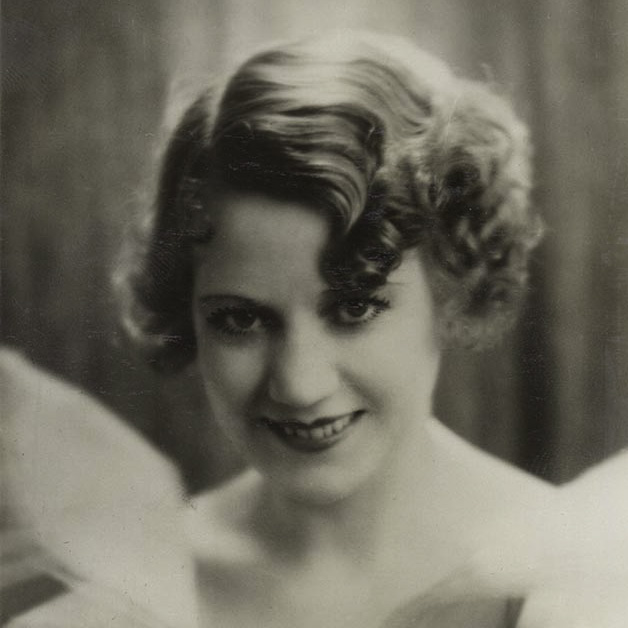
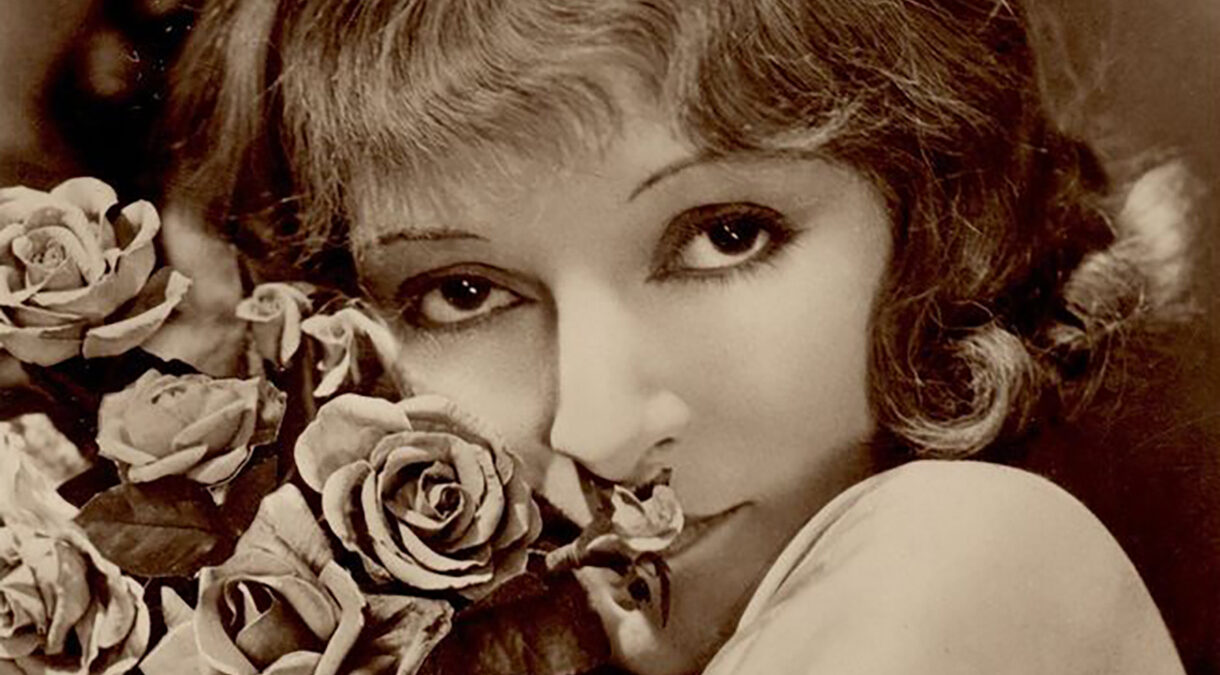
“I’m Just in the Mood Tonight.” Words by Edgar Leslie, music by Horatio Nicholls (pseudonym of Lawrence Wright) (1929). Recorded in London c. September 1929 by Elsie Carlisle under the musical direction of Jay Wilbur. Dominion A-180 mx. 1447-2.

Elsie Carlisle – “I’m Just in the Mood Tonight” (1929)

Elsie Carlisle recorded twenty songs for Dominion between the end of 1928 and the spring of 1930. There is an almost perfectly inverse relationship, I would argue, between the quality of the music Dominion attempted to capture and the actual sound of its discs, both when the music was new but especially now, nearly a century later. A low-budget operation with minimal ambition, Dominion seems to have been content to receive “Sounds: OK” reviews from Melody Maker, and its shellac is abnormally subject to wear. It is therefore a real pleasure to find a fairly well-preserved Dominion like this copy of “I’ll Get By” and “I’m Just in the Mood Tonight.”

“I’m Just in the Mood Tonight” has lyrics by the noteworthy American songwriter Edgar Leslie (known better, perhaps, for his work on “Dirty Hands, Dirty Face” and “Midnight Blue”), who was living for a time in England and collaborating with Lawrence Wright, a major music publisher who also composed under the pseudonym Horatio Nicholls. As in a number of her other Dominion recordings, Carlisle here impersonates a playful and perhaps dangerously sexy flapper. She handles Edgar Leslie’s suggestive wordplay deftly. She introduced Cole Porter’s “What Is This Thing Called Love?” on stage in the same year, so she must have been in very great demand at this time.

Also worth contextualizing in terms of her long career is the fact that Carlisle was working under Jay Wilbur, the musical director at Dominion. He would play a role in her recordings all the way until 1942. In “I’m Just in the Mood Tonight” we hear some of his studio instrumentalists, whom I am not quite ready to try to identify, although no doubt someone will recognize the guitarist from the admirable solo.

Other British recordings of “I’m Just in the Mood Tonight” were made in 1929 by Randolph Sutton, Helen Trix, The Piccadilly Players (dir. Al Starita; v. Eddie Brandt, Les Allen, and one other), Bidgood’s Broadcasters (v. Eddie Pola, Eddie Brandt, and Les Allen), Jay Wilbur and His Orchestra (v. Tom Barratt), The Rhythmic Eight, and Jack Hylton and His Orchestra (v. Sam Browne and two others).
Ronnie Munro, Solo Recordings

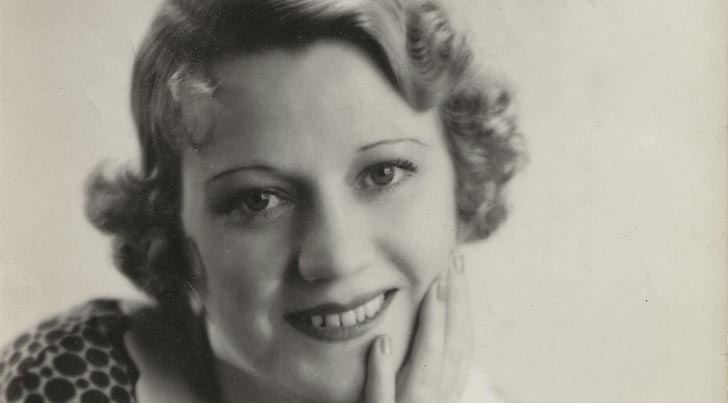
Elsie Carlisle Medley (1937)

Elsie Carlisle committed her last Decca record to shellac on January 31, 1936 and would not start recording again with HMV until October 25, 1937 — a hiatus of one year and nine months in an otherwise consistently busy period of fifteen years (1926-1942). We must not assume a low point in her career, however, but much the opposite. Elsie’s status as “Idol of the Radio” was at an all-time high, as suggested by the evidence of newspapers and industry magazines, and her stage activities seem to have kept up unabated.

The BBC Genome project shows a fair number of BBC appearances in 1936 and 1937. Importantly, a December issue of Melody Maker prints the results of a nationwide poll showing Elsie Carlisle as the most popular British female singer.1 Meanwhile, a 1935 stage show featuring Sam Browne and Elsie Carlisle (accompanied by pianist Ronnie Aldrich and Freddie Aspinall) morphed in 1936 into an act that featured solely Elsie. This act would continue into at least July 19372 and seems to have featured “Home, James, and Don’t Spare the Horses,” ending with “No, No, a Thousand Times, No!”

It should not be a surprise, then, that within days of returning to recording, Elsie recorded a collection including those two songs that went under the name “Elsie Carlisle Medley.” It was the first of two such medleys that would be released under her name in a three-month period. The medleys, which include songs that must have been perceived as somehow representative of her whole career up to that point, must reinforce her special status as a premiere vocalist.

“Elsie Carlisle Medley.” Part 1: “Gertie, the girl with the gong,” “Home James, and don’t spare the horses,” “No, No, a thousand times no.” Part 2: “Dirty hands, dirty face,” “Little chap with big ideas,” “Little man, you’ve had a busy day.” Arranged by Con Lamprecht. Recorded on November 8, 1937 in London at Studio No. 1A, Abbey Roads by Elsie Carlisle under the musical direction of Ronnie Munro. HMV BD-476 matrices 0EA-5869-1 and 0EA-5870-1.

Elsie Carlisle Medley (1937)

This medley, arranged, according to Richard J. Johnson, by Con Lamprecht,3 begins with Ronnie Munro’s own “Gertie, the Girl with the Gong” (Sonin-Munro; 1935), which Elsie famously recorded with Ambrose and His Orchestra in 1935 (Decca F. 5486). The next two numbers were, as I have already noted, famously a part of Elsie’s stage show, but they had also been memorably recorded with Ambrose and His Orchestra on Decca F. 5318 (“Home, James, and Don’t Spare the Horses” [Fred Hillebrand; 1934]; “No, No, a Thousand Times, No” [Sherman-Lewis-Silver; 1934]).

Part 2 of the “Elsie Carlisle Medley” is a group of songs with childhood themes. According to Richard J. Johnson,4 it was originally supposed to include “He’s an Angel” (Michael Hodges; 1936; recorded by Elsie Carlisle on Decca F. 5902), but that song was not ultimately recorded for the “Medley” session. Instead, Part 2 begins with “Dirty Hands, Dirty Face” (Leslie-Jolson-Clarke-Monaco; 1923), which Elsie had never recorded. Perhaps it was part of her stage act, or perhaps she had broadcast it on the radio. The song’s popularity was long-lived, especially after Al Jolson featured it in The Jazz Singer (1927). Elsie had not recorded the next song, either: “Little Chap with Big Ideas” (Drake-Damerell-Evans) was a new song in 1937, and Elsie may very well have sung it on the radio. The last song, “Little Man, You’ve Had a Busy Day,” was one that Elsie had recorded twice in 1934.

Newspaper ads for the first “Elsie Carlisle Medley” described it as “Elsie Carlisle sing[ing] a medley of her successes,”5 and the tabloid Illustrated Police News (Thursday, February 10, 1938, p. 15) included the following delightful review:

Croonette

Elsie Carlisle is probably the ace girl vocalist of the radio—British radio, at any rate. She has made a record of some of her most popular hits under the heading “Elsie Carlisle Medley.”

…

Elsie croons through these numbers in just as delightful fashion as she does when heard “on the air….”

The success of this collection of songs may be gauged by HMV’s decision to have the “ace croonette” record “Elsie Carlisle Medley No. 2” in January 1938, which similarly included four songs that Elsie had recorded in the late 1920s and early 1930s, as well as a couple that she had not recorded, but that she must have been associated with in some other way, whether through broadcast or stage.

  1. Melody Maker 12.187 (Dec. 19, 1936) 11. ↩︎
  2. The Stage issue 2,937 (July 15, 1937) 7. ↩︎
  3. Elsie Carlisle: A Discography. Aylesbury, Bucks. (1994) 33. ↩︎
  4. Ibid. ↩︎
  5. In the Belfast News-Letter (Wednesday, February 2, 1938) 11 and elsewhere. ↩︎