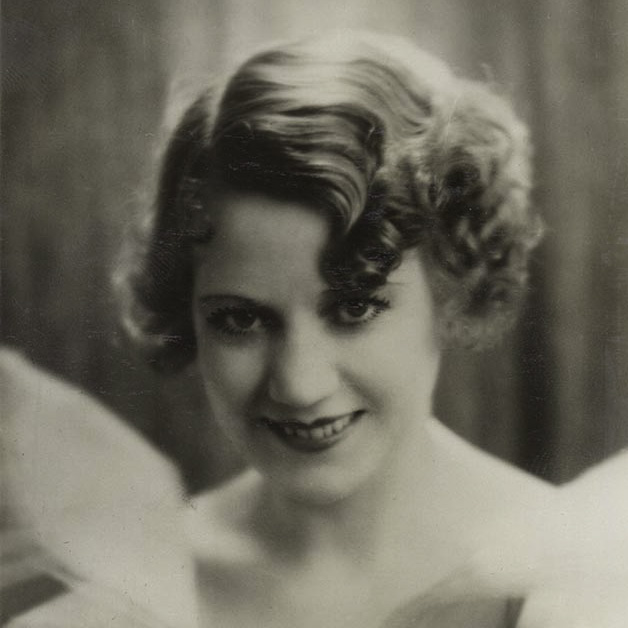
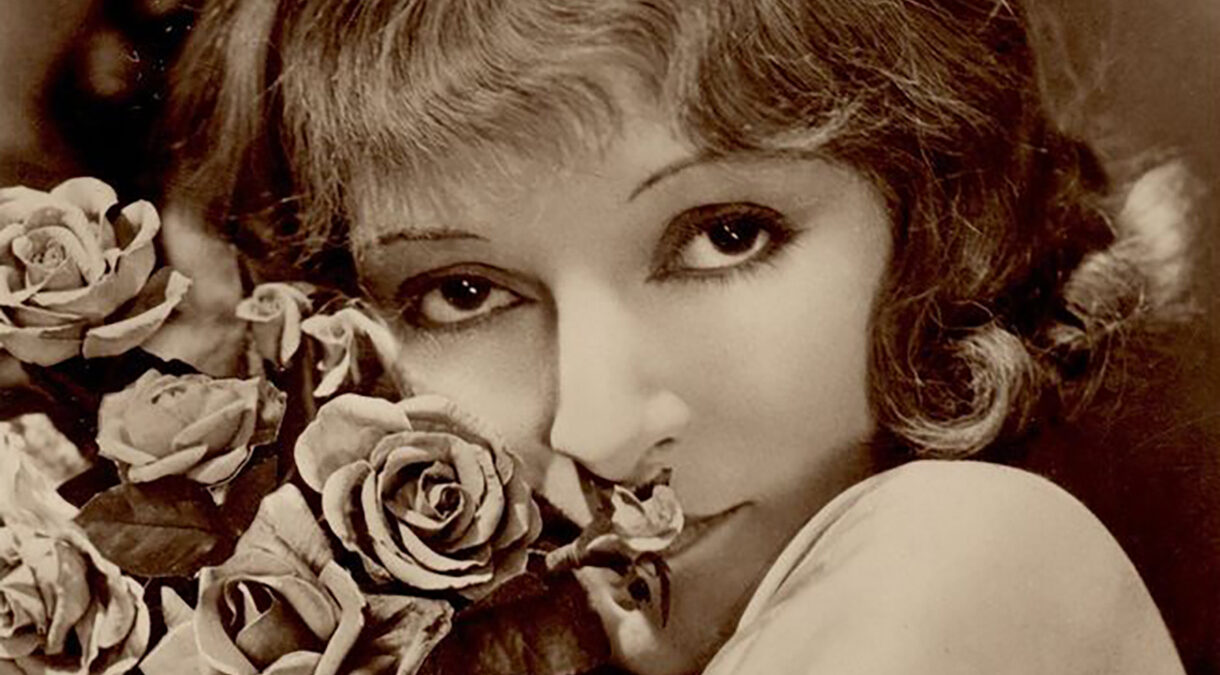
Jay Wilbur, Solo Recordings

“I’m Just in the Mood Tonight” (1929)

“I’m Just in the Mood Tonight.” Words by Edgar Leslie, music by Horatio Nicholls (pseudonym of Lawrence Wright) (1929). Recorded in London c. September 1929 by Elsie Carlisle under the musical direction of Jay Wilbur. Dominion A-180 mx. 1447-2.

Elsie Carlisle – “I’m Just in the Mood Tonight” (1929)

Elsie Carlisle recorded twenty songs for Dominion between the end of 1928 and the spring of 1930. There is an almost perfectly inverse relationship, I would argue, between the quality of the music Dominion attempted to capture and the actual sound of its discs, both when the music was new but especially now, nearly a century later. A low-budget operation with minimal ambition, Dominion seems to have been content to receive “Sounds: OK” reviews from Melody Maker, and its shellac is abnormally subject to wear. It is therefore a real pleasure to find a fairly well-preserved Dominion like this copy of “I’ll Get By” and “I’m Just in the Mood Tonight.”

“I’m Just in the Mood Tonight” has lyrics by the noteworthy American songwriter Edgar Leslie (known better, perhaps, for his work on “Dirty Hands, Dirty Face” and “Midnight Blue”), who was living for a time in England and collaborating with Lawrence Wright, a major music publisher who also composed under the pseudonym Horatio Nicholls. As in a number of her other Dominion recordings, Carlisle here impersonates a playful and perhaps dangerously sexy flapper. She handles Edgar Leslie’s suggestive wordplay deftly. She introduced Cole Porter’s “What Is This Thing Called Love?” on stage in the same year, so she must have been in very great demand at this time.

Also worth contextualizing in terms of her long career is the fact that Carlisle was working under Jay Wilbur, the musical director at Dominion. He would play a role in her recordings all the way until 1942. In “I’m Just in the Mood Tonight” we hear some of his studio instrumentalists, whom I am not quite ready to try to identify, although no doubt someone will recognize the guitarist from the admirable solo.

Other British recordings of “I’m Just in the Mood Tonight” were made in 1929 by Randolph Sutton, Helen Trix, The Piccadilly Players (dir. Al Starita; v. Eddie Brandt, Les Allen, and one other), Bidgood’s Broadcasters (v. Eddie Pola, Eddie Brandt, and Les Allen), Jay Wilbur and His Orchestra (v. Tom Barratt), The Rhythmic Eight, and Jack Hylton and His Orchestra (v. Sam Browne and two others).
Ray Starita, Sam Browne

“You’ll Find Out” (1932)

“You’ll Find Out.” Words and music composed by Archie Gottler and Betty Treynor (a pseudonym of Lawrence Wright) for On with the Show. Recorded in London on June 15, 1932 by Ray Starita and His Ambassadors with vocalists Elsie Carlisle and Sam Browne. Sterno 984 mx. S-2477-2.

Personnel: Ray Starita-cl-ts dir. Nat Gonella-t / t / tb / prob. Chester Smith-cl-as-bar-o / Nat Star-cl-as / George Glover-cl-ts-vn / George Hurley-vn / Harry Robens-p / George Oliver-bj-g / Arthur Calkin-sb / Rudy Starita-d

Ray Starita and his Ambassadors – You’ll Find Out – 1932
Transfer by Henry Parsons

Between 1932 and 1937, Elsie Carlisle would make some 42 record sides with Sam Browne, most famously with Ambrose and His Orchestra, but occasionally also with other bands. The two singers became best known for on-shellac vituperative bickering (the best examples being found in “Seven Years with the Wrong Woman,” “What’s Good for the Goose Is Good for the Gander,” and “I’m Gonna Wash My Hands of You”). But their fictional relationships could be much more playful and subtle, as we see here in “You’ll Find Out,” which they recorded with Ray Starita’s band.

“You’ll Find Out” was a joint composition of American songwriter Archie Gottler and the prolific British composer Lawrence Wright, who most frequently used the pseudonym “Horatio Nicholls.” (His pseudonym used here — “Betty Treynor” — may have been a one-off.) As far as I can tell, this West End musical song was only recorded one other time; that recording, from April 1932, featured Sam Browne with Billie Lockwood under the Zonophone pseudonyms “Jack and Jill.” Now, “Jack and Jill” numbers, while delightful, tend to be comparatively sedate, and that is definitely the case with the Browne-Lockwood version. The two singers slowly take their turns delivering the increasingly suggestive lyrics, leaving the song’s comic sensibility underdeveloped.

Browne and Carlisle, in the Ray Starita recording of the song, uncover the composition’s potential. Part of their success is due to an audible chemistry that few duettists could match. But just as important is their phrasing as they deliver the lyrics. The joke of the song is that the young couple asks each other questions that seem to answer themselves: “What do lovers do out in the moonlight?” “What will we do evenings when it’s raining?” Supposing I must leave you for a week or two / And you haven’t got as single thing to do / How would you spend all those lonesome evenings?” Answered with “You’ll find out!” the questions suggest sex, infidelity, and the like.

The repeated punchline risks seeming monotonous. But we hear Sam and Elsie breaking up that monotony by altering the line “You’ll find out” in such a way as to dramatize it. “You’ll find out” gives way to “Ah! You’ll find out…”; “Could I? You’ll find out!”; “Oh, but…you’ll find out!”; “It is! You’ll find out…”; “Hmm… You’ll find out!” and finally, “Try and find out!” By varying the response, they produce something resembling a witty, funny conversation.

The vocal chorus is unusually long in this dance band recording, and the arrangement is remarkably sophisticated. Ray Starita’s musicians remain comparatively quiet during the vocal refrain, but as it progresses they build momentum and come in strong at the end. Starita’s band was brassless at the time, and one gets the sense from the powerful sax section work in “You’ll Find Out” that the orchestra could execute a dynamically scored arrangement without  trumpets and trombone — instruments added only for recording purposes in Starita’s 1932 British Homophone sessions.1

  1. My thanks to Henry Parsons for reminding me of this latter point. ↩︎
Nat Star, Ray Starita, Rudy Starita

“Rock Your Cares Away” (1932)

“Rock Your Cares Away.” Words and music by Leonard Blitz (as Leo Towers), Harry Sugarman (as Harry Leon), Lawrence Wright (as Horatio Nicholls) (1932). Recorded in London on November 5, 1932 by Rudy Starita and His Ambassadors with vocalist Elsie Carlisle. 4 in 1 – 17 mx. X-218-2.

Personnel: probably Nat Star-cl-as dir. / Nat Gonella-t / t / tb / cl-as / cl-ts / vn / p / bj-g / bb-sb / Rudy Starita-d-vib-x

Elsie Carlisle – “Rock Your Cares Away” (1932)

It is a little difficult to taxonomize this recording of “Rock Your Cares Away” by bandleader. It is clearly Ray Starita’s band, as is indicated on the label of the Sterno recording made at the same session (Sterno and 4 in 1 were both products of the British Homophone Company), but Ray had not returned from a vacation to America the previous summer and so could not have directed the music. The 4 in 1 record from the session mentions not Ray, but his brother Rudy Starita, the percussionist who did eventually take over control of the band from his brother. And yet Rust and Forbes think it likely that this particular session was led by Nat Star, who was generally in charge of dance music at Homophone1.

Whoever directed it, the result was a memorable piece of lively dance band music. The lyrics of “Rock Your Cares Away” exhort us to cast away gloom, live in the moment, and “…rock [our] cares away / In a cradle of dreams.” The Star/Starita 4 in 1 version is uptempo; Elsie Carlisle’s vocal refrain, while brief, is memorable for its ebullience. Her enthusiastic delivery is infectious and evocative of a carefree mental state, and she gets across the song’s message through raw energy rather than mere earnestness.

“Rock Your Cares Away” was also recorded in 1932 by Billy Cotton and His Band (v. Cyril Grantham), Ray Noble and His New Mayfair Orchestra (v. Al Bowlly), Jack Hylton and His Orchestra (v. Pat O’Malley), and Ambrose and His Orchestra (with an unidentified vocalist).

  1. Brian Rust and Sandy Forbes. British Dance Bands on Record, 1911 to 1945, and Supplement. Bungay, Suffolk: Richard Clay, Ltd., 1989, 1021-1022. ↩︎