


Jay Wilbur, Solo Recordings

“When That Man Is Dead and Gone” (1941)

“When That Man Is Dead and Gone.” Words and music by Irving Berlin (1941). Recorded in London on April 9, 1941 by Elsie Carlisle with orchestral accompaniment directed by Jay Wilbur. Rex 9960 mx. R-5566-1. Personnel: Jay Wilbur dir. ?Alfie Noakes-?Chick Smith-t / tb / 3 cl-as-bar / Charles Trimby + 1-vn / p / …

Jay Wilbur, Solo Recordings

“He’s Not Worth Your Tears” (1931)

“He’s Not Worth Your Tears.” Words by Mort Dixon and Billy Rose, music by Harry Warren; composed for the musical Sweet and Low (1930). Recorded in London on February 25, 1931 by Elsie Carlisle (as Gracie Collins) under the musical direction of Jay Wilbur. Eclipse 50 mx. JW-173-3. Personnel: Jay Wilbur dir. Max Goldberg-Bill Shakespeare-t / …

Jay Wilbur, Solo Recordings

“Alone and Afraid” (1931)

“Alone and Afraid.” Music by Jack Trent, with lyrics by Stan Leigh (1931). Recorded in London in May 1931 by Elsie Carlisle (under the musical direction of Jay Wilbur). Imperial 2489 mx. 5701-2. Personnel: Jay Wilbur dir. Laurie Payne-Jimmy Gordon-cl-as-bar / George Clarkson-cl-ts / Norman Cole-?George Melachrino-vn / Billy Thorburn or Pat Dodd-p / Bert …

Jay Wilbur

“Little White Lies” (1930)

“Little White Lies.”  Music and words by Walter Donaldson (1930).  Recorded in London in September 1930 by Elsie Carlisle under the musical direction of Jay Wilbur. Imperial 2346 mx. 5473-2. Personnel: probably Jack Miranda-cl-ts / Eric Siday-vn / vn / Harry Jacobson-p-cel / Len Fillis-g Prolific composer Walter Donaldson, also known for such jazz standards …

Jay Wilbur, Solo Recordings

“More Than You Know” (1930)

“More Than You Know.” Lyrics by Billy Rose and Edward Eliscu, music by Vincent Youmans (1929). Composed for the film Great Day (unreleased). Recorded by Elsie Carlisle with Jay Wilbur and His Orchestra (uncredited) in London in late September 1930. Imperial 2362 mx. 5510-1. Personnel: Laurie Payne-Jimmy Gordon-cl-as-bar / George Clarkson-cl-ts / Norman Cole-George Melachrino-vn …

Jay Wilbur, Solo Recordings

“Wasn’t It Nice?” (1930)

“Wasn’t It Nice?” Words by Joe Young, music by Seymour Simons (1930). Recorded by Elsie Carlisle with Jay Wilbur and His Band (uncredited) in London c. October 1930. Imperial 2362 mx. 5509-1. Personnel: Laurie Payne-Jimmy Gordon-cl-as-bar / George Clarkson-cl-ts / Norman Cole-George Melachrino-vn / Billy Thorburn or Pat Dodd-p / Bert Thomas-g / Harry Evans-bb-sb …

More on this topic

Jay Wilbur

“Shake Down the Stars” (1940)

“Shake Down the Stars.” Words by Eddie De Lange, music by Jimmy Van Heusen (1940). Recorded by Elsie Carlisle under the musical direction of Jay Wilbur in London on August 8, 1940. Rex 9847 mx. R-4937-2.

Elsie Carlisle – “Shake Down the Stars” (1940)

“Shake Down the Stars” was the creation of prolific songwriting duo Eddie De Lange and Jimmy Van Heusen (who also wrote the similarly atmospheric “Deep in a Dream”). Its singer addresses the aftermath of the dissolution of a romantic relationship. In doing so, she calls for a corresponding dissolution of the natural order:

Shake down the stars,
Pull down the clouds,
Turn off the moon....
...
I wish I had a high stepladder
So I could scatter the stars....

The singer really says very little about her relationship, but she makes it clear how devastating its cessation is to her through the use of impressive hyperbole; in this way, the song resembles closely the 1932 song “Stop the Sun, Stop the Moon,” which Elsie Carlisle also recorded. In addition to the calls for the the astronomical order to be disrupted, the singer turns to the smaller things in life: “Crush every rose, / Hush every prayer…. / I know I can’t go on without you.” The impression is of a person to whom life has become worse than worthless: its continued existence is a mockery in light of her loss.

“Shake Down the Stars” was recorded by many artists in 1940. Elsie Carlisle’s version stands out as perhaps the least swingy of the lot, which is natural, insofar as it is intended to showcase the vocalist, not the band. The result is refreshing: Elsie’s more dramatic interpretation of the unusually tempestuous lyrics is more impressive to me than the other excellent versions. The novel rhythms of the latter are so distractingly upbeat that one almost forgets that the song is about destroying the universe out of frustration.

“Shake Down the Stars” was recorded in 1940 in America by George Auld and His Orchestra (v. Kay Foster), Bob Crosby and His Orchestra (v. Bob Crosby), Glenn Miller and His Orchestra (v. Ray Eberle), Chick Bullock, Tommy Dorsey and His Orchestra (v. Frank Sinatra)Benny Goodman and His Orchestra (v. Helen Forrest), and Ella Fitzgerald and Her Famous Orchestra.

In 1940, British bands who recorded “Shake Down the Stars” include Harry Roy and His Band (v. Kay Harding), Carroll Gibbons and the Savoy Hotel Orpheans (v. Anne Lenner), Oscar Rabin (v. Beryl Davis), and Mantovani and His Orchestra.

Solo Recordings

“Let There Be Love” (1941)

“Let There Be Love.” Music by Lionel Rand, words by Ian Grant. Recorded by Elsie Carlisle under the musical direction of Jay Wilbur in London on May 22, 1941. Rex 9989 mx. R-5782-2.

Personnel: Jay Wilbur dir. Alfie Noakes-Chick Smith-t / Paul Fenoulhet or Ted Heath or George Rowe-tb / Frank Johnson-Frank Weir-cl-as / George Smith or Cliff Timms-ts / Matt Heft-p / Jack Simmons-g / Billy Bell-sb / Jack Simpson-d

Elsie Carlisle – “Let There Be Love” (1941)

The output of songwriters apparently known for little else, “Let There Be Love” has exhibited unusual staying power, with a notable artist reviving it every decade or so: Nat King Cole (1961), Rosemary Clooney (1992), Cliff Richard and Matt Monro (2006). Bruce Forsyth even sang it as a duet in 1976 with Miss Piggy of Muppets fame.

For the sake of full disclosure, I should mention that I do not like this song, and that Elsie Carlisle’s version of it is my least favorite of her recordings. Some of my objection to it must stem, no doubt, from simple matters of personal aesthetic sensibility. I find the rhythm of the beguine moderately irritating: it is to dance genres what a cloying, fruity blended drink is to cocktails (I am referring to the kind with a paper umbrella in it). All the same, 1941 saw Elsie Carlisle release a recording of another beguine, “You’re in My Arms,” which seems in every way preferable to me.

Surely there must be firmer grounds for my dislike of “Let There Be Love.” I locate those grounds in the insipid lyrics, which aim for cuteness and end up with stupidity verging on the repugnant. The rhymes are facile and seem to be the driving force behind the lyrics, rather than any detectable thematic cohesion:

Let there be you,
And let there be me.
Let there be oysters
Under the sea.

The moment of maximum bathos comes early in the song:

Let there be birds
To sing in the trees,
Someone to bless me
Whenever I sneeze.

The blessing-sneezing moment is no doubt the most carefully thought-out part of the lyrics. “…[O]ysters / Under the sea,” for example, only rhymes and does not contribute to a love theme, but “Someone to bless me / Whenever I sneeze” is a preconceived notion that the lyricist actually had to work to put into words — it is not there simply for the sake of rhyming.

One might hope that, as is usually the case with weak underlying compositions, Elsie Carlisle (assisted by some musical luminary such as Jay Wilbur) could redeem the piece in some way, but I cannot hear it. The arrangement contains one too many wacky woodwind flourish for my taste. It is all just too regrettable: Elsie’s voice seems to have acquired strength over the course of her career, and the improved recording techniques of the early 1940s (putting the Rex label’s infamous “crackle” aside) capture every bright moment, every delicious quaver in her voice. That they captured this particular song is perhaps unfortunate, but it provides us with something like an absolute zero on the thermometer of Elsie Carlisle songs. Everything else is better, even “Calliope Jane.”

Noteworthy 1940-1941 American recordings of “Let There Be Love” are those of Sammy Kaye, Kay Kyser and His Orchestra (v. Harry Babbit), Maxine Gray, Shep Fields and His Rippling Rhythm Orchestra (v. Hal Derwin), and Jimmy Dorsey and His Orchestra (v. Bob Eberly).

The song was recorded in Britain by Ambrose and His Orchestra (v. Anne Shelton and Sam Browne), Joe Loss and His Band (v. Bob Arden and Bette Roberts), Victor Silvester and His Ballroom Orchestra, and the Savoy Orpheans (dir. Carroll Gibbons, v. Anne Lenner).

Jay Wilbur

“Is There Anything Wrong in That?” (1929)

“Is There  Anything Wrong in That?” Words by Herb Magidson, music by Michael H. Cleary (1928). Recorded by Elsie Carlisle with accompaniment by Jay Wilbur’s Orchestra in London c. March 1929. Dominion A-83 mx. 1148-2.

Personnel: Max Goldberg-Bill Shakespeare-t / Tony Thorpe-tb / Laurie Payne-Jimmy Gordon-cl-as-bar / George Clarkson-cl-as-ts / Norman Cole-vn / Billy Thorburn-p / Dave Thomas or Bert Thomas-bj-g / Harry Evans-bb-sb / Jack Kosky-d

Elsie Carlisle – “Is There Anything Wrong in That?” (1929)

A 1929 review of Dominion A-83 explains:

Little Elsie has tried two extreme opposites this month. “Dreaming of To-morrow” is a rhythmical but sentimental number. The other one is of the “Naughty” type; it fits Elsie like a glove and is just the thing for everyone (except your maiden aunt).1

In “Is There Anything Wrong in That?” the singer repeatedly expresses hesitance, doubt, and more than anything, ignorance with regard to basic questions of morality. She explains, “I can’t tell the bad things from the good,” and “I can’t tell the naughty from the nice.” Her misdeeds appear to consist of taking gifts in exchange for sexual favors; she also seems to use her attractiveness to facilitate the theft of a fur-lined coat and a Cadillac!

The most familiar recordings of this song are by Helen Kane and Annette Hanshaw, both of whom use the persona of a Bronx-accented baby vamp. Their exaggerated little girl voices complement their bogus claims of ignorance and innocence. Elsie Carlisle, by contrast, uses an adult voice, so the comic effect is more subtle. Elsie sings mostly in a parlando style, where the delivery of the lines is close to natural speech. Her more natural intonation gives her leeway to emphasize the lyrics’ ridiculous statements.

“Is There Anything Wrong in That?” was recorded in 1928-1929 in America by Helen Kane, Beth Challis, Annette Hanshaw, Ermine Callway (with the Seven Blue Babies), and Helen Charleston (with Ken Murray). In Britain it was recorded in 1929 by Lily Lapidus and The Rhythmic Eight.

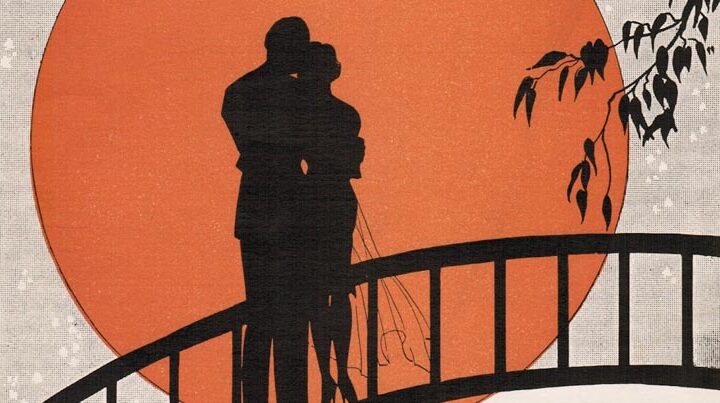
"Is There Anything Wrong in That?" original sheet music

  1. “Elsie Carlisle.” The Melody Maker. (The Gramophone Review). 4.40 (April 1, 1929): 376. ↩︎