Jay Wilbur, Solo Recordings

“More Than You Know” (1930)

“More Than You Know.” Lyrics by Billy Rose and Edward Eliscu, music by Vincent Youmans (1929). Composed for the film Great Day (unreleased). Recorded by Elsie Carlisle with Jay Wilbur and His Orchestra (uncredited) in London in late September 1930. Imperial 2362 mx. 5510-1.

Personnel: Laurie Payne-Jimmy Gordon-cl-as-bar / George Clarkson-cl-ts / Norman Cole-George Melachrino-vn / Billy Thorburn or Pat Dodd-p / Bert Thomas-g / Harry Evans-bb-sb / Jack Kosky-d-chm / Wag Abbey-x / Len Fillis-bj

Elsie Carlisle – “More Than You Know” (1930)

In “More Than You Know” we have one of those eminently successful, perennial standards that originated in a Broadway flop (one might compare “Exactly Like You,” also recorded by Elsie Carlisle). It was introduced in the musical Great Day, set in the American Deep South, which saw only 36 performances over the course of a single month. The Vincent Youmans score was so catchy, though, that Metro-Goldwyn-Mayer planned and almost completed a 1930 movie version starring Joan Crawford. Crawford was so personally disappointed with the results (including with her own acting) that she convinced the studio to rewrite and reshoot the greater part of the film and to release it in 1931, but this never happened, and a 1934 attempt starring Jeanette MacDonald also never came to fruition. The legacy of these failed shows, then, is in the songs “Without a Song” and “More Than You Know.”

“More Than You Know” shares the structure of many Broadway tunes of its time, consisting of an introduction that is melodically quite different from the verses. Its intro is even more melancholy than the rest of the song, which is sad in tone but which encapsulates an effusive expression of love for a man without respect to any flaws he might have. Elsie Carlisle’s version fully embraces the gushing quality of the lyrics while maintaining a sense of credibility and sincerity. One might compare it to her recording of “What Is This Thing Called Love?” (which she had introduced on the London stage the previous year); in both, she evokes innocence and vulnerability of a sort that is immediately attractive to the listener. It is worth noting that the Imperial label of the disc on which “More Than You Know” is recorded mentions the film Great Day; there must have still been a keen expectation of the release of the film and a corresponding need for a tie-in.

“More Than You Know” was recorded in 1929 in America by Helen Morgan, Ruth Etting, Libby Holman, and Carmel Myers. It was recorded in London in 1930-1931 by Zaidee Jackson, The Million-Airs (Arthur Lally dir., v. Maurice Elwin), Ambrose and His Orchestra (v. Sam Browne), The New Mayfair Dance Orchestra (Ray Noble dir.; in a medley), Jack Payne and His BBC Dance Orchestra (v. Val Rosing; also in a medley), Gwladys Stanley, and Bert Maddison and His Dance Orchestra (Nat Star dir., v. Dan Donovan; in a medley).
Jay Wilbur, Solo Recordings

“Wasn’t It Nice?” (1930)

“Wasn’t It Nice?” Words by Joe Young, music by Seymour Simons (1930). Recorded by Elsie Carlisle with Jay Wilbur and His Band (uncredited) in London c. October 1930. Imperial 2362 mx. 5509-1.

Personnel: Laurie Payne-Jimmy Gordon-cl-as-bar / George Clarkson-cl-ts / Norman Cole-George Melachrino-vn / Billy Thorburn or Pat Dodd-p / Bert Thomas-g / Harry Evans-bb-sb / Jack Kosky-d-chm / Wag Abbey-x / Len Fillis-bj

Elsie Carlisle – “Wasn’t It Nice?” (1930)

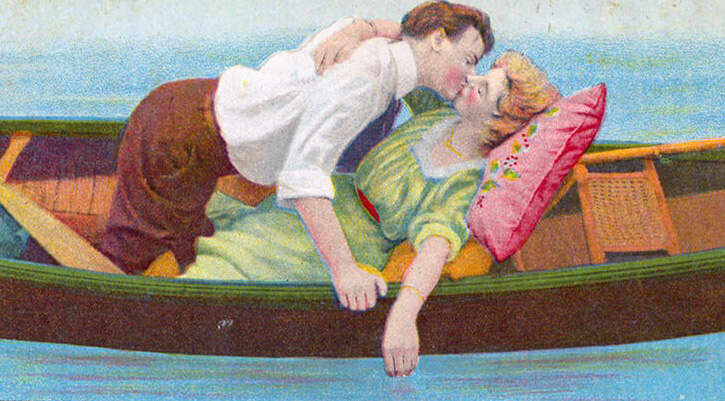
The lyrics of “Wasn’t It Nice?” describe an idyllic romantic relationship. They consist of fond recollections of the early days of that relationship and of the ensuing marriage (the refrain for each reminiscence is “Gee, dear, wasn’t it nice?”). There is a notable description of “canoedling” (cuddling in a boat, a common occupation in the years before motorcars were common enough to provide young couples with privacy). The lyrics also mention a wedding at which not only is the familiar rice thrown, but also shoes (an older practice) — one of which is nonsensically said to still have a foot in it. This last detail provides a suitable ending for a fundamentally goofy song.

Elsie Carlisle’s version of “Wasn’t It Nice?” is noteworthy for its evocation of a certain sort of almost infantile femininity. Elsie perfectly captures a mood of youthful glee which is nevertheless worlds away from the squeaky protestations of her also childlike persona in the rather sinister “Dada, Dada” (but it is worth noting that Elsie would have recorded one of her three versions of “Dada, Dada” at the same session as “Wasn’t It Nice?”) Particularly delightful is the primal girlish giggle that she emits at 2:09. The use of the chimes in the middle of the song adds to an overall feeling of simplicity and innocence, insofar as they recall the sounds of nursery toys.

“Wasn’t It Nice?” was recorded in America in 1930 by Marion Harris, Tom Clines and His Music (v. Jack Carney), The Charleston Chasers, and Aileen Stanley. Other British groups who recorded it in 1930 were Arthur Lally and the Million-Airs (v. Maurice Elwin), the Arcadians Dance Orchestra (dir. John Firman), Van Phillips and His Band (v. Billy Milton), Nat Star and His Dance Orchestra (twice: once with vocalists Fred Douglas and Jack Hodges, in a medley, and again with Fred Douglas), and one more time by Arthur Lally and the Million-Airs (v. Fred Douglas).

Cecil Norman, Solo Recordings

“Am I Blue?” (1929)

“Am I Blue?” Lyrics by Grant Clarke, music by Harry Akst. Composed for On with the Show (1929). Recorded by Elsie Carlisle (as Sheila Kay) with Cecil Norman and His Band (uncredited) in London on October 16, 1929. Worldecho A-1012 mx. 119-1.

Personnel: Cecil Norman-p dir. Lloyd Shakespeare-t / Ben Oakley-tb / Les Norman-as /vn / __ Stanley-bb / Ronnie Gubertini-d

Elsie Carlisle (as Sheila Kay) – “Am I Blue?” (1929)

“Am I Blue?” was a wildly successful composition by lyricist Grant Clarke (also famous for “Dirty Hands, Dirty Face” [1923]) and composer Harry Akst (already famous for “Dinah” [1925], he would go on to write “Guilty” in 1931). The song first appeared in 1929 in the backstage musical film On with the Show, which was the first movie to have both color and sound from beginning to end, though sadly only black-and-white prints survive. “Am I Blue?” is introduced in the movie on stage by Ethel Waters playing herself.

Waters appears on stage carrying what appears to be a basket full of cotton; the set behind her shows fields of the same stuff, and she is eventually joined by a small chorus of men dressed as farmhands. She repeatedly asks “Am I Blue?” as if she has just been asked that question. Very much so, her song goes on to say: she finds herself without her lover, who has abandoned her. The song is entirely catchy. On with the Show was financially successful, and the song “Am I Blue?” was recorded prolifically that year and has been perennially successful since then.

Elsie Carlisle’s version of “Am I Blue?” seems rather — well, bluesy — when compared to other recordings of the song made in 1929. That quality is doubtless due mostly to Cecil Norman’s band and the arrangement they used. Elsie’s own performance is difficult to describe. She is always uncommonly good at torch songs and other tearjerkers in which she seems sincere in her weepiness. In “Am I Blue?” however, it is as if she has found a song of that genre which she likes so much that it is mostly her ebullience, playfulness, and virtuosity that come through, not sadness. Elsie either had a genuinely good time making this recording, or else she gives the impression of having done so. Either way, the effect is extraordinary.

“Am I Blue?” was recorded in 1929 in America by Vaughn de Leath (as Betty Brown; also with B. A. Rolfe’s Lucky Strike Orchestra; also in a medley with the Edison Bell All Star Ensemble; and with the Colonial Club Orchestra), Ethel Waters and The Travellers, the California Ramblers (v. Irving Kaufman), Annette Hanshaw (as Gay Ellis, accompanied by the New Englanders), Irving Mills and His Modernists (v. Billy Murray), Tom Gerunovitch and His Roof Garden Orchestra (v. Jimmy Davis), The Dorsey Brothers and Their Orchestra (v. Irving Kaufman), Bill Moore’s Syncopaters (v. Paul Hagan), Helen Richards, Grace Hayes, Libby Holman, Ben Selvin and His Orchestra (v. Smith Ballew), Jimmie Noone’s Apex Club Orchestra (v. May Alix), Nat Shilkret and the Victor Orchestra (v. Don Howard), and Stella Haugh. Seger Ellis and His Embassy Club Orchestra appeared playing it in a film short; a radio transcription survives of the Dixie Shoe Steppers playing it in a medley; and there are Vitaphone recordings of “Am I Blue?” being performed by Jeanne Fayal with Jack White and His Chateau Madrid Orchestra and by Frances Shelley and the Four Eton Boys.

Other 1929 British versions of “Am I Blue?” are those of Jack Hylton and His Orchestra (v. Sam Browne), Herbert Jaeger and His Orchestra, Bidgood’s Broadcasters (first as the Manhattan Melody Makers with vocalist Mabel Mann,  later in a medley with vocalist Tom Barratt), Maurice Elwin, Lily Lapidus (with Arthur Roseberry’s Kit Cat Dance Band), John Firman’s Arcadians Dance Orchestra, Eddie Harding and His Night Club Boys (v. Tom Barratt), Alfredo’s Band (v. Eddie Grossbart), Anona Winn, Ambrose and His Orchestra (v. Lou Abelardo), Jay Wilbur and His Orchestra (v. Les Allen), Jim Kelleher’s Piccadilly Band (v. Fred Douglas), and the Rhythm Maniacs (in a medley).