Solo Recordings

“To Be Worthy of You” (1932)

“To Be Worthy of You.” Words by Benny Davis, music by John Frederick Coots (1931). Recorded by Elsie Carlisle with orchestral accompaniment on February 8, 1932. Zonophone 6069 mx. 0Y-2687-2.

Personnel: cl / Bert Firman-vn / ?Bert Read-p / ?Joe Brannelly-g / ?Billy Bell-sb

Elsie Carlisle – “To Be Worthy of You” (1932)

“To Be Worthy of You” was composed in 1931 by Benny Davis and John Frederick Coots. Davis had written the successful standard “Baby Face”  back in 1926,  and Coots would go on to co-write the best-selling “Santa Claus Is Coming to Town” in 1934.1 “To Be Worthy of You” did not have the staying power that those other songs enjoyed. Indeed, the melody falls short of being particularly infectious or compelling, and the lyrics initially seem gushy. I do think, however, that the words express sentiments that are comparatively deep for a popular song, and that Elsie Carlisle’s version is a rather elegant realization of the song’s possibilities.

At first it would seem that Elsie is merely expressing her satisfaction at having found a love partner whose merits are so great that she feels scarcely worthy of having him. In fact, she is rejoicing in having resolved to be a better person: “Watch the way that I’ll come through / To be worthy of you.” The idea of being transported, not just with the joy of love, but also with delight at having discovered in another person the means of self-improvement, is really extraordinary.

Elsie’s singing in this comparatively simple arrangement is nothing if not refined. Her anonymous accompaniment is also noteworthy, in particular the pianist, whom Richard J. Johnson tentatively identifies as Bert Read,2 a constant fixture at Elsie’s recording sessions (especially in his role as an Ambrose man). Whatever this pianist’s identity, his flourishes contribute a great deal to the overall bright, crisp sound of the recording and to the idea that we are dealing in this piece with an elevated mental state.

“To Be Worthy of You” was also recorded in a radio transcript in 1931 or 1932 in America by Gus Arnheim’s Cocoanut Grove Ambassadors (v. Loyce Whiteman). In Britain it was recorded by Roy Fox and His Band (v. Al Bowlly), Ambrose and His Orchestra (v. Sam Browne), and the Savoy Hotel Orpheans (v. Jack Plant).

  1. Not to mention “Gosh Darn,” which Elsie Carlisle would record with Ray Starita and His Ambassadors later in 1932. ↩︎
  2. Johnson, Richard J. Elsie Carlisle: A Discography. Aylesbury, UK, 1994, 14. ↩︎
Solo Recordings

“Up the Wooden Hill to Bedfordshire” (1936)

“Up the Wooden Hill to Bedfordshire.” Words by Nixon Grey, music by Nixon Grey and Reg Connelly (1936). Recorded by Elsie Carlisle with orchestral accompaniment on January 31, 1936. Decca F-5877 mx. GB-7661-1.

Elsie Carlisle – “Up the Wooden Hill to Bedfordshire” (1936)

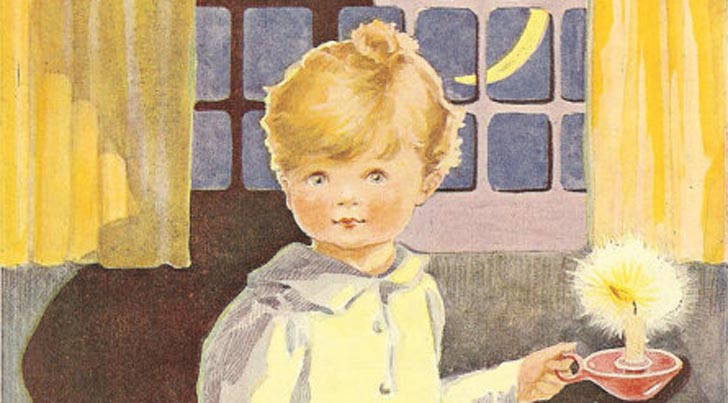
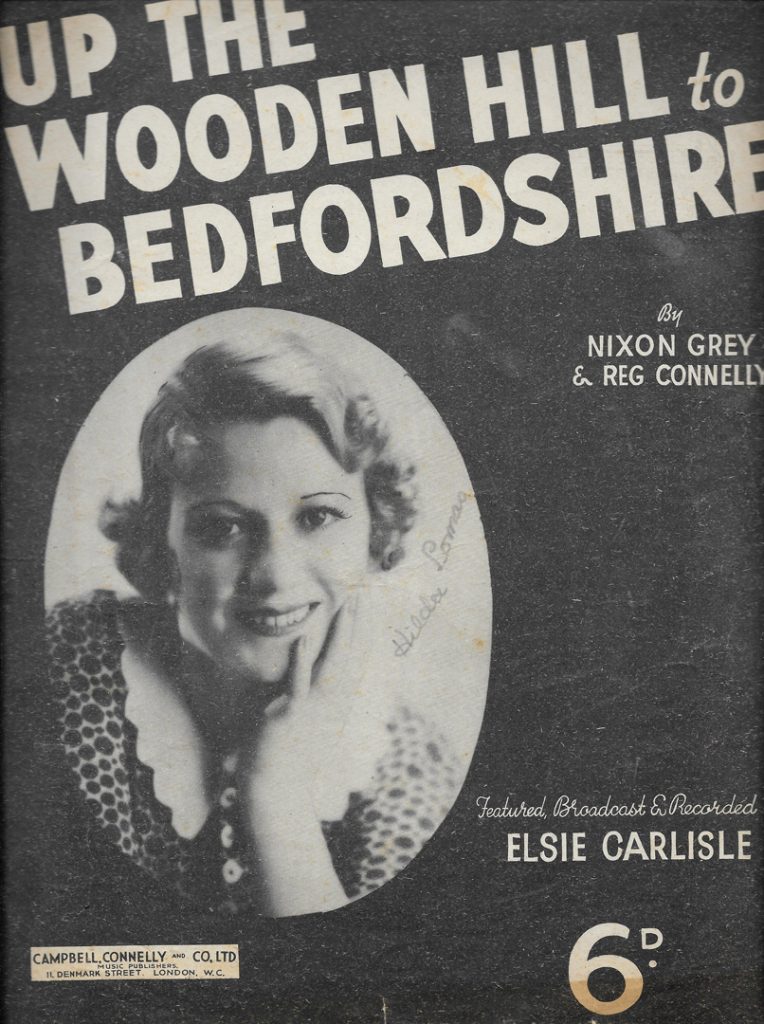
“Up the Wooden Hill to Bedfordshire” was composed by the relatively minor British lyricist Nixon Grey and the great songwriter and producer Reg Connelly (of Campbell and Connelly publishing fame). The title alludes to a childhood nickname for bedtime. As the song explains,

The old wooden hill was the old wooden stair,
And Bedfordshire, a cot, where I knelt to say my pray'r.
Climbing up the wooden hill to Bedfordshire,
They were happy, happy days for me.

The lyrics are an adult’s memory of an idyllic childhood, and especially of the joys of riding on “Dad’s” shoulders upstairs to go to sleep; in short, they are perfect treacle, but perhaps suited to the sentimental tastes of their day. One might compare them to “Little Man, You’ve Had a Busy Day,” but that earlier song is more melodically compelling and has the added bonus of possibly not really being about childhood.

Elsie Carlisle recorded “Up the Wooden Hill to Bedfordshire” at this her last session with Decca (she would not begin recording with HMV until late 1937, but is clear that she was more than busy broadcasting during that hiatus). She breathes a fair amount of life into the flawed composition, palliating its saccharinity with the appearance of sincerity. Vera Lynn also recorded this song, but her organ accompaniment makes the whole affair seem unnecessarily solemn. Elsie’s studio band can be applauded for their more playful approach to the melody; the overall effect is sweet and light.

"Up the Wooden Hill to Bedforshire" original sheet music featuring Elsie Carlisle

Solo Recordings

“The ‘Daily Herald’ Dance Medley” (1933)

“The Daily Herald Dance Medley.” Selection from Elsie Carlisle (credited) singing “Snowball” (on Decca F. 3696). Dubbing session on December 7, 1933. Decca F-3790 mx. GB-6408-1.

“The ‘Daily Herald’ Dance Medley” (1933)

In December 1933, the Daily Herald newspaper announced a holiday season contest for its readers: The Daily Herald Dance Tunes Contest. Readers were to pick out 12 dance songs from a list of 28 as their “best programme of dance music.” A group of “experts” would arrive at their own ideal line-up of tunes, and whoever had mailed in a list closest to that of the experts would win a staggering £2,500 (in the event of a tie, the money would be divided evenly among the winners).

As a commercial tie-in, two records were released with selections from each of the 28 songs, one recorded by George Scott-Wood and His Orchestra (“Dance Parade”; Regal Zonophone M.R. 1170), the other dubbed by Decca from records by its various artists (“The Daily Herald Dance Medley”).

I include the second record on my website because of the dub of Elsie Carlise’s “Snowball” (Decca F. 3696). The titles of all the songs are announced before each selection. The artists are not individually credited by the announcer, but their names are listed in a general sort of way on the label. Jack Hylton, Roy Fox, and Lew Stone are on both sides of the label, with the addition of Elsie Carlisle on side A and of Alfredo Campoli, Olive Groves, and the Britannica Piano-Accordion Band on side B. Members of the Facebook Golden Age of British Dance Bands group were kind enough to help me identify the source of each song excerpt:

  1. Isn’t It Heavenly? – Lew Stone and His Band (Decca F. 3630)
  2. Let’s Call It a Day – Roy Fox and His Band (v. Peggy Dell; F. 3631)
  3. Night and DayJack Hylton and His Orchestra (Decca F. 3698)
  4. It’s the Talk of the TownJack Hylton and His Orchestra (Decca F. 3687)
  5. The Wedding of Mister Mickey MouseJack Hylton and His Orchestra (Decca F. 3669)
  6. Lazy Bones – Lew Stone and His Orchestra (Decca F. 3644)
  7. Snowball – Elsie Carlisle (Decca F. 3636)
  8. Trouble in ParadiseJack Hylton and His Orchestra (Decca F. 3663)
  9. Reflections in the Water – Jack Hylton and His Orchestra (Decca F. 3671)
  10. Somebody Stole My Gal – Roy Fox and His Band (Decca F. 3618)
  11. Who’s Afraid of the Big Bad Wolf? – Lew Stone and His Band (Decca F. 3697)
  12. Dinner at Eight – Roy Fox and His Band (Decca F. 3685)
  13. Don’t Blame MeJack Hylton and His Orchestra (Decca F. 3659)
  14. Hold MeJack Hylton and His Orchestra (Decca F. 3600)
  15. In the Valley of the Moon – Jack Hylton and His Orchestra (Decca F. 3672)
  16. Sweet Dreams, Pretty Lady – Britannica Piano-Accordion Band (Decca F. 3683)
  17. We’re in the MoneyJack Hylton and His Orchestra (Decca F. 3672)
  18. The Last Round-Up – Jack Hylton and His Orchestra (F. 3687)
  19. I Can’t Remember – Jack Hylton and His Orchestra (F. 3612)
  20. Shadow Waltz – Jack Hylton and His Orchestra (F. 3672)
  21. Alice Blue Gown – Olive Groves (Decca F. 2361)
  22. The Saint Louis Blues – Jack Hylton and His Orchestra (v. Billy Munn; Decca. F 3239)
  23. Destiny – Alfredo Campoli and His Salon Orchestra (Decca F. 3679, side two: “Memories of the Ball – A Medley of Pre-War Waltzes”)
  24. WhisperingRoy Fox and His Band (Decca K. 713)
  25. Nights of Gladness – Alfredo Campoli and His Salon Orchestra (Decca F. 3679, side one: “Memories of the Ball – A Medley of Pre-War Waltzes”)
  26. Learn to Croon – Jack Hylton and His Band (Decca F. 3633)
  27. ThanksLew Stone and His Band (Decca F. 3722)
  28. Under a Blanket of BlueRoy Fox and His Band (Decca F. 3632)

Scorecard: 3-8, 10-21, and 23-28 identified by Terry Brown; 1-2 by John Wright; and 9 by Peter Wallace.

The original £2,500 prize was claimed and split in February 1934 by five winners whose ideal dance band programs matched those of the Daily Herald‘s panel of experts.  The winning combination?

3. Night and Day
5. The Wedding of Mister Mickey Mouse
6. Lazybones
9. Reflections in the Water
11. Who’s Afraid of the Big Bad Wolf?
12. Dinner at Eight
14. Hold Me
17. We’re in the Money
18. The Last Round-Up
20. Shadow Waltz
22. The Saint Louis Blues
27. Thanks1

  1. The Daily Herald. Friday, February 16, 1934, p. 9. ↩︎