Solo Recordings

“I Cover the Waterfront” (1933)

“I Cover the Waterfront.” Music by Johnny Green, lyrics by Edward Heyman. Recorded by Elsie Carlisle with instrumental accompaniment in London on August 2, 1933. Decca F-3628 mx. GB-6060-3.

Elsie Carlisle – “I Cover the Waterfront” (1933)

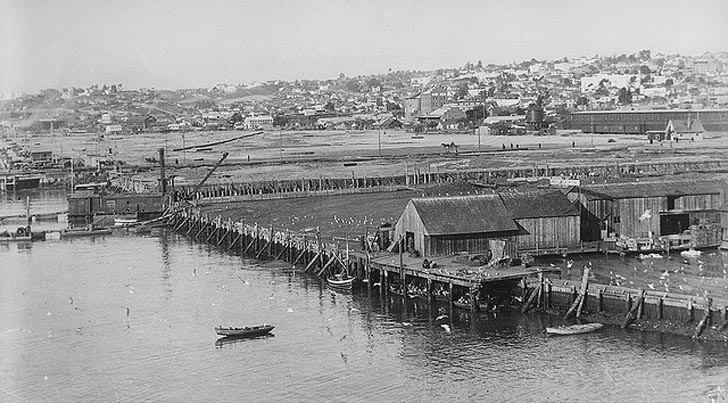
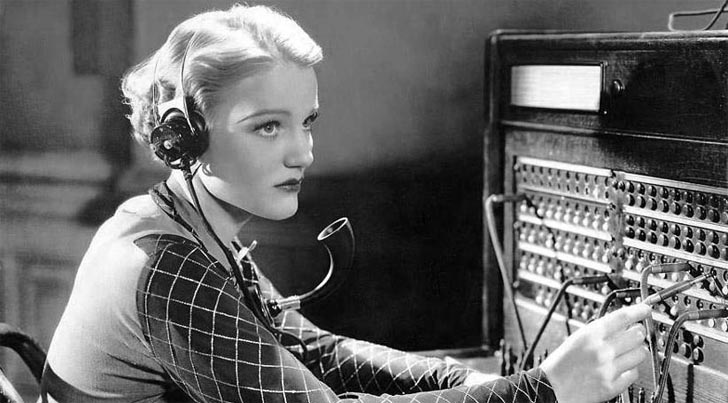
The song “I Cover the Waterfront” was inspired by a 1932 book of the same name by Max Miller, a San Diego newspaper reporter, which is a collection of factual observations about the noteworthy events and criminal intrigues of that city’s waterfront. A pre-Code film, very loosely based on some events in the book, was released in 1933, and at the last minute the already popular Green-Heyman composition was included in it. Johnny Green and Edward Heyman are, of course, most famous for their collaboration with Robert Sour and Frank Eyton on Body and Soul.

“I Cover the Waterfront” references a book whose details are not really evident in the lyrics. The sentences “I cover the waterfront / I’m watching the sea” do not unequivocally convey to an audience the idea that the singer is impersonating a newspaper reporter (which is the premise of the book). The remainder of the lyrics repeatedly explain that the singer is waiting for a lover to return. The vagueness and repetition of the words create an attractive dreaminess that fits nicely with the atmospheric melody. The overall sound of “I Cover the Waterfront” is very much of its time; the song expresses the musical sensibilities of the early 1930s as well as “Ain’t Misbehavin'” does those of the late 1920s. Elsie Carlisle’s version of “I Cover the Waterfront” is exemplary of her ability to inject sincerity and character into any song, and in this case her plaintive tone makes us feel almost as if we knew its backstory — which we don’t.

“I Cover the Waterfront” was recorded in 1933 in America by Abe Lyman and His Orchestra (v. Grace Barrie), Freddy Martin and His Orchestra (v. Will Osborne), Bert Lown and His Biltmore Orchestra (v. Mac Ceppos), Eddie Duchin and His Orchestra (v. Lew Sherwood), Joe Haymes and His Orchestra, Annette Hanshaw, Connie Boswell, and The Washboard Rhythm Kings (v. Ghost Howell). Louis Armstrong was filmed directing and singing it in a performance in Copenhagen.

In Britain it was recorded by Howard Flynn and His Orchestra (v. Phyllis Robins), the BBC Dance Orchestra (directed by Henry Hall; one version with vocals by Les Allen in July 1933, followed by an instrumental medley in August 1933), Roy Fox and His Band (v. Peggy Dell), Harry Roy and His Orchestra (v. Ivor Moreton), Bertini and His Band (v. Cavan O’Connor), Ambrose and His Orchestra (v. Sam Browne), Jack Payne and His Band (v. Billy Scott-Coomber), Debroy Somers’ Band (v. Cecile Petrie), Nat Star and His Dance Orchestra (three takes with Tom Barratt in August 1933, as well as in an instrumental medley in October 1933), Freddy Gardner and His Mess-Mates, Maurice Winnick and His Band (v. Brian Lawrance), and Geraldo and His Orchestra (in a medley).

Ambrose, Solo Recordings

“It’s the Talk of the Town” (Two Versions; 1933)

The lyrics of “It’s the Talk of the Town” present a delicate situation: a couple engaged to be married has broken up after having already sent out wedding invitations. The song could be considered a torch song, but it is an atypical one, insofar as the singer’s argument for reconciliation rests less on passionate desire than on feelings of personal embarrassment resulting from gossip, the refrain being “Everybody knows you left me: it’s the talk of the town.”

Elsie Carlisle recorded three takes of “It’s the Talk of the Town” with Ambrose and His Orchestra on October 10, 1933, but they were rejected by Brunswick. On the morning of October 13, she made a successful recording for Decca with an eight-person band whose makeup is unknown but which probably contained Ambrose men:

“It’s the Talk of the Town.” Music by Jerry Levinson, words by Marty Symes and Al J. Neiburg (1933). Recorded by Elsie Carlisle with orchestral accompaniment in London on October 13, 1933. Decca F-3696 mx. GB-6186-1.

Elsie Carlisle – “It’s the Talk of the Town” (1933)

In the early afternoon of the same day, Elsie would make her more famous and instrumentally more compelling recording of the song with Ambrose and His Orchestra. In this version, the emphasis on social awkwardness is highlighted by the band members’ snarling whisper: “IT’S THE TALK OF THE TOWN!”:

“It’s the Talk of the Town.” Recorded by Ambrose and His Orchestra with vocals by Elsie Carlisle in London on October 13, 1933. Brunswick 01607 mx. GB-6175-4.

Personnel: Bert Ambrose dir. Max Goldberg-t-mel / Harry Owen-t / Ted Heath-Tony Thorpe-tb / Danny Polo-reeds / Sid Phillips-reeds / Joe Jeannette-as / Billy Amstell-reeds / Bert Read-p / Joe Brannelly-g  / Dick Ball-sb / Max Bacon-d (also humming and speaking by members of the orchestra)

Ambrose and His Orchestra (w. Elsie Carlisle) – “It’s The Talk of The Town” (1933)

“It’s the Talk of the Town” was one of two hits written in 1933 by the team of Levinson, Symes, and Neiburg, the other being “Under a Blanket of Blue.” Neiburg had three years earlier penned the lyrics to “(I’m) Confessin’ (That I Love You),” and Levinson (under the name “Livingston”) went on in later decades to compose noteworthy music for movies and television, although his role in composing the 1943 novelty song “Mairzy Doats” should not be forgotten.

In the late summer of 1933 America saw versions of “It’s the Talk of the Town” recorded by Glen Gray’s Casa Loma Orchestra (with vocals by Kenny Sargent), Connee Boswell, Dick Robertson and His Orchestra, Will Osborne and His Orchestra, Annette Hanshaw, Red McKenzie and His Orchestra, and Fletcher Henderson and His Orchestra.

As summer turned to autumn, British bands did their own versions. In addition to Ambrose’s recording and Elsie’s solo version on Decca, there were recordings made by the BBC Dance Orchestra (under the direction of Henry Hall, with vocal refrain by Phyllis Robins), Jay Wilbur and His Band (with vocalists Dan Donovan and Phyllis Robins), Jack Hylton and His Orchestra (with vocals by Eve Becke), Billy Cotton and His Band (Alan Breeze, vocalist), Jack Payne and His Band (with vocals by Billy Scott-Coomber), Joe Loss and His Band (with Jimmy Messini), George Glover and His Band (also with Jimmy Messini), Bertini and His Orchestra (Jack Plant, vocalist), and Oscar Rabin and His Romany Band (as “Art Willis and His Band,” with vocals by Harry Davis).

Oscar Rabin, Solo Recordings

“Deep Water” (Two Versions; 1933)

“Deep Water” was composed by Hungarian-born Tin Pan Alley composer Jean Schwartz, with words by Canadian lyricist Alfred Bryan. The song employs an extended metaphor of shipwreck to describe emotional distress and a feeling of desperate loneliness. The singer complains of being submerged in deep seawater and asks for an oar, a lifeline, or, failing those, prayers or sympathy. Her plight would appear to be entirely figurative, her ailment psychological depression, not drowning; so it is funny that the refrain ends with the complaint “Deep water never drowns my troubles for me!” Here the expression “drown your sorrows” (which usually refers to resorting to alcohol) is invoked, and it clashes with the larger theme of drowning from depression. The overall effect of the song is thus a playful, rather than a genuinely depressing, one.

Elsie Carlisle first recorded “Deep Water” on a solo record, with an excellent but anonymous studio band:

“Deep Water.” Music by Jean Schwartz, lyrics by Alfred Bryan (1931). Recorded by Elsie Carlisle on March 3, 1933. Decca F-3507 mx. GB-5629-1.

Elsie Carlisle – “Deep Water” (1933)

This March recording of “Deep Water” is melancholy for its first few seconds but straightway becomes more upbeat. Elsie’s delivery of the song’s complaint is in every way fun and is complemented by a piano solo whose virtuosity drowns any idea that the song is meant to be depressing.

On May 9, 1933, Elsie recorded three takes of “Deep Water” with Oscar Rabin and His Romany Band: one on Sterno 1187, one on Four-in-One 44, and one that appeared both on Plaza P-103 (with the band identified as “Brockman’s Band”) and on Lewis L-4 (where the band is called “Phil Conrad’s Serenaders.” The arrangement that Oscar Rabin used is somewhat more morose than Elsie’s original recording but catchy nonetheless:

“Deep Water.” Recorded by Oscar Rabin and His Romany Band (as Brockman’s Band) with vocals by Elsie Carlisle on May 9, 1933. Plaza P-103 mx. L-995-1.

Personnel: Harry Davis-bj-g dir. Hamish Christie-t-tb / Johnny Swinfen-Raymond Doughty-cl-as / Sid Brown-cl-ts / Oscar Rabin-bsx-vn-ldr / Alf Kaplan-p / Cecil Walden-d

Oscar Rabin and His Romany Band (with Elsie Carlisle) – “Deep Water” (1933)

The only other contemporary recording of “Deep Water” would appear to be the one that Maurice Winnick and his band made on May 12, 1933, with vocals by Sam Browne.