Bands & Directors

“Stop the Sun, Stop the Moon” (1932)

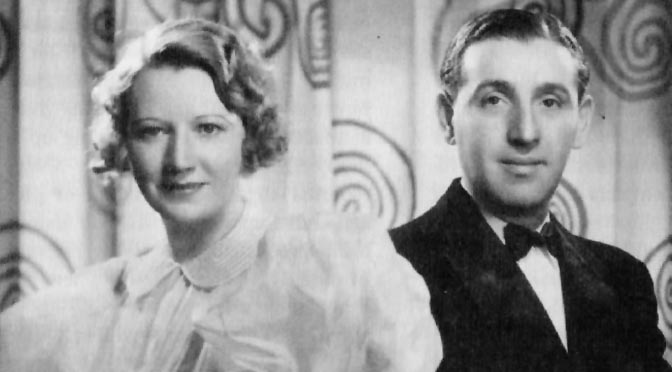
“Stop the Sun, Stop the Moon.” Words and music by Hartwell “Harty” Cook, W. Mercer Cook, and J. Russel Robinson. Recorded by Ray Starita and His Ambassadors with vocalist Elsie Carlisle on September 1, 1932. Four-in-One 6 mx. S2557-2.

Personnel: Ray Starita-reeds dir. Nat Gonella-t / tb / prob. Chester Smith-reeds / Nat Star-reeds / George Glover-reeds-vn / George Hurley-vn / George Oliver-g / Arthur Calkin-sb / Rudy Starita-d-vib-x1

Ray Starita and His Ambassadors (w. Elsie Carlisle) – “Stop the Sun, Stop the Moon” (1932)

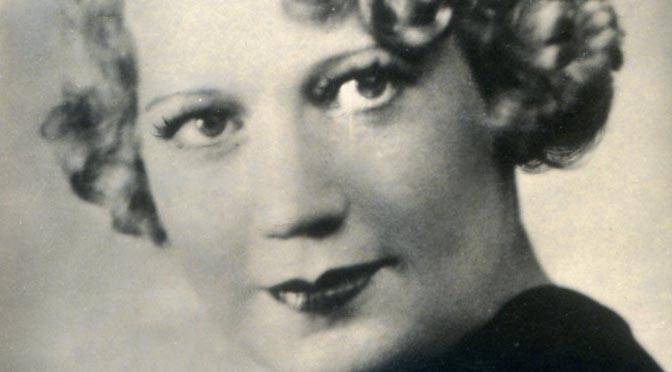
“Stop the Sun, Stop the Moon (My Man’s Gone)”2 is a 1932 composition by Harty Cook, Mercer Cook, and J. Russel Robinson (the latter two also produced the popular “Is I in Love? I Is” that same year). In this song, the singer makes almost Biblical demands for the powers of nature — and technology, for that matter — to cease their usual operations, for she has lost her man. This sort of theme was suited to Elsie Carlisle’s dramatic manner of delivery, and in this recording her impassioned complaint serves as a fitting summation to the pulsating instrumental interpretation of the tune by Ray Starita and His Ambassadors’ Band. They would do another take of the song that day with Elsie, and it appears on Sterno 1028.

There were recordings of “Stop the Sun, Stop the Moon” in America that year by Joel Shaw and His Orchestra (with vocals by Dick Robertson), Dick Robertson and His Orchestra (with vocalist Chick Bullock), the Dorsey Brothers’ Orchestra (with the Boswell Sisters), Chick Bullock and His Levee Loungers (with Chick Bullock singing), the Ted Dahl Orchestra, and Paul Whiteman and His Orchestra (with vocalist Mildred Bailey).

In addition to the two record sides made by Ray Starita with Elsie Carlisle, there was a 1932 British version of “Stop the Sun, Stop the Moon” by Ambrose and His Orchestra (with vocalist Sam Browne).
Notes:

  1. According to Brian Rust and Sandy Forbes, British Dance Bands on Record (1911-1945) and Supplement (1989), p. 1021.
  2. The subtitle of the song is also found as “My Gal’s Gone” when the singer is a man.

“Seven Years with the Wrong Woman” (1933)

“Seven Years with the Wrong Woman.”  Words and melody by Bob Miller (1932).  Recorded by Maurice Winnick and His Orchestra, with vocals by Sam Browne and Elsie Carlisle, on May 16, 1933.  Panachord 25527.

Personnel: Maurice Winnick-vn dir. Charles Price-another-t / 2tb / Harry Hayes-Harry Turoff-as / Percy Winnick-cl-ts-o / Bert Whittam -p / Bill Herbert-g / Tiny Stock-sb / Stanley Marshall-d / Max Bacon-sp (possibly -d also)

Seven Years With The Wrong Woman – Maurice Winnick & his Orchestra 1933

Transfer and video by Peter Wallace (YouTube)

“Seven Years with the Wrong Woman,” a comic hillbilly waltz by Memphis-born but New York-based Bob Miller, is the lament of an unhappily married man.  The henpecked husband and the shrewish wife are perennial stock sources of mirth, and Miller’s encapsulation of the sentiments of the former attracted the attention of such American artists as Cliff Carlisle, Parker & Dodd, Frank Luther, Mac & Bob, and Jess Hillard.  The success of the song  is attested to by Miller’s having released a second song, “Seven Years with the Wrong Man,” a year later, in which he presented the same situation from the point of view of the fairer sex.

Sam Browne and Elsie Carlisle’s duet in Maurice Winnick’s recording of “Seven Years with the Wrong Woman” is an early example of the sort of song of bickering and vituperation for which they became well known (consider also the 1934 songs “What’s Good for the Goose Is Good for the Gander” and “I’m Gonna Wash My Hands of You”).  The verses of the song are interspersed with spoken comic vignettes.  The arrangement is whimsical, and it includes a bit of Rachmaninoff’s “Prelude in C Sharp Minor.”1  The comedy is at times rather dark (“Prisoner at the bar, you are accused of striking this woman with your fist.  Why did you strike her with your fist?”  “Because I couldn’t find a hammer”).  The third speaker is Ambrose drummer Max Bacon, who liked to do comedy in a stereotypical Jewish accent whenever the chance presented itself.2

In 1933 there were other British treatments of “Seven Years with the Wrong Woman” by Jimmy Campbell and His Paramount Band (in a medley, with vocals by the Three Ginx),  Roy Fox and His Band (with vocalists Jack Plant and Sid Buckman), Ray Noble and His Orchestra (with Al Bowlly), Billy Cotton and His Band (Alan Breeze, vocalist), Syd Roy and His R.K.Olians (with Ivor Moreton), and Jack Payne and His Band (with vocalists Billy Scott-Coomber, Bob Busby, Bob Manning, and Jack Payne himself).

Notes:

  1. For a considerably more elaborate British dance band treatment of Rachmaninoff’s prelude, listen to Teddy Joyce’s recording of a Bob Busby arrangement of the piece.
  2. Many thanks to Fred Finnigan for drawing my attention to Bacon’s considerable work as an independent comedian, and not just as Britain’s premier drummer.

“You’ve Got Me Crying Again” (1933)

“You’ve Got Me Crying Again.”  Words by Charles Newman, music by Isham Jones (1933).  Recorded by Ambrose and His Orchestra with vocal refrain by Elsie Carlisle in London on May 5, 1933.  Brunswick 01523.

Personnel: Bert Ambrose dir. Max Goldberg-Harry Owen-t / Ted Heath-tb / Danny Polo-cl-as-bar / Joe Jeannette-cl-as / Harry Hayes-as / Billy Amstell-cl-ts / Ernie Lewis-Teddy Sinclair-Peter Rush-vn / Bert Read-p / Joe Brannelly-g / Don Stutely-sb / Max Bacon-d

You’ve got me crying again – Ambrose with Elsie Carlisle

Transfer by Julian Dyer (YouTube)

“You’ve Got Me Crying Again” is a particularly good torch song, or “plaintive onion-ballad of the better type,”1 if you prefer.  It is an example of a genre that Elsie Carlisle had mastered (compare her renditions of “Mean to Me,” “Body and Soul,” “He’s My Secret Passion,” “Poor Kid,” and “Have You Ever Been Lonely”), and she handles this Isham Jones piece with dramatic dexterity, combining pathos with utter cuteness.  The lyrics are the words of a person frustrated by the vicissitudes of a love relationship, but the complaints are really rather generic, and so it is impressive that Elsie is able, in the 45 seconds allotted to her, to impart character to what is fundamentally just a snippet of a speech. She outdoes herself in this recording, but she is matched by the mesmerizing instrumentals of an arrangement outstanding even by the high standards one expects of Ambrose.

Elsie Carlisle would go on to perform “You’ve Got Me Crying Again” again in the film Radio Parade (1933), where she is accompanied by a number of Ambrose’s instrumentalists.2  That performance gives one a sense of Elsie’s acting abilities; she was, after all, a lauded stage performer admired by Cole Porter, no less.  The song would make another 1933 film appearance in a performance by Ruth Etting in the short Knee Deep in Music.  But perhaps more recent audiences will be familiar with Elsie’s Ambrose version of “You’ve Got Me Crying Again” from its inclusion in Dennis Potter’s 1978 television series Pennies From Heaven, where it is mimed by actress Cheryl Campbell in lieu of Psalm 35!

In America, “You’ve Got Me Crying Again” was first recorded on February 9, 1933 by Bing Crosby.  On Valentine’s Day it was recorded by its composer, Isham Jones, with vocals by Joe Martin, and by Adrian Rollini and His Orchestra (as The Rhythm Aces), with Dick Robertson as vocalist.  That spring versions were issued by the Dorsey Brothers and Their Orchestra (Lee Wiley, vocalist), Ruth Etting, and Judy Rogers.

The same year saw British recordings by the BBC Dance Orchestra (in an arrangement by director Henry Hall, with vocals by Les Allen), Harry Roy and His Orchestra (Ivor Moreton, vocalist), Scott Wood and His Orchestra (with Sam Browne), Jack Hylton and His Orchestra (with vocals by Pat O’Malley, in a Peter Yorke arrangement), Syd Lipton and His Grosvenor House Band (as Ben Fields and His Band, with singer Cyril Grantham), The Blue Mountaineers (with vocals by Sam Browne and Nat Gonella), and Ray Noble and His Orchestra, in a Daily Herald Contest Record medley.

Notes:

  1. The Gramophone, edd. Sir Compton MacKenzie and Christopher Stone.  London, UK, v. 48, p. 1371
  2.   Peter Wallace was able to identify for me Bert Read at the piano and Max Goldberg on the trumpet.

“Dreaming of Tomorrow” (1929)

“Dreaming of Tomorrow.” Words and music by Eddie Pola and Phil Cardew. Recorded by Elsie Carlisle under the musical direction of Jay Wilbur in London c. March 1929. Dominion A. 83 mx. 1147-3.

Personnel: Jay Wilbur dir. Max Goldberg-Bill Shakespeare-t / Tony Thorpe-tb / Laurie Payne-Jimmy Gordon-George Clarkson-reeds / Norman Cole-vn / Billy Thorburn-p / Dave Thomas or Bert Thomas-bj-g / Harry Evans-bb-sb / Jack Kosky-d-x

Elsie Carlisle – “Dreaming of Tomorrow”

The “Dreaming of Tomorrow” that Elsie Carlisle recorded c. February 1929 is sometimes incorrectly identified as the 1925 composition of the same name by Benny Davis and Joe Sanders (of the Coon-Sanders Original Nighthawk Orchestra, who recorded the earlier song). Elsie’s song was actually composed in 1928 by Eddie Pola and Phil Cardew (the latter a prolific arranger for the BBC Dance Orchestra, amongst other things). It is a song that starts out melancholy but eventually becomes rather upbeat. The title and, for that matter, the lyrics, are apt to be misinterpreted as some form of optimism for the future (so common a theme in the songs of the decade to come), when really they express an intense happiness and satisfaction with the present. The singer contrasts her past infelicity with the bliss that she has found in a new relationship:

It seems to me my dreams
Will all materialize,
Since I got a glimpse
Of the love in your eyes.
Dreaming of tomorrow,
Why should I be blue?
When I know tomorrow’s
Gonna give me you?

The song is a suitable vehicle for Elsie’s technique of vocally representing a character in very little time and in few words, and she she expresses her sweet sentiments in an appropriately dreamy way.

“Dreaming of Tomorrow” had been recorded before in November 1928 by Bert and John Firman’s Arcadians Dance Orchestra, with Maurice Elwin as the vocalist. It was also recorded by Philip Lewis and His Dance Orchestra (a.k.a. the Rhythm Maniacs), under the direction of Arthur Lally, in November 1929, again with Maurice Elwin, but that take was rejected by Decca.

“Leave Me Alone with My Dreams” (1932)

“Leave Me Alone with My Dreams.” Written by Joseph George Gilbert (1932). Recorded by Ray Starita and His Ambassadors, with Elsie Carlisle as vocalist, on March 2, 1932. Sterno 923.

Personnel: Ray Starita-cl-ts dir. Sid Buckman-Nat Gonella-t / tb / probably :- Chester Smith-cl-as-bar-o / Nat Star-cl-as / George Glover-cl-ts-vn / George Hurley-vn / Harry Robens-p / George Oliver-bj-g / Arthur Calkin-sb / Rudy Starita d-vib-x1

Ray Starita – “Leave Me Alone With My Dreams”

Transfer by Mick Johnson (YouTube)

1932 was the year of Elsie Carlisle’s collaboration with Ray Starita’s Ambassadors’ Band; their output includes “Let That Be a Lesson to You,” “I Heard,” and “On a Dreamy Afternoon.” Even though she only sings for 46 seconds in their recording of “Leave Me Alone with My Dreams,” she adds a memorably wistful touch to this mellow foxtrot. In the lone verse allotted to her she alludes to the loving affection she hopes to enjoy in a fantasy world into which she has retreated. The conceit is simple yet poignant.

The music and lyrics were written by Joseph George Gilbert, who is better known for his collaborations (as lyricist) with Lawrence Wright (who often went under the pseudonym “Horatio Nicholls”). “Leave Me Alone with My Dreams” was also recorded in April 1932 by the New BBC Dance Orchestra (directed by Henry Hall, with vocals by Val Rosing, in a Douglas Brownsmith arrangement), and by Arthur Lally (Sam Brown, vocalist).

Notes:

  1. Brian Rust and Sandy Forbes, British Dance Bands on Record (1911-1945) and Supplement, p. 1020.

"The Idol of the Radio." British dance band singer of the 1920s, 1930s, and 1940s.