Embassy Rhythm Eight

“I’ve Got an Invitation to a Dance” (1935)

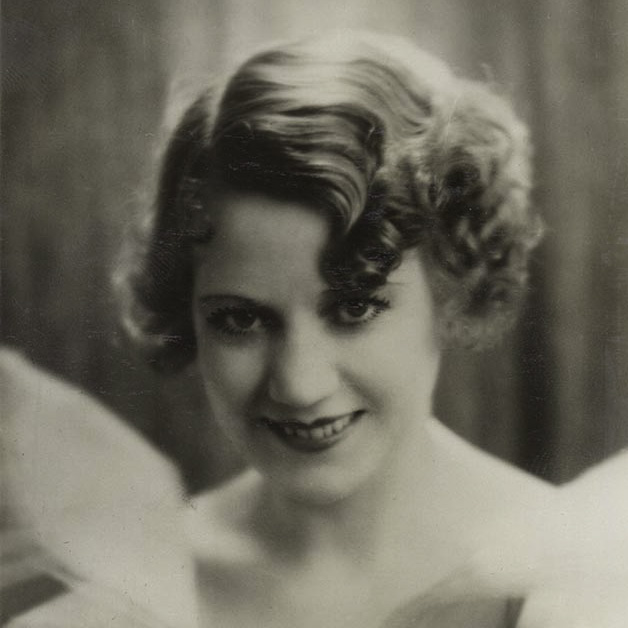
“I’ve Got an Invitation to a Dance.” Words and music by Marty Symes, Al J. Neiburg, and Jerry Levinson (1934). Recorded by Elsie Carlisle with the Embassy [Rhythm] Eight in London on February 15, 1935. Decca F-5456 mx. GB-6978-1.

Personnel: Max Goldberg-t / Lew Davis-tb / Danny Polo-cl / Billy Amstell-ts / Bert Barnes-p / Joe Brannelly-g / Dick Ball-sb / Max Bacon-d

Elsie Carlisle (with The Embassy Rhythm Eight) – “I’ve Got an Invitation to a Dance” (1935)

“I’ve Got an Invitation to a Dance” is the plaintive report of a woman who is reluctant to go to a party that might feature her ex-boyfriend (or possibly even fiancé), accompanied by a new sweetheart. Because she is hopeful for a possible reconciliation, her main concern is to prevent awkward gossip. The focus on idle talk in the context of a breakup might remind us of Elsie Carlisle’s 1933 recordings of “It’s the Talk of the Town,” and in fact that song had the same three composers.1

Elsie imbues the argument of “I’ve Got an Invitation to a Dance” with poignancy while developing a vocal persona strong enough to make up for the vagueness of the lyrics. We do not know, for example, whom the woman blames for the breakup or any of its circumstances. Elsie seems to deliberate over each syllable to reveal what we do know about her character’s motivations, namely her desire to be reunited with her lover.

The melancholy  atmosphere is enhanced by the elegant but subdued playing of The Embassy Rhythm Eight (mentioned on the label simply as The Embassy Eight), a studio recording band made up of core members of the Ambrose Orchestra. I should note that on this record (unlike the one with “Whisper Sweet” and “Dancing with My Shadow,” songs for which The Embassy Rhythm Eight almost certainly played the accompaniment), both Elsie Carlisle and the band are credited on the label — a very rare occurrence. Elsie’s records are almost perfectly divided into groups that mention her name and not the band, or that mention the band and not her. Perhaps the Embassy Rhythm Eight, which had been recently formed, wanted the extra publicity.

“I’ve Got an Invitation to a Dance” was recorded in America in 1934 by the Casa Loma Orchestra (with vocalist Kenny Sargent), Hal Kemp and His Orchestra, Paul Pendarvis and His Orchestra (with vocals by Eddie Scope), the Will Osborne Orchestra (with vocals by Will Osborne), Ruth Etting, and A. Ferdinando and His Orchestra.

British versions of “I’ve Got an Invitation to a Dance” were made in 1935 by Roy Fox and His Band (with vocalist Denny Dennis), Billy Cotton and His Band (with vocals by Harold “Chips” Chippendall), Jay Wilbur and His Band (with singer Cyril Grantham), the New Grosvenor House Band (under director Sydney Lipton, with vocalist Gerry Fitzgerald), Lou Preager and His Romano’s Restaurant Dance Orchestra (with vocal refrain by Pat Hyde), and Scott Wood and His Orchestra (in a medley).

  1. In addition to composing “It’s the Talk of the Town” and “I’ve Got an Invitation to a Dance,” Symes, Neiburg, and Levinson also collaborated on the 1935 “Star Gazing,” and Symes wrote the lyrics to “Somebody’s Thinking of You Tonight,” which Elsie would record in 1938. ↩︎
Jay Wilbur

“When the Blackbird Says ‘Bye-Bye'” (1940)

“When the Blackbird Says ‘Bye-Bye’ (and the Bluebird Says ‘Hello’).” Words and music by Art Noel and Don Pelosi (1940). Recorded by Elsie Carlisle with orchestral accompaniment under the musical direction of Jay Wilbur on December 31, 1940. Rex 9904 mx. R-5204-1.

Elsie Carlisle – “When the Blackbird Says ‘Bye-Bye'”

British songwriters Art Noel and Don Pelosi co-wrote a good number of Elsie Carlisle’s later songs: “Little Drummer Boy,” “Kiss Me Goodnight, Sergeant Major,” “A Mother’s Prayer at Twilight,” and “Nursie, Nursie” are among them (and Art Noel made still further contributions to Elsie’s songbook). “When the Blackbird Says ‘Bye-Bye'” is a particularly beautiful representation of what the British music industry could turn out even during the dark months of the Blitz. The song’s theme of blackbirds departing and the apparently preferable bluebirds appearing does not appear to me to refer to ornithological facts about changing seasons. It is, rather, to musical tradition that we must look for the roots of this upbeat theme of better times and happy reunion, to the 1920s songs “Bye Bye, Blackbird” and “My Blackbirds Are Bluebirds Now,” which also use breeds of birds to represent changing moods and fortunes.

The incredible sweetness of Elsie Carlisle’s later recording voice comes through nicely on this Rex record, which suffers from somewhat less “crackle” than the label was famous for. It is is quite satisfying to aficionados to hear Elsie reprise her famous theme of “The Clouds Will Soon Roll By” at 1:26. The orchestra is not identified on the label and the precise personnel is unknown, but the violin is particularly memorable.

“When the Blackbird Says ‘Bye-Bye'” was also recorded in 1940 by the New Mayfair Dance Orchestra (under the direction of Ronnie Munro, with vocals by Sam Browne), Geraldo and the Savoy Hotel Orchestra (with vocalist Jackie Hunter), Lew Stone and His Band (with Sam Browne), and Joe Loss and His Band (in a “Quick-Step Medley”).

Ray Noble

“Cavalcade” (1931)

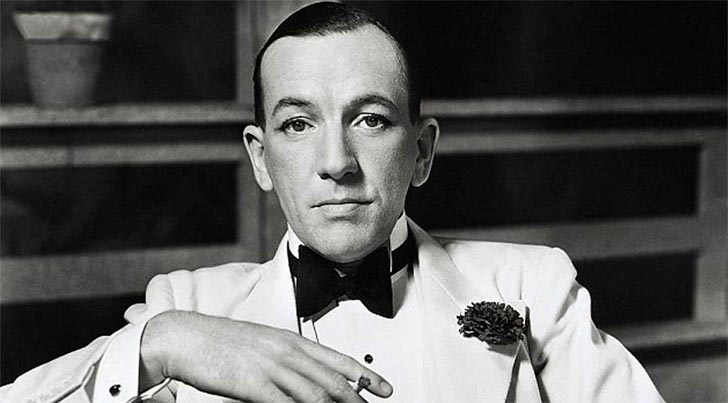
“Cavalcade.” Composed by various artists, including Noël Coward. Recorded under the direction of Ray Noble (uncredited) in London on November 24, 1931, with narration by Henry Oscar and with uncredited soloists (including Elsie Carlisle), full chorus, orchestra, and organ. HMV C-2330, matrices 2B-1546-2 and 2B-1547-1.

“Cavalcade” — Descriptive Record (1931)

“Cavalcade (32 Years of England)” is derived from a stage play of the same name by Sir Noël Coward that was enormously successful in 1931 at the Theatre Royal, Drury Lane, with 405 performances. The play concerns the life of a British family and their servants and spans over the first three decades of the twentieth century. It was the inspiration for a 1933 Fox film.

The play “Cavalcade” includes music contemporary to each period it depicts that was either chosen by Noël Coward or even written by him (“Lover of My Dreams” and “Twentieth Century Blues” were both introduced in the drama). The musical revivals inspired a number of recordings, such as the HMV medley with Noël Coward as vocalist (side one and side two), one by The New Mayfair Orchestra (under the direction of Ray Noble, with prologue and epilogue spoken by Noël Coward), and medleys by Sam Greening’s Rhythmic Troubadours, Jack Hylton and His Orchestra (both in early November and in mid-December; you may hear side A and side B of the latter on YouTube), and Jay Wilbur and His Band.

The 1931 record labelled by HMV as “‘Cavalcade’–Descriptive Record (’32 Years of England’)” credits prolific British actor Henry Oscar as narrator, but leaves the “soloists, full chorus, orchestra, and organ[ist]” unnamed. Ray Pallett has identified Ray Noble as the leader and arranger and Max Goldberg as one of the trumpet players,1

but it is the audible presence of Elsie Carlisle as soloist (and presumably also as ensemble member) that interests me most.

The numbers performed on the record include

  • Soldiers of the Queen
  • Has Anyone Seen a German Band?
  • Knocked ‘Em in the Old Kent Road
  • I Do Like to Be Beside the Seaside
  • The Merry Widow Waltz
  • It’s a Long Way to Tipperary
  • I’ll Make a Man of You
  • Our God, Our Help in Ages Past
  • Rhapsody in Blue
  • Twentieth-Century Blues
  • Pomp and Circumstance

Elsie takes the solos in “I’ll Make a Man of You” (5:29-5:58) and “Twentieth-Century Blues” (7:44-8:22). The former is a reprise of a WWI recruiting song that encourages young men to enlist by suggesting that they will get more dates. Elsie brightly sings out

On Sunday I walk out with a Soldier,
On Monday I'm taken by a Tar,
On Tuesday I'm out with a baby Boy Scout,
On Wednesday an Hussar;
On Thursday I gang out wi' a Scottie,
On Friday the Captain of the crew --
But on Saturday I'm willing, if you'll only take the shilling,
To make a man of any one of you!

Elsie’s great moment, though, comes just after an instrumental excerpt from that declaration of modernity, Gershwin’s Rhapsody in Blue. The music of Gershwin gives way to that of Noël Coward, and Elsie bursts out with

Blues!
Twentieth-century blues
Are getting me down!
Who’s
Escaped those dreary
Twentieth-century blues?
Why,
If there’s a God in the sky,
Why shouldn’t he grin?
High
Above this dreary
Twentieth-century din?

Elsie would record Coward’s music again one year later, with Mad About the Boy (recorded with Ray Starita and His Ambassadors).

Even though her role in this HMV recording is easily overlooked, Elsie distinguishes herself with gestures to music dating from the beginnings of her career as well as to current compositions. The brevity of her solos allows her to show her dexterity at summoning up a character at a moment’s notice. Bold, saucy, querulous, and comical, Elsie Carlisle shines as a talented singer on this strangely anonymous record.

  1. Liner notes to Elsie Carlisle (with a different style), a CD issued by Memory Lane in 2011. ↩︎