Gilt-Edged Four

“Meadow Lark” (1927)

“Meadow Lark.” Words by Hal Keidel, music by Ted Fiorito (1926). Recorded by Elsie Carlisle, accompanied by The Gilt-Edged Four, on February 4, 1927. Columbia 4275 mx. WA-4788-1.

Personnel: Al Starita-as / Ray Starita-ts / Sid Bright-p-cel / Len Fillis-g / Rudy Starita-x

Meadow Lark – Elsie Carlisle with The Gilt-Edged Four
Video by Jonathan David Holmes (YouTube)

“Meadow Lark” takes its name from an ingenious solution two young lovers find for a problem presented to them. Their habit of “spooning” (cuddling amorously) in a public park meets with opposition from the authorities and is forbidden. They arrange to continue meeting in the park, but after close of day, and to identify one another with a whistle approximating the call of a meadow lark — which is how this “whistling song” gets its title. Part of the fun the two young lovers are having derives from an odd pleasure some people seem to experience when they risk being caught:

A policeman just went by
Pounding his beat;
Each little kiss we steal
Is ten times as sweet!

Elsie Carlisle imbues this catchy song with sweet, ebullient fun. I am particularly fond of the way that she emphasizes “With each hug we’re oh so snug, / Like a little bug in a little old rug!” This version of “Meadow Lark” fully realizes the potential of what was already an international hit, and the accompaniment provided by The Gilt-Edged Four could not be a better match to Elsie’s perkiness: they give the impression of unstoppable, upbeat energy throughout.

“Meadow Lark” was recorded in America in 1926 by Adrian Schubert and His Salon Orchestra (with vocalist Irving Kaufman), the Isham Jones Orchestra (with vocals by Frank Munn), Bill Wirges and His Orchestra (as Phil Hughes and His High Hatters, with vocalist Tom Stacks), the Jack Albin Orchestra, Cole McElroy’s Spanish Ballroom Orchestra (with vocals by George Eichhorn), Wendell Hall, Jesse Crawford (on the organ)Duke Yellman and His Orchestra, George Olsen and His Music, Harry Reser’s Night Club Orchestra, Cliff Edwards (Ukelele Ike) and His Hot Combination, and Frances Sper. A version was broadcast by Sam ‘n’ Henry (Freeman Gosden and Charles Correll, who would later create the characters Amos ‘n’ Andy).

In Britain in 1927 versions of “Meadow Lark” were recorded by Jack Hylton and His Orchestra (with vocals by Jack Hylton), The Piccadilly Revels Band (under the direction of Ray Starita, with vocals by his brother Al), the Edison Bell Dance Orchestra (with vocalist Tom Barratt), Bert and John Firman (as Eugene Brockman’s Dance Orchestra), and the Savoy Havana Band (in a “Blue Skies Selection”).

Embassy Rhythm Eight

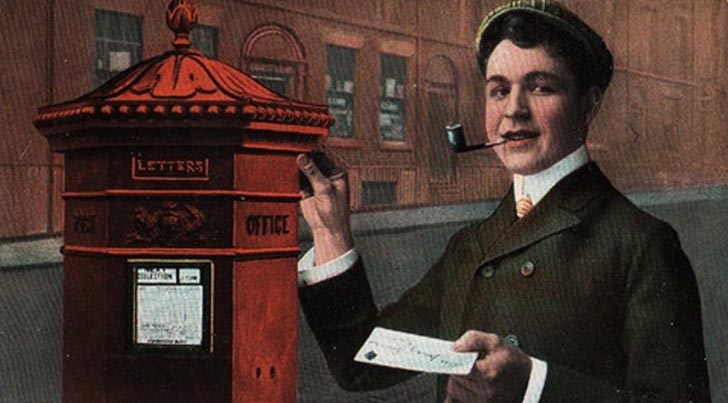
“I’m Afraid to Open Your Letter” (1935)

“I’m Afraid to Open Your Letter.” Words and music by Maurice Sigler, Al Goodhart, and Al Hoffman (1935). Recorded by Elsie Carlisle, accompanied by The Embassy Rhythm Eight, in London on February 15, 1935. Decca F-5456 mx. GB-6979-1.

Personnel: Max Goldberg-t / Lew Davis-tb / Danny Polo-cl / Billy Amstell-ts / Bert Barnes-p / Joe Brannelly-g / Dick Ball-sb / Max Bacon-d

Elsie Carlisle (with The Embassy Rhythm Eight) – “I’m Afraid to Open Your Letter” (1935)

Like the song on the reverse side of the record (“I’ve Got an Invitation to a Dance”), “I’m Afraid to Open Your Letter” is about a woman receiving a piece of mail and then deliberating, hesitating, and agonizing. In the case of this song, however, the conceit is even simpler, for as the song’s title and the singer repeatedly tell us, she does not open the letter that she has received from her lover, fearing that it is a breakup letter. She tells us nothing about her relationship or her reasons for expecting its dissolution.

Lyrics of such a basic and uncomplicated nature could prove a challenge for any singer; it is hard to repeat the same idea again and again, using virtually the same words, and still to seem sincere. Elsie Carlisle pulls it off, relying both on the inherent sweetness of her voice and on her uncanny ability to evoke with a quavering voice the idea of a weepy girl.  As is so often the case, Elsie’s success in evoking sympathy is rooted in her being not just a singer but a vocal actress.

It is rare for two songs so closely united in subject matter and tone as “I’m Afraid to Open Your Letter” and “I’ve Got an Invitation to a Dance” to end up on either side of a 78 rpm record. For the most part, the pairing of songs on a record seems entirely serendipitous. On both sides Elsie’s elegant interpretation of simple lyrics is complemented nicely by the playing of The Embassy Rhythm Eight, a studio recording band consisting of members of the Ambrose Orchestra.

“I’m Afraid to Open Your Letter” was written by three composers well-represented in Elsie Carlisle’s songbook. Maurice Sigler was a collaborator on “Little Man, You’ve Had a Busy Day”; Al Goodhart co-wrote “Fit as a Fiddle” and “Who Walks In When I Walk Out?”; Al Hoffman contributed to all three songs, as well as to “My Darling”; and all three men collaborated on “Rehearsing a Lullaby,” which Elsie would record later in 1935.

“I’m Afraid to Open Your Letter” was recorded in America in 1935 by Don Bestor and His Orchestra. In Britain recordings were made by the Casani Club Orchestra (under the direction of Charlie Kunz, with vocals by George Barclay), Teddy Joyce and His Dance Music (with vocals by the Four Smith Brothers), Phyllis Robins, Ann Summers, and Primo Scala’s Accordion Band (in a medley).

Embassy Rhythm Eight

“I’ve Got an Invitation to a Dance” (1935)

“I’ve Got an Invitation to a Dance.” Words and music by Marty Symes, Al J. Neiburg, and Jerry Levinson (1934). Recorded by Elsie Carlisle with the Embassy [Rhythm] Eight in London on February 15, 1935. Decca F-5456 mx. GB-6978-1.

Personnel: Max Goldberg-t / Lew Davis-tb / Danny Polo-cl / Billy Amstell-ts / Bert Barnes-p / Joe Brannelly-g / Dick Ball-sb / Max Bacon-d

Elsie Carlisle (with The Embassy Rhythm Eight) – “I’ve Got an Invitation to a Dance” (1935)

“I’ve Got an Invitation to a Dance” is the plaintive report of a woman who is reluctant to go to a party that might feature her ex-boyfriend (or possibly even fiancé), accompanied by a new sweetheart. Because she is hopeful for a possible reconciliation, her main concern is to prevent awkward gossip. The focus on idle talk in the context of a breakup might remind us of Elsie Carlisle’s 1933 recordings of “It’s the Talk of the Town,” and in fact that song had the same three composers.1

Elsie imbues the argument of “I’ve Got an Invitation to a Dance” with poignancy while developing a vocal persona strong enough to make up for the vagueness of the lyrics. We do not know, for example, whom the woman blames for the breakup or any of its circumstances. Elsie seems to deliberate over each syllable to reveal what we do know about her character’s motivations, namely her desire to be reunited with her lover.

The melancholy  atmosphere is enhanced by the elegant but subdued playing of The Embassy Rhythm Eight (mentioned on the label simply as The Embassy Eight), a studio recording band made up of core members of the Ambrose Orchestra. I should note that on this record (unlike the one with “Whisper Sweet” and “Dancing with My Shadow,” songs for which The Embassy Rhythm Eight almost certainly played the accompaniment), both Elsie Carlisle and the band are credited on the label — a very rare occurrence. Elsie’s records are almost perfectly divided into groups that mention her name and not the band, or that mention the band and not her. Perhaps the Embassy Rhythm Eight, which had been recently formed, wanted the extra publicity.

“I’ve Got an Invitation to a Dance” was recorded in America in 1934 by the Casa Loma Orchestra (with vocalist Kenny Sargent), Hal Kemp and His Orchestra, Paul Pendarvis and His Orchestra (with vocals by Eddie Scope), the Will Osborne Orchestra (with vocals by Will Osborne), Ruth Etting, and A. Ferdinando and His Orchestra.

British versions of “I’ve Got an Invitation to a Dance” were made in 1935 by Roy Fox and His Band (with vocalist Denny Dennis), Billy Cotton and His Band (with vocals by Harold “Chips” Chippendall), Jay Wilbur and His Band (with singer Cyril Grantham), the New Grosvenor House Band (under director Sydney Lipton, with vocalist Gerry Fitzgerald), Lou Preager and His Romano’s Restaurant Dance Orchestra (with vocal refrain by Pat Hyde), and Scott Wood and His Orchestra (in a medley).

  1. In addition to composing “It’s the Talk of the Town” and “I’ve Got an Invitation to a Dance,” Symes, Neiburg, and Levinson also collaborated on the 1935 “Star Gazing,” and Symes wrote the lyrics to “Somebody’s Thinking of You Tonight,” which Elsie would record in 1938. ↩︎