Torch songs Articles

“What Is This Thing Called Love?” (1929)

“What Is This Thing Called Love?” Composed by Cole Porter and introduced by Elsie Carlisle in C. B. Cochran’s Wake Up and Dream (1929). Recorded by Elsie Carlisle under the musical direction of Jay Wilbur in London c. May 1929. Dominion A. 125 mx. 1251-4.

Personnel: ?Max Goldberg-t / ?Tony Thorpe-tb / Laurie Payne-Jimmy Gordon-cl-as-bar / George Clarkson-cl-as-ts / Norman Cole-vn / Billy Thorburn-p / Dave Thomas or Bert Thomas-bj-g / Harry Evans-sb / Jack Kosky-d1

Elsie Carlisle – “What Is This Thing Called Love?” (1929)

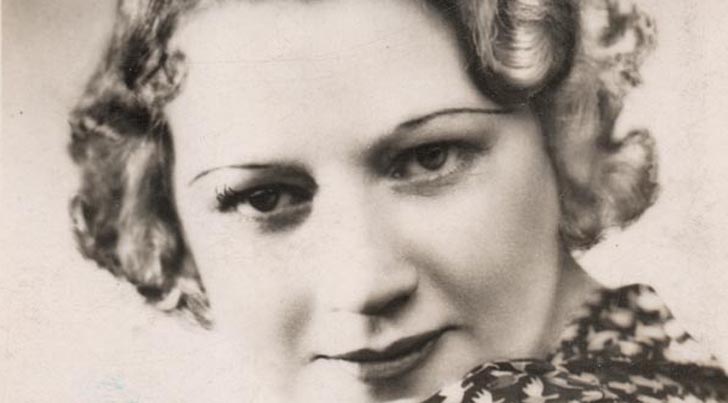
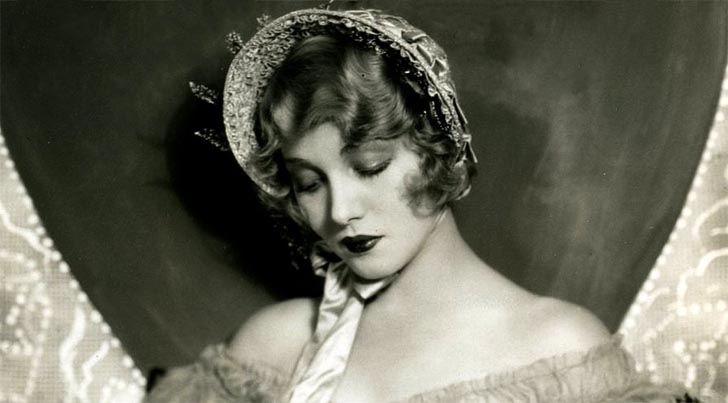
On March 27, 1929, a revue opened at the London Pavilion, C. B. Cochran’s Wake Up and Dream, which had words and lyrics by Cole Porter. One of the numbers was exotic and featured Tilly Losch and Toni Birkmayer dancing to the sound of a tom-tom beat in front of an African idol2 (the choreography, while credited to Losch, appears to have been arranged by George Balanchine).3 As they danced, Elsie Carlisle, a ten-year veteran of the London stage, introduced the world to what would become one of Porter’s best-remembered songs, “What Is This Thing Called Love?” Stephen Citron describes how Elsie, “the show’s languorous torch singer, leaned against the proscenium arch and intoned the refrain. The song…created a palpable sexuality and became the hit of the show.”4 Cole Porter is said to have personally requested that Elsie introduce the song,5 and she was billed simply as “The Girl.”

About a month later Elsie committed the song to the rather gravelly shellac of Dominion Records, with whom she had a recording contract. Dominion’s musical director was Jay Wilbur, who would oversee so many of Elsie’s recordings both early and late in her career, and the studio personnel were members of his dance band. Their throbbing accompaniment must recall the drumbeat of the stage show.

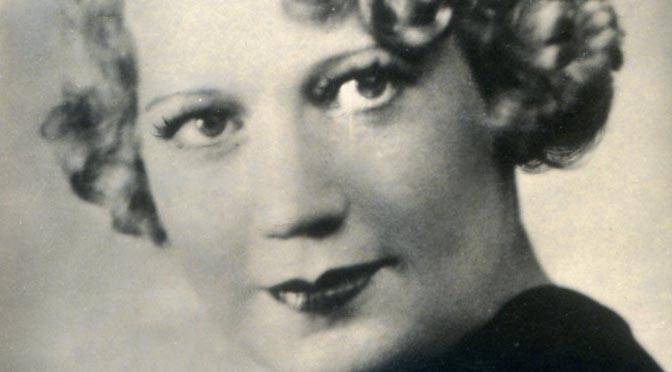
Elsie’s rendition of the song showcases her well-known talent in delivering torch songs. It is a particularly good example of her technique of allowing her voice to quaver, to falter, almost to break, thereby creating an impression of vulnerability. Elsie is so often remembered as a funny, witty, naughty singer that it would be possible to overlook how, in her torch songs and in her other love songs, she evokes such pathos that we do not even stop to question her sincerity.

Some British bands that recorded “What Is This Thing Called Love?” around the time of its opening in London and into that summer were Jack Payne and His BBC Dance Orchestra (vocals by Jack Payne), Jack Hylton and His Orchestra (with vocalist Sam Browne),  Arthur Roseberry and His Kit-Cat Dance Band (with vocal by Len Lees), Philip Lewis and His Dance Orchestra (a.k.a the Rhythm Maniacs, under the direction of Arthur Lally, with vocals by Maurice Elwin), and Harry Hudson’s Melody Men (with Eddie Grossbart); the song also occurred in medleys derived from Wake Up and Dream recorded by the New Mayfair Dance Orchestra (directed by Carrol Gibbons) and John Firman’s London Orchestra.
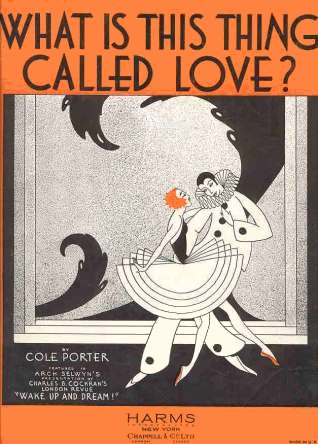
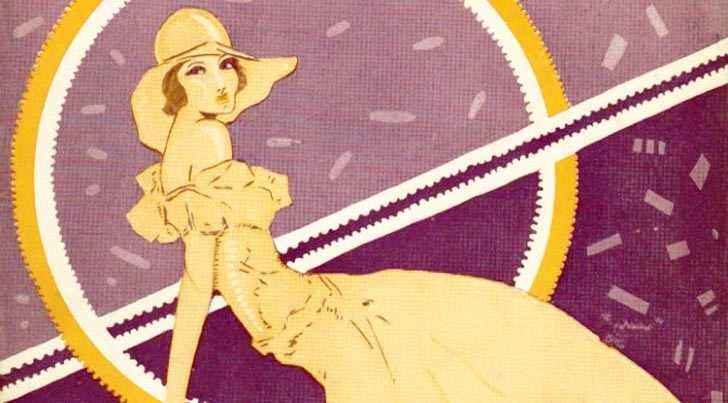
"What Is This Thing Called Love?" original sheet music
“What Is This Thing Called Love?” original sheet music

Notes:

  1. According to Richard J. Johnson in Elsie Carlisle:  A Discography, Aylesbury, 1994, p. 8.
  2. Stephen Citron, Noel & Cole: The Sophisticates, 81.
  3. George Balanchine Catalogue 91. Wake Up and Dream!
  4. Stephen Citron, ibid.
  5. Richard J. Johnson, “Elsie Carlisle (with a different style). Part Two.” Memory Lane 175 (2012): 40.

“He’s a Good Man to Have Around” (1929)

“He’s a Good Man to Have Around.” Composed by Milton Ager, with lyrics by Jack Yellen, for the 1929 film Honky Tonk. Recorded by Elsie Carlisle (as “Sheila Kay”), with Cecil Norman and His Band, in London, October 16, 1929. World Echo A. 1013.

Personnel: Lloyd Shakespeare-t / Ben Oakley-tb / Les Norman-as / vn / Cecil Norman-p / __ Stanley-bb

He’s a Good Man to Have Around – Elsie Carlisle (as Sheila Kay)

Video by David Weavings (YouTube)

“He’s a Good Man to Have Around” is a torch song fashioned loosely after the model of Mistinguett’s “Mon homme” or its English adaptation “My Man” (introduced by Fanny Brice in the 1921 Ziegfeld Follies). The singer catalogues her “man’s” various faults and insists that she loves him in spite of them. One lyrical advantage that “He’s a Good Man to Have Around” has over comparable songs (such as “Hangin’ On to That Man”) is that the man’s moral deficits creep up comically in intensity; at first one expects the song to remain light, insofar as the man’s faults are merely not being good-looking, being a poor dancer and a poor speaker, and occasionally being mildly irritating. Indeed, the lyrics as used in Elsie’s August 23, 1929 recording of the song with Philip Lewis and His Dance Orchestra (a.k.a. the Rhythm Maniacs)1 stop at this point; they complement the comparatively upbeat instrumental interpretation nicely. In the October 16 Worldecho recording, however, Elsie sings the whole song, including the parts about how her lover is untrustworthy, unfaithful, and apparently such a dangerous fellow as to warrant her having bought a pistol — which she won’t use, for “He’s a Good Man to Have Around!” Elsie Carlisle recorded this record and three others with Worldecho under the name “Sheila Kay”; as she was recording under her own name for the Dominion label at the time, it may be that contractual obligations necessitated the use of the pseudonym.

Originally written for the 1929 film Honky Tonk starring Sophie Tucker (which does not survive as a movie, although the Vitaphone soundtrack is intact), “He’s a Good Man to Have Around” was first recorded by Tucker herself (with Ted Shapiro’s Orchestra). In 1929 versions of the song were also recorded in America by Herman Kenin and His Ambassador Hotel Orchestra, Lee Morse and Her Blue Grass Boys, The Cotton Pickers (both with Libby Holman and without), Kate Smith and the Harmonians, and Jimmy Noone’s Apex Club Orchestra (with vocals by Helen Savage).

“He’s a Good Man to Have Around” was recorded in 1929 in Britain by Florence Oldham (accompanied by Len Fillis on the guitar and by Sid Bright on the piano), Lily Lapidus, the Rhythmic Eight (with vocals by Maurice Elwin), The Picadilly Players (Eddie Collis, vocalist), Mabel Marks, Belle Dyson, the Blue River Band (with vocalist Sybil Jason), and Mabel Lawrence.

Notes:

  1. It is incidentally amusing to hear take one of this Decca recording, in which Elsie gets a couple of notes wrong!

“Stop the Sun, Stop the Moon” (1932)

“Stop the Sun, Stop the Moon.” Words and music by Hartwell “Harty” Cook, W. Mercer Cook, and J. Russel Robinson. Recorded by Ray Starita and His Ambassadors with vocalist Elsie Carlisle on September 1, 1932. Four-in-One 6 mx. S2557-2.

Personnel: Ray Starita-reeds dir. Nat Gonella-t / tb / prob. Chester Smith-reeds / Nat Star-reeds / George Glover-reeds-vn / George Hurley-vn / George Oliver-g / Arthur Calkin-sb / Rudy Starita-d-vib-x1

Ray Starita and His Ambassadors (w. Elsie Carlisle) – “Stop the Sun, Stop the Moon” (1932)

“Stop the Sun, Stop the Moon (My Man’s Gone)”2 is a 1932 composition by Harty Cook, Mercer Cook, and J. Russel Robinson (the latter two also produced the popular “Is I in Love? I Is” that same year). In this song, the singer makes almost Biblical demands for the powers of nature — and technology, for that matter — to cease their usual operations, for she has lost her man. This sort of theme was suited to Elsie Carlisle’s dramatic manner of delivery, and in this recording her impassioned complaint serves as a fitting summation to the pulsating instrumental interpretation of the tune by Ray Starita and His Ambassadors’ Band. They would do another take of the song that day with Elsie, and it appears on Sterno 1028.

There were recordings of “Stop the Sun, Stop the Moon” in America that year by Joel Shaw and His Orchestra (with vocals by Dick Robertson), Dick Robertson and His Orchestra (with vocalist Chick Bullock), the Dorsey Brothers’ Orchestra (with the Boswell Sisters), Chick Bullock and His Levee Loungers (with Chick Bullock singing), the Ted Dahl Orchestra, and Paul Whiteman and His Orchestra (with vocalist Mildred Bailey).

In addition to the two record sides made by Ray Starita with Elsie Carlisle, there was a 1932 British version of “Stop the Sun, Stop the Moon” by Ambrose and His Orchestra (with vocalist Sam Browne).

Notes:

  1. According to Brian Rust and Sandy Forbes, British Dance Bands on Record (1911-1945) and Supplement (1989), p. 1021.
  2. The subtitle of the song is also found as “My Gal’s Gone” when the singer is a man.

“You’ve Got Me Crying Again” (1933)

“You’ve Got Me Crying Again.”  Words by Charles Newman, music by Isham Jones (1933).  Recorded by Ambrose and His Orchestra with vocal refrain by Elsie Carlisle in London on May 5, 1933.  Brunswick 01523.

Personnel: Bert Ambrose dir. Max Goldberg-Harry Owen-t / Ted Heath-tb / Danny Polo-cl-as-bar / Joe Jeannette-cl-as / Harry Hayes-as / Billy Amstell-cl-ts / Ernie Lewis-Teddy Sinclair-Peter Rush-vn / Bert Read-p / Joe Brannelly-g / Don Stutely-sb / Max Bacon-d

You’ve got me crying again – Ambrose with Elsie Carlisle

Transfer by Julian Dyer (YouTube)

“You’ve Got Me Crying Again” is a particularly good torch song, or “plaintive onion-ballad of the better type,”1 if you prefer.  It is an example of a genre that Elsie Carlisle had mastered (compare her renditions of “Mean to Me,” “Body and Soul,” “He’s My Secret Passion,” “Poor Kid,” and “Have You Ever Been Lonely”), and she handles this Isham Jones piece with dramatic dexterity, combining pathos with utter cuteness.  The lyrics are the words of a person frustrated by the vicissitudes of a love relationship, but the complaints are really rather generic, and so it is impressive that Elsie is able, in the 45 seconds allotted to her, to impart character to what is fundamentally just a snippet of a speech. She outdoes herself in this recording, but she is matched by the mesmerizing instrumentals of an arrangement outstanding even by the high standards one expects of Ambrose.

Elsie Carlisle would go on to perform “You’ve Got Me Crying Again” again in the film Radio Parade (1933), where she is accompanied by a number of Ambrose’s instrumentalists.2  That performance gives one a sense of Elsie’s acting abilities; she was, after all, a lauded stage performer admired by Cole Porter, no less.  The song would make another 1933 film appearance in a performance by Ruth Etting in the short Knee Deep in Music.  But perhaps more recent audiences will be familiar with Elsie’s Ambrose version of “You’ve Got Me Crying Again” from its inclusion in Dennis Potter’s 1978 television series Pennies From Heaven, where it is mimed by actress Cheryl Campbell in lieu of Psalm 35!

In America, “You’ve Got Me Crying Again” was first recorded on February 9, 1933 by Bing Crosby.  On Valentine’s Day it was recorded by its composer, Isham Jones, with vocals by Joe Martin, and by Adrian Rollini and His Orchestra (as The Rhythm Aces), with Dick Robertson as vocalist.  That spring versions were issued by the Dorsey Brothers and Their Orchestra (Lee Wiley, vocalist), Ruth Etting, and Judy Rogers.

The same year saw British recordings by the BBC Dance Orchestra (in an arrangement by director Henry Hall, with vocals by Les Allen), Harry Roy and His Orchestra (Ivor Moreton, vocalist), Scott Wood and His Orchestra (with Sam Browne), Jack Hylton and His Orchestra (with vocals by Pat O’Malley, in a Peter Yorke arrangement), Syd Lipton and His Grosvenor House Band (as Ben Fields and His Band, with singer Cyril Grantham), The Blue Mountaineers (with vocals by Sam Browne and Nat Gonella), and Ray Noble and His Orchestra, in a Daily Herald Contest Record medley.

Notes:

  1. The Gramophone, edd. Sir Compton MacKenzie and Christopher Stone.  London, UK, v. 48, p. 1371
  2.   Peter Wallace was able to identify for me Bert Read at the piano and Max Goldberg on the trumpet.

“Have You Ever Been Lonely?” (1933)

“Have You Ever Been Lonely?” Music by Peter De Rose, lyrics by Billy Hill (using the pseudonym George Brown; 1932). Recorded by Elsie Carlisle in London on February 14, 1933. Decca F-3435 mx. GB-5586-1.

Elsie Carlisle – “Have You Ever Been Lonely?” (1933)

In the 1933 song “Have You Ever Been Lonely?” one can detect the musical sensibilities of composer Peter De Rose, who would write “Deep Purple” to great acclaim the following year. The lyricist deserves attention, too; it was Billy Hill who collaborated with Harry Woods to produce “The Clouds Will Soon Roll By,” which Elsie Carlisle recorded twice in 1932, and which for modern listeners might be her trademark song, in no small part due to Dennis Potter’s Pennies from Heaven television series. “The Clouds Will Soon Roll By,” however, seems very much bound to the era of its composition and has inspired few interpretations by artists since the 1930s, whereas “Have You Ever Been Lonely?” has been recorded frequently and qualifies as a standard. Perhaps it is the latter song’s simple, timeless theme which makes it so attractive to different musical treatments.

Elsie Carlisle brings to this comparatively light torch song her talent for evoking pathos with a voice that quavers selectively and whose timbre (especially around the high notes) suggests an attractive vulnerability. Her delivery is dramatic but precise: when at 2:20 she asks “How can I go on living / Now that we’re apart?” there is the faintest hint of a mournful gulp when she pronounces the word “how.” The languid pace of the recording suits her melancholy interpretation (one might compare the excellent Ray Noble/Al Bowlly version for an example of a faster-paced, generally more upbeat rendition of the tune).

“Have You Ever Been Lonely was recorded in America in 1933 by Ted Lewis and His Band, Adrian Rollini and His Orchestra (with vocals by Dick Robertson), and Chick Bullock and His Orchestra. The song was more prolifically recorded by British bands, including Maurice Winnick and His Band (with vocalist Louis Spiro), Ray Noble and His Orchestra (with Al Bowlly), Jack Hylton and His Orchestra (with Pat O’Malley as vocalist, in a Billy Ternent arrangement), Henry Hall’s B.B.C. Dance Orchestra (with a vocal trio including Sam Browne, in a Sid Phillips arrangement), Sam Browne and Billie Lockwood (as “Jack and Jill”), Harry Roy and His Orchestra (Ivor Moreton, vocalist), Syd Roy and His R.K. Olians (with vocals by Sam Browne), Jack Payne and His Band (with a vocal trio of Billy Scott-Coomber, Bob Busby, and Bob Manning), and Jay Wilbur and His Band (with vocalist Val Rosing). “Have You Ever Been Lonely?” also appeared in medleys by Phil Green’s Studio Orchestra, Jimmy Campbell and His Paramount Band, and Ray Noble and His Orchestra (on a Daily Herald Contest Record).

"The Idol of the Radio." British dance band singer of the 1920s, 1930s, and 1940s.