Bands & Directors

“When My Dreams Come True” (1929)

“When My Dreams Come True.” Composed by Irving Berlin for the Marx Brothers film The Cocoanuts (1929). Recorded by Philip Lewis and His Orchestra (a.k.a. the Rhythm Maniacs) under the musical direction of Arthur Lally with vocalist Elsie Carlisle in London on September 14, 1929. Decca F. 1539 mx. DJ49-1.

Personnel: Arthur Lally cl-bas-bsx dir. Sylvester Ahola-t / Danny Polo-cl-as-ss / Johnny Helfer-ts / Claude Ivy-p / Joe Brannelly-g / Max Bacon-d-vib

The Rhythm Maniacs (v. Elsie Carlisle) – “When My Dreams Come True” (1929)

When I first heard The Rhythm Maniacs’ recording of “When My Dreams Come True,”1 it came as quite a surprise: here was Elsie Carlisle singing a vocal part mistakenly attributed to the male singer Maurice Elwin by Rust and Forbes’s British Dance Bands on Record (a.k.a “The Bible”). Indeed, this side has been overlooked by the discographies covering Elsie’s recording career, and Elsie’s role in this Rhythm Maniacs session has been noted in print only by Dick Hill.2

“When My Dreams Come True” is the leitmotiv of Paramount’s 1929 The Cocoanuts, the first Marx Brothers feature. The song is introduced by Oscar Shaw and Mary Eaton but performed throughout by a number of characters (including twice by Harpo, on clarinet and harp). The Cocoanuts is a successful comedy, but it suffers from the awkwardness of other early sound films, which struggled with the novel problem of trying to integrate song-and-dance routines with non-musical material.

Elsie Carlisle’s recording with the Rhythm Maniacs lacks any such awkwardness: she sings with confidence and ebullience, especially when we compare her singing on this record to her excellent but admittedly slightly flawed first session with the same band. In the first takes of “Come On, Baby” and “He’s a Good Man to Have Around,” Elsie even hits a couple of false notes! In contrast, Elsie’s 38-second delivery of the refrain of “When My Dreams Come True” is nearly flawless, and Elsie makes the mental “Spanish castle” of the lyrics sound like an invitingly happy place.

“When My Dreams Come True” was recorded in America in 1929 by Franklyn Baur, Paul Whiteman and His Orchestra (with vocalist Jack Fulton), Hal Kemp and His Orchestra (with vocals by Skinnay Ennis), and Phil Spitalny’s Music (with the Pauli Sisters). It was made popular in Britain in 1929 by Bidgood’s Broadcasters (as Al Benny’s Broadway Boys, with vocalist Cavan O’Connor), The Gilt-Edged Four (with vocals by Norah Blaney), Betty Bolton, and by Stanley Kirkby and Rene Valma. In March 1930 it was recorded by Harry Hudson’s Radio Melody Boys (with vocalist Sam Browne).
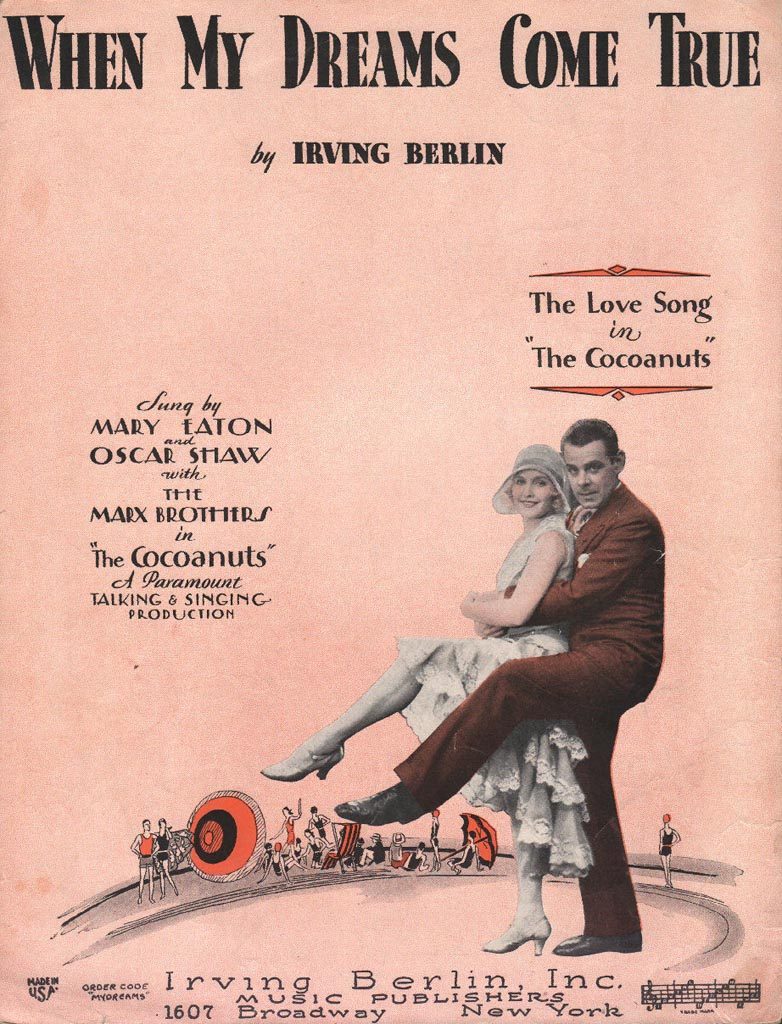
"When My Dreams Come True." Original sheet music (1929).

Notes:

  1. On the YouTube channel of David Weavings (a.k.a. “jackpaynefan”), where you may find other rare Elsie Carlisle songs.
  2. Silvester Ahola: The Gloucester Gabriel, “Discography,” especially pp. 151-155 (Metuchen, New Jersey, 1993). My thanks to John Wright and Barry McCanna for referring me to this fascinating volume.

“Am I Blue?” (1929)

“Am I Blue?” Lyrics by Grant Clarke, music by Harry Akst. Composed for On with the Show (1929). Recorded by Elsie Carlisle (as Sheila Kay) with Cecil Norman and His Band (uncredited) in London on October 16, 1929. Worldecho A. 1012 mx. 119.

Personnel: Cecil Norman-p dir. Lloyd Shakespeare-t / Ben Oakley-tb / Les Norman-as /vn / __ Stanley-bb / Ronnie Gubertini-d

Elsie Carlisle (as Sheila Kay) – “Am I Blue?” (1929)

“Am I Blue?” was a wildly successful composition by lyricist Grant Clarke (also famous for “Dirty Hands, Dirty Face” [1923]) and composer Harry Akst (already famous for “Dinah” [1925], he would go on to write “Guilty” in 1931). The song first appeared in 1929 in the backstage musical film On with the Show, which was the first movie to have both color and sound from beginning to end, though sadly only black-and-white prints survive. “Am I Blue?” is introduced in the movie on stage by Ethel Waters playing herself.

Waters appears on stage carrying what appears to be a basket full of cotton; the set behind her shows fields of the same stuff, and she is eventually joined by a small chorus of men dressed as farmhands. She repeatedly asks “Am I Blue?” as if she has just been asked that question. Very much so, her song goes on to say: she finds herself without her lover, who has abandoned her. The song is entirely catchy. On with the Show was financially successful, and the song “Am I Blue?” was recorded prolifically that year and has been perennially successful since then.

Elsie Carlisle’s version of “Am I Blue?” seems rather — well, bluesy — when compared to other recordings of the song made in 1929. That quality is doubtless due mostly to Cecil Norman’s band and the arrangement they used. Elsie’s own performance is difficult to describe. She is always uncommonly good at torch songs and other tearjerkers in which she seems sincere in her weepiness. In “Am I Blue?” however, it is as if she has found a song of that genre which she likes so much that it is mostly her ebullience, playfulness, and virtuosity that come through, not sadness. Elsie either had a genuinely good time making this recording, or else she gives the impression of having done so. Either way, the effect is extraordinary.

“Am I Blue?” was recorded in 1929 in America by Vaughn de Leath (as Betty Brown; also with B. A. Rolfe’s Lucky Strike Orchestra; also in a medley with the Edison Bell All Star Ensemble; and with the Colonial Club Orchestra), Ethel Waters and The Travellers, the California Ramblers (v. Irving Kaufman), Annette Hanshaw (as Gay Ellis, accompanied by the New Englanders), Irving Mills and His Modernists (v. Billy Murray), Tom Gerunovitch and His Roof Garden Orchestra (v. Jimmy Davis), The Dorsey Brothers and Their Orchestra (v. Irving Kaufman), Bill Moore’s Syncopaters (v. Paul Hagan), Helen Richards, Grace Hayes, Libby Holman, Ben Selvin and His Orchestra (v. Smith Ballew), Jimmie Noone’s Apex Club Orchestra (v. May Alix), Nat Shilkret and the Victor Orchestra (v. Don Howard), and Stella Haugh. Seger Ellis and His Embassy Club Orchestra appeared playing it in a film short; a radio transcription survives of the Dixie Shoe Steppers playing it in a medley; and there are Vitaphone recordings of “Am I Blue?” being performed by Jeanne Fayal with Jack White and His Chateau Madrid Orchestra and by Frances Shelley and the Four Eton Boys.

Other 1929 British versions of “Am I Blue?” are those of Jack Hylton and His Orchestra (v. Sam Browne), Herbert Jaeger and His Orchestra, Bidgood’s Broadcasters (first as the Manhattan Melody Makers with vocalist Mabel Mann,  later in a medley with vocalist Tom Barratt), Maurice Elwin, Lily Lapidus (with Arthur Roseberry’s Kit Cat Dance Band), John Firman’s Arcadians Dance Orchestra, Eddie Harding and His Night Club Boys (v. Tom Barratt), Alfredo’s Band (v. Eddie Grossbart), Anona Winn, Ambrose and His Orchestra (v. Lou Abelardo), Jay Wilbur and His Orchestra (v. Les Allen), Jim Kelleher’s Piccadilly Band (v. Fred Douglas), and the Rhythm Maniacs (in a medley).

“Shake Down the Stars” (1940)

“Shake Down the Stars.” Words by Eddie De Lange, music by Jimmy Van Heusen (1940). Recorded by Elsie Carlisle under the musical direction of Jay Wilbur in London on August 8, 1940. Rex 9847 mx. R4937-2.

Elsie Carlisle – “Shake Down the Stars” (1940)

“Shake Down the Stars” was the creation of prolific songwriting duo Eddie De Lange and Jimmy Van Heusen (who also wrote the similarly atmospheric “Deep in a Dream”). Its singer addresses the aftermath of the dissolution of a romantic relationship. In doing so, she calls for a corresponding dissolution of the natural order:

Shake down the stars,
Pull down the clouds,
Turn off the moon….
I wish I had a high stepladder
So I could scatter the stars….

The singer really says very little about her relationship, but she makes it clear how devastating its cessation is to her through the use of impressive hyperbole; in this way, the song resembles closely the 1932 song “Stop the Sun, Stop the Moon,” which Elsie Carlisle also recorded. In addition to the calls for the the astronomical order to be disrupted, the singer turns to the smaller things in life: “Crush every rose, / Hush every prayer…. / I know I can’t go on without you.” The impression is of a person to whom life has become worse than worthless: its continued existence is a mockery in light of her loss.

“Shake Down the Stars” was recorded by many artists in 1940. Elsie Carlisle’s version stands out as perhaps the least swingy of the lot, which is natural, insofar as it is intended to showcase the vocalist, not the band. The result is refreshing: Elsie’s more dramatic interpretation of the unusually tempestuous lyrics is more impressive to me than the other excellent versions. The novel rhythms of the latter are so distractingly upbeat that one almost forgets that the song is about destroying the universe out of frustration.

“Shake Down the Stars” was recorded in 1940 in America by George Auld and His Orchestra (v. Kay Foster), Bob Crosby and His Orchestra (v. Bob Crosby), Glenn Miller and His Orchestra (v. Ray Eberle), Chick Bullock, Tommy Dorsey and His Orchestra (v. Frank Sinatra)Benny Goodman and His Orchestra (v. Helen Forrest), and Ella Fitzgerald and Her Famous Orchestra.

In 1940, British bands who recorded “Shake Down the Stars” include Harry Roy and His Band (v. Kay Harding), Carroll Gibbons and the Savoy Hotel Orpheans (v. Anne Lenner), Oscar Rabin (v. Beryl Davis), and Mantovani and His Orchestra.

“Is There Anything Wrong in That?” (1929)

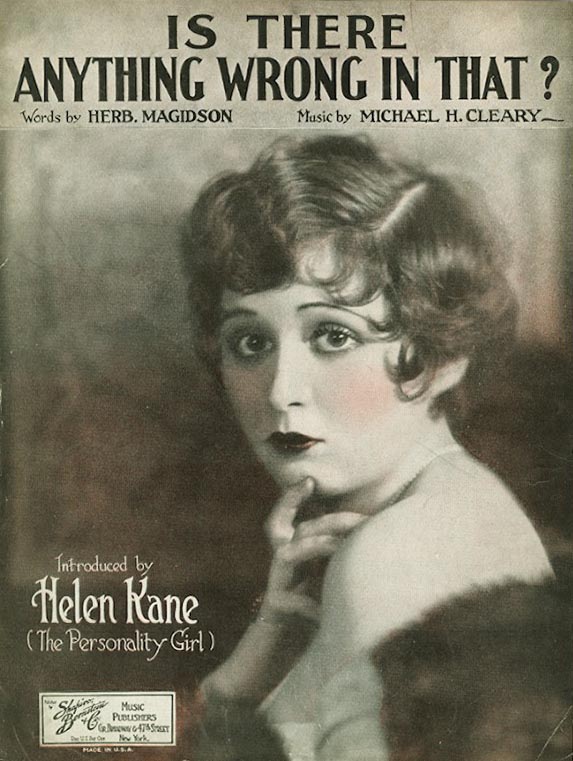
“Is There  Anything Wrong in That?” Words by Herb Magidson, music by Michael H. Cleary (1928). Recorded by Elsie Carlisle with accompaniment by Jay Wilbur’s Orchestra in London c. March 1929. Dominion A. 83 mx. 1148-2.

Personnel: Max Goldberg-Bill Shakespeare-t / Tony Thorpe-tb / Laurie Payne-Jimmy Gordon-cl-as-bar / George Clarkson-cl-as-ts / Norman Cole-vn / Billy Thorburn-p / Dave Thomas or Bert Thomas-bj-g / Harry Evans-bb-sb / Jack Kosky-d

Elsie Carlisle – “Is There Anything Wrong in That?” (1929)

A 1929 review of Dominion A. 83 explains

Little Elsie has tried two extreme opposites this month. “Dreaming of To-morrow” is a rhythmical but sentimental number. The other one is of the “Naughty” type; it fits Elsie like a glove and is just the thing for everyone (except your maiden aunt).1

In “Is There Anything Wrong in That?” the singer repeatedly expresses hesitance, doubt, and more than anything, ignorance with regard to basic questions of morality. She explains, “I can’t tell the bad things from the good,” and “I can’t tell the naughty from the nice.” Her misdeeds appear to consist of taking gifts in exchange for sexual favors; she also seems to use her attractiveness to facilitate the theft of a fur-lined coat and a Cadillac!

The most familiar recordings of this song are by Helen Kane and Annette Hanshaw, both of whom use the persona of a Bronx-accented baby vamp. Their exaggerated little girl voices complement their bogus claims of ignorance and innocence. Elsie Carlisle, by contrast, uses an adult voice, so the comic effect is more subtle. Elsie sings mostly in a parlando style, where the delivery of the lines is close to natural speech. Her more natural intonation gives her leeway to emphasize the lyrics’ ridiculous statements.

“Is There Anything Wrong in That?” was recorded in 1928-1929 in America by Helen Kane, Beth Challis, Annette Hanshaw, Ermine Callway (with the Seven Blue Babies), and Helen Charleston (with Ken Murray). In Britain it was recorded in 1929 by Lily Lapidus and The Rhythmic Eight.

"Is There Anything Wrong in That?" original sheet music

Notes:

  1. “Elsie Carlisle.” The Melody Maker. (The Gramophone Review). 4.40 (April 1, 1929): 376.

“Room Five-Hundred-and-Four” (1941)

“Room Five-Hundred-and-Four.” Words by Eric Maschwitz, music by George Posford. Composed for the Eric Maschwitz revue New Faces (1940). Recorded by Elsie Carlisle under the musical direction of Jay Wilbur in London on February 10, 1941. Rex 9934.

Elsie Carlisle – “Room Five-Hundred-and-Four” (1941)

Original 78 rpm Transfer by Charles Hippisley-Cox

“Room Five-Hundred-and-Four” has its origins in the 1940 revue New Faces, which is also where “A Nightingale Sang in Berkeley Square” was introduced. The lyrics describe a woman’s happy memory of a night spent with her lover in a luxury hotel too expensive for either of them. She describes the night as “her very first and only rendezvous,” and for good reason: this comparatively wholesome song is about a honeymoon, not a tryst. It is tame, therefore, by the standards of Elsie Carlisle’s songbook, which includes not just “My Man o’ War” but also “Public Sweetheart No. 1.”

Elsie Carlisle committed “Room Five-Hundred-and-Four” to shellac in her last year of recording. While I generally prefer the underlying compositions of her earlier period, it is delightful to hear her voice on her later Rex-label records. Elsie’s later style of singing seems slightly more confident, and the crisp beauty of her voice is made even more evident by the more modern recording techniques available by that time — in spite of Rex’s reputation for “crackly” shellac. The studio band’s virtuosity is showcased nicely in their rather swingy instrumental segment.

Other versions of “Room Five-Hundred-and-Four” were recorded in Britain in 1940-1941 by Vera Lynn (accompanied by Jay Wilbur and His Band), Geraldo and His Orchesta (v. Dorothy Carless), The Savoy Hotel Orpheans (dir. Carroll Gibbons, v. Anne Lenner), Ambrose and His Orchestra (v. Ann Shelton), Leslie “Hutch” Hutchinson, again by Jay Wilbur and His Band (v. Anne Lenner), and by Binnie Hale.

"Room Five-Hundred-and-Four" sheet music
“Room Five-Hundred-and-Four” sheet music

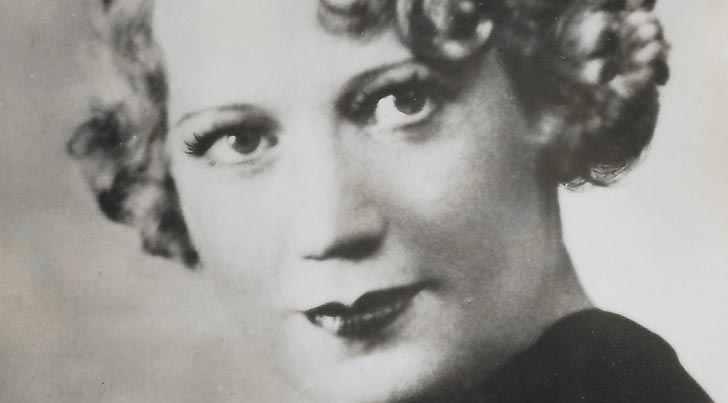
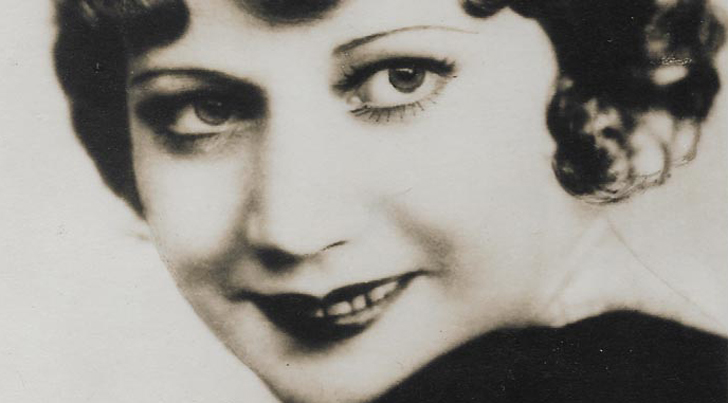
"The Idol of the Radio." British dance band singer of the 1920s, 1930s, and 1940s.