
Cecil Norman, Solo Recordings

“He’s a Good Man to Have Around” (1929)

“He’s a Good Man to Have Around.” Composed by Milton Ager, with lyrics by Jack Yellen, for the 1929 film Honky Tonk. Recorded by Elsie Carlisle (as “Sheila Kay”), with Cecil Norman and His Band, in London, October 16, 1929. World Echo A-1013 mx. 120-1.

Personnel: Lloyd Shakespeare-t / Ben Oakley-tb / Les Norman-as / vn / Cecil Norman-p / __ Stanley-bb

He’s a Good Man to Have Around – Elsie Carlisle (as Sheila Kay)
Video by David Weavings (YouTube)

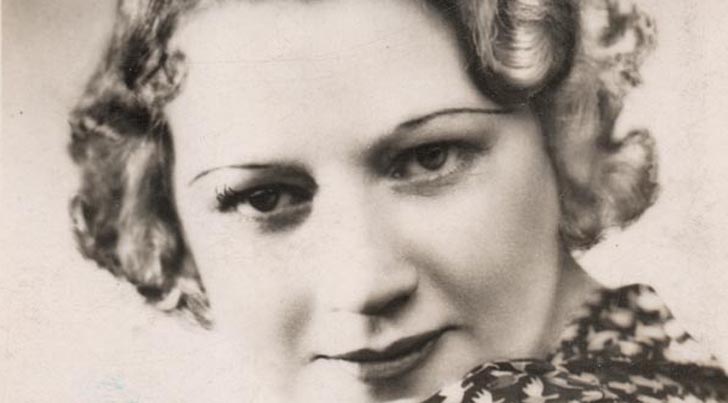
“He’s a Good Man to Have Around” is a torch song fashioned loosely after the model of Mistinguett’s “Mon homme” or its English adaptation “My Man” (introduced by Fanny Brice in the 1921 Ziegfeld Follies). The singer catalogues her “man’s” various faults and insists that she loves him in spite of them. One lyrical advantage that “He’s a Good Man to Have Around” has over comparable songs (such as “Hangin’ On to That Man”) is that the man’s moral deficits creep up comically in intensity; at first one expects the song to remain light, insofar as the man’s faults are merely not being good-looking, being a poor dancer and a poor speaker, and occasionally being mildly irritating. Indeed, the lyrics as used in Elsie’s August 23, 1929 recording of the song with Philip Lewis and His Dance Orchestra (a.k.a. the Rhythm Maniacs)1 stop at this point; they complement the comparatively upbeat instrumental interpretation nicely. In the October 16 Worldecho recording, however, Elsie sings the whole song, including the parts about how her lover is untrustworthy, unfaithful, and apparently such a dangerous fellow as to warrant her having bought a pistol — which she won’t use, for “He’s a Good Man to Have Around!” Elsie Carlisle recorded this record and three others with Worldecho under the name “Sheila Kay”; as she was recording under her own name for the Dominion label at the time, it may be that contractual obligations necessitated the use of the pseudonym.

Originally written for the 1929 film Honky Tonk starring Sophie Tucker (which does not survive as a movie, although the Vitaphone soundtrack is intact), “He’s a Good Man to Have Around” was first recorded by Tucker herself (with Ted Shapiro’s Orchestra). In 1929 versions of the song were also recorded in America by Herman Kenin and His Ambassador Hotel Orchestra, Lee Morse and Her Blue Grass Boys, The Cotton Pickers (both with Libby Holman and without), Kate Smith and the Harmonians, and Jimmy Noone’s Apex Club Orchestra (with vocals by Helen Savage).

“He’s a Good Man to Have Around” was recorded in 1929 in Britain by Florence Oldham (accompanied by Len Fillis on the guitar and by Sid Bright on the piano), Lily Lapidus, the Rhythmic Eight (with vocals by Maurice Elwin), The Picadilly Players (Eddie Collis, vocalist), Mabel Marks, Belle Dyson, the Blue River Band (with vocalist Sybil Jason), and Mabel Lawrence.

  1. It is incidentally amusing to hear take one of this Decca recording, in which Elsie gets a couple of notes wrong! ↩︎
Ray Starita

“Stop the Sun, Stop the Moon” (1932)

“Stop the Sun, Stop the Moon.” Words and music by Hartwell “Harty” Cook, W. Mercer Cook, and J. Russel Robinson. Recorded by Ray Starita and His Ambassadors with vocalist Elsie Carlisle on September 1, 1932. 4 in 1 6 mx. S-2557-2.

Personnel: Ray Starita-reeds dir. Nat Gonella-t / tb / prob. Chester Smith-reeds / Nat Star-reeds / George Glover-reeds-vn / George Hurley-vn / George Oliver-g / Arthur Calkin-sb / Rudy Starita-d-vib-x1

Ray Starita and His Ambassadors (w. Elsie Carlisle) – “Stop the Sun, Stop the Moon” (1932)

“Stop the Sun, Stop the Moon (My Man’s Gone)”2 is a 1932 composition by Harty Cook, Mercer Cook, and J. Russel Robinson (the latter two also produced the popular “Is I in Love? I Is” that same year). In this song, the singer makes almost Biblical demands for the powers of nature — and technology, for that matter — to cease their usual operations, for she has lost her man. This sort of theme was suited to Elsie Carlisle’s dramatic manner of delivery, and in this recording her impassioned complaint serves as a fitting summation to the pulsating instrumental interpretation of the tune by Ray Starita and His Ambassadors’ Band. They would do another take of the song that day with Elsie, and it appears on Sterno 1028.

There were recordings of “Stop the Sun, Stop the Moon” in America that year by Joel Shaw and His Orchestra (with vocals by Dick Robertson), Dick Robertson and His Orchestra (with vocalist Chick Bullock), the Dorsey Brothers’ Orchestra (with the Boswell Sisters), Chick Bullock and His Levee Loungers (with Chick Bullock singing), the Ted Dahl Orchestra, and Paul Whiteman and His Orchestra (with vocalist Mildred Bailey).

In addition to the two record sides made by Ray Starita with Elsie Carlisle, there was a 1932 British version of “Stop the Sun, Stop the Moon” by Ambrose and His Orchestra (with vocalist Sam Browne).

  1. According to Brian Rust and Sandy Forbes, British Dance Bands on Record (1911-1945) and Supplement (1989), p. 1021. ↩︎
  2. The subtitle of the song is also found as “My Gal’s Gone” when the singer is a man. ↩︎
Maurice Winnick, Sam Browne

“Seven Years with the Wrong Woman” (1933)

“Seven Years with the Wrong Woman.”  Words and melody by Bob Miller (1932).  Recorded by Maurice Winnick and His Orchestra, with vocals by Sam Browne and Elsie Carlisle, on May 16, 1933.  Panachord 25527 mx. GB-5876-2.

Personnel: Maurice Winnick-vn dir. Charles Price-another-t / 2tb / Harry Hayes-Harry Turoff-as / Percy Winnick-cl-ts-o / Bert Whittam -p / Bill Herbert-g / Tiny Stock-sb / Stanley Marshall-d / Max Bacon-sp (possibly -d also)

Seven Years With The Wrong Woman – Maurice Winnick & his Orchestra 1933
Transfer and video by Peter Wallace (YouTube)

“Seven Years with the Wrong Woman,” a comic “hillbilly” waltz by Memphis-born but New York-based Bob Miller, is the lament of an unhappily married man.  The henpecked husband and the shrewish wife are perennial stock sources of mirth, and Miller’s encapsulation of the sentiments of the former attracted the attention of such American artists as Cliff Carlisle, Parker & Dodd, Frank Luther, Mac & Bob, and Jess Hillard.  The success of the song  is attested to by Miller’s having released a second song, “Seven Years with the Wrong Man,” a year later, in which he presented the same situation from the point of view of the fairer sex.

Sam Browne and Elsie Carlisle’s duet in Maurice Winnick’s recording of “Seven Years with the Wrong Woman” is an early example of the sort of song of bickering and vituperation for which they became well known (consider also the 1934 songs “What’s Good for the Goose Is Good for the Gander” and “I’m Gonna Wash My Hands of You”).  The verses of the song are interspersed with spoken comic vignettes.  The arrangement is whimsical, and it includes a bit of Rachmaninoff’s “Prelude in C Sharp Minor.”1

The comedy is at times rather dark (“Prisoner at the bar, you are accused of striking this woman with your fist.  Why did you strike her with your fist?”  “Because I couldn’t find a hammer”).  The third speaker is Ambrose drummer Max Bacon, who liked to do comedy in a stereotypical Jewish accent whenever the chance presented itself.2

In 1933 there were other British treatments of “Seven Years with the Wrong Woman” by Jimmy Campbell and His Paramount Band (in a medley, with vocals by the Three Ginx),  Roy Fox and His Band (with vocalists Jack Plant and Sid Buckman), Ray Noble and His Orchestra (with Al Bowlly), Billy Cotton and His Band (Alan Breeze, vocalist), Syd Roy and His R.K.Olians (with Ivor Moreton), and Jack Payne and His Band (with vocalists Billy Scott-Coomber, Bob Busby, Bob Manning, and Jack Payne himself).

  1. For a considerably more elaborate British dance band treatment of Rachmaninoff’s prelude, listen to Teddy Joyce’s recording of a Bob Busby arrangement of the piece. ↩︎
  2. Many thanks to Fred Finnigan for drawing my attention to Bacon’s considerable work as an independent comedian, and not just as Britain’s premier drummer. ↩︎