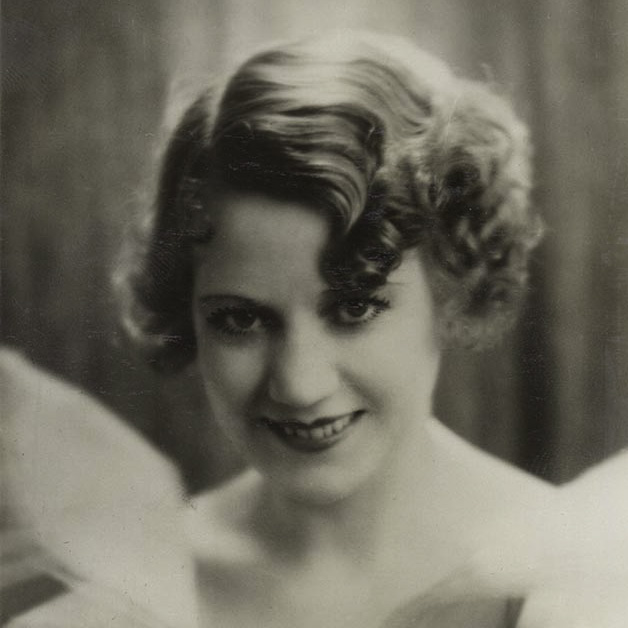

“Babyin’ You.” Music and lyrics by Bert Kalmar and Harry Ruby; included in the London show Princess Charming (1926). Recorded by Eddie Morris and Elsie Carlisle (as Lena Barton) in London on November 24, 1926. Regal G-20196 (an Australian issue derived from the British Regal G-8762) mx. WA-4514-1.
“Babyin’ You” – Eddie Morris and Lena Barton (Regal G-20196)
The business of writing discographies really needs no defense, as these reference works are indispensable tools for understanding the history of music, theater, film, and television. Why someone would personally want to compile a discography is another question. Brian Rust, the twentieth century’s best known discographer, described having heard his favorite activity labelled by detractors as “analytical bookkeeping” or even “mere musical philately,” i.e., stamp collecting.1
Today, on the eve of Elsie Carlisle’s 129th birthday, I have the opportunity to describe a breakthrough that I hope will convey how thrilling assembling lists of records can really be.
In an addendum to his discography of female popular singers from 1920–1933, Ross Laird records
LENA BARTON: It has been reported that this is a pseudonym for Elsie Carlisle (but this is unconfirmed).
If we look back at his entry for “Lena Barton,” we find the following:
| EDDIE MORRIS & LENA BARTON | London, Nov 24, 1926 |
| WA4513-1 | Cross your heart | Re G8762 |
| WA4514-1 | Babying you | Re G8762 |
So a record exists, attributed to Eddie Morris and Lena Barton; we know the date it was recorded; and we know the two songs that are on it.2 Eddie Morris is the name of a real singer, but Lena Barton is an otherwise unknown artist.
I first noticed Laird’s addendum reporting the rumor that “Lena Barton” was really Elsie Carlisle a few years ago, but I was not able to find anyone who actually owned the record, and I decided to wait for more information. That information came to me last week, in the form of pages of addenda that discographer Richard J. Johnson had made but never issued for his own Elsie Carlisle discography.3
Johnson listed much the same information as Laird, but added in pen:
Lena Barton is Elsie Carlisle.
I took it that he had heard the record himself and felt comfortable identifying the voices. Clearly, it was time for me to update my discography (I was planning to release a new edition in the next few months anyway).
But it so happened that since the last time I looked into the matter, a transfer had surfaced on the Internet Archive, not of Regal G-8762 (the record mentioned by Laird and Johnson), but of the Australian Regal G-20196, which has one of its sides: “Babyin’ You.” One play was enough to convince me that the rumors had been correct: this was an Elsie Carlisle record, made during her first year of recording.
Why “Lena Barton”? Up to this point, Carlisle had been working exclusively for the Gramophone Company’s Zonophone label. It was not until February 1927 that she would do work under her own name for Columbia, which also owned Regal. I can only guess that some contractual requirement prevented her from appearing as herself on Regal in November 1926.
Eddie Morris, though, was the very real name of an American actor, billed as “The Kid from Kentucky,” who appeared regularly on the London stage and also on BBC radio. In fact, he had performed during Elsie Carlisle’s first radio broadcast, as is attested by several newspapers4.
“Babyin’ You,” a catchy song about the relationship between infantilization and affection, is a Kalmar and Ruby ditty. It was apparently added to an originally Hungarian operetta with an Albert Sirmay score, Princess Charming, which was playing in London at the time. Some noteworthy recordings of “Babyin’ You” were made by:
- W. H. Berry and Alice Delysia (from the cast of the London production of Princess Charming)
- Harry Bidgood and His Orchestra (as The Serenaders Dance Orchestra)
- Stan Greening and His Orchestra (as the Raymond Dance Band)
- Layton and Johnstone
- Ronnie Munro and His Dance Orchestra
- The Savoy Orpheans
- Brian Rust, Brian Rust’s Guide to Discography, Greenwood Press, 1980, 4. ↩︎
- Laird, Moanin’ Low, 19. ↩︎
- Richard J. Johnson, Elsie Carlisle: A Discography, published by the author. My thanks to Peter Johnson for supplying me with his father’s papers on Elsie Carlisle, and to Steve Paget for having put me in touch with Peter. ↩︎
- E.g., “Broadcasting: Programmes for To-Day,” Northern Whig, March 1, 1926, 10, British Newspaper Archive. ↩︎