Sam Browne

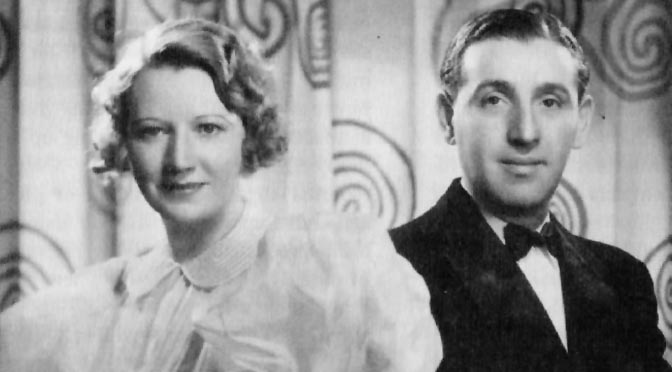
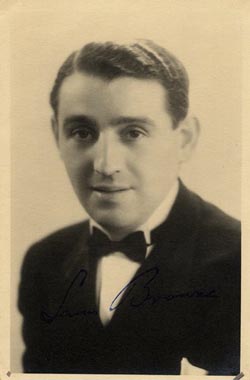
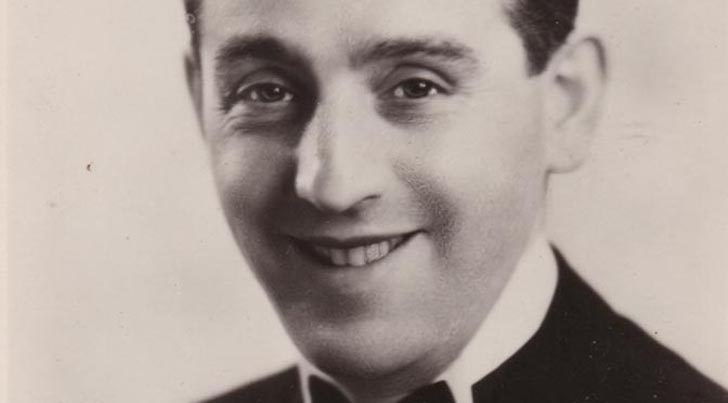
Quintessential British dance band vocalist Sam Browne was often Elsie Carlisle’s recording partner from 1932-1937. He continued to tour and broadcast with her after that, and even appeared with her on television.

Sam Browne – Wikipedia

Sam Browne
Sam Browne

“Let’s Make Love” (1934)

“Let’s Make Love.” Words By Stanley J. Damerell, music by Tolchard Evans (1934). Recorded by Ambrose and His Orchestra with vocals by Sam Browne and with Elsie Carlisle in a speaking role on November 1, 1934. Decca F. 5297 mx. TB 1704-1.

Personnel: Bert Ambrose dir. Max Goldberg-t-mel / Harry Owen-t / Ted Heath-Tony Thorpe-tb / Danny Polo-reeds / Sid Phillips-reeds / Joe Jeannette-as / Billy Amstell-reeds / Ernie Lewis-Reg Pursglove-others?-vn / Bert Barnes-p / Joe Brannelly-g / Dick Ball-sb / Max Bacon-d

Ambrose & His Orchestra (w. Sam Browne & Elsie Carlisle) – “Let’s Make Love” (1934)

“Let’s Make Love (In Spring, Summer, Autumn and Winter)” is a light waltz written by British songwriters Stanley J. Damerell and Tolchard Evans, who collaborated on such notable songs as “Lady of Spain” (1931) and “If (They Made Me a King)” (1934). There seems to be a general rule that whenever Damerell and Evans have collaborated on a song, Elsie Carlisle ends up with a speaking role.  That would appear to be the case in the Ambrose recording of “Hyde Park Corner” (Hargreaves-Damerell-Evans; 1933), in which Sam Browne sings and Elsie and drummer Max Bacon have speaking parts, as well as in the Maurice Winnick version of “Da-Dar-Da-Dar” (also Hargreaves-Damerell-Evans; 1933), in which Sam Browne sings and Elsie is a mere interlocutor. So it is in this Damerell-Evans piece, “Let’s Make Love.”

Jack Payne and His Band had made, in late October 1934, a version of “Let’s Make Love” that relied for its entertainment value largely on comical Northern and Cockney voices provided by Jack Payne and Charlie Asplin; there was yet another version of “Let’s Make Love” in November by Jay Wilbur and His Band, with Fred Latham on the vocals. After an impressive instrumental introduction, the Ambrose recording has Sam Browne sing just the refrain and the first verse of the song. He then proceeds repeatedly to try to sing the first few words of the refrain (or something like them) in foreign accents which are intentionally abysmally done. His try at a Russian accent (“Letsky makesky loveskevitch”) is perhaps the least embarrassing.  I cannot say whether his announcing the Russian lover a second time and then correcting himself to “a Spanish lover” is a feigned mistake or a real one. The cannibalistic Zulu with his war cry “Yum, yum, yum!” is awkward at best, as is the shivering Eskimo.

Elsie Carlisle, for her part, merely interjects on occasion that Sam’s “impressions are lousy,” or the like. Sam and Elsie had already played bickering lovers in the 1933 Maurice Winnick recording of “Seven Years with the Wrong Woman,” and it was only weeks after recording “Let’s Make Love” that they would berate each other in “I’m Gonna Wash My Hands with You” with Ambrose and His Orchestra.  In “Let’s Make Love,” by contrast, it is not apparent that Sam really means it when he repeatedly sings “Let’s Make Love” to Elsie, nor that her rebuffing of him is anything more than a negative review of his talent.  What is clear is that this song is one of the silliest things Sam and Elsie ever collaborated on in their years of working for Ambrose.
“My Dog Loves Your Dog” (1934)

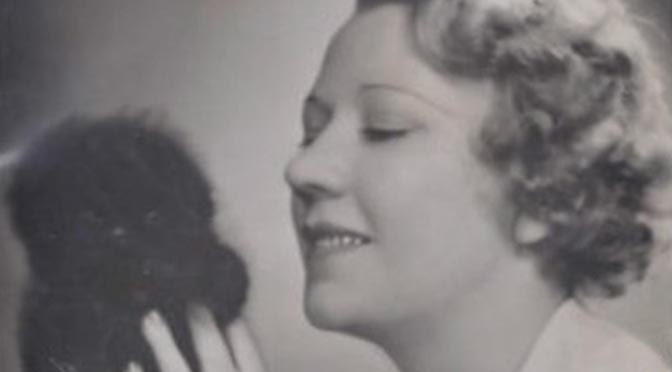
“My Dog Loves Your Dog.” Music by Ray Henderson, lyrics by Jack Yellen and Irving Caesar for the film George White’s Scandals (1934). Recorded by Elsie Carlisle and Sam Browne with orchestral accompaniment on June 22, 1934. Decca F. 5079.

Elsie Carlisle & Sam Browne – “My Dog Loves Your Dog” (1934)

The various annual installments of George White’s Scandals, a famed series of Broadway revues which ran from 1919-1939, were responsible for introducing the world to countless people who would eventually become Hollywood stars, as well as to the early music of George Gershwin. In 1934 the music of the stage show was combined with a somewhat more robust plot and made into a feature film, George White’s Scandals (1934), starring Alice Faye, Rudy Vallée, Cliff Edwards, and Jimmy Durante. One long scene in that movie involves the male characters walking dogs in tandem with the female characters and engaging in lengthy observations about canine amorousness that always lead to the conclusion “If our doggies love each other, why can’t we?” Foremost among the singers of “My Dog Loves Your Dog” is Jimmy Durante, who at one point is shown in a dog collar, with his head in a woman’s lap, having his famously protuberant “schnozz” petted.

In June, Elsie Carlisle and Sam Browne would tackle the song themselves, but with less than three minutes to sing it — including an instrumental interlude — they present a considerably abbreviated version. Their male-female duet adds flavor to the song, though, and ultimately allows the entrance of the element of strife between lovers that one would expect in a Sam-and-Elsie bit. When Sam first accosts Elsie and begins to observe the growing familiarity of their respective dogs, she responds, “Yes.  Someone mentioned it today. You can see it in their eyes” in a stilted delivery that must either betoken haughtiness on the part of Elsie’s character or perhaps exhaustion on the part of Elsie herself! Either way, I find her awkward beginning intensely funny. Some very nice singing ensues, but Elsie’s observations about the dogs ultimately serve as a riposte to Sam’s advances. The dogs begin to fight, and the two singers conclude “And if our doggies bite each other, why can’t we?” — a comic twist not present in the movie.

“My Dog Loves Your Dog” was also recorded that year by the Dorsey Brothers Orchestra (as Bob Snyder and His Orchestra, with vocalist Kay Weber), by Cliff Edwards, one of the stars of the original movie sequence, Victor Young and the Brunswick Studio Orchestra, and Harry Roy and His Orchestra (with vocals by Bill Currie). Jay Wilbur and His Band did a medley based on the Scandals in which Mona Brandon and Sam Browne sing “My Dog Loves Your Dog.”

“Mr. Magician” (1934)

“Mr. Magician (Won’t You Bring My Honey Back to Me?).” Words and music by Charles O’Flynn, James Cavanaugh, and Frank Weldon (1934). Recorded by Elsie Carlisle and Sam Browne with orchestral accompaniment on June 22, 1934. Decca F. 5079.

Elsie Carlisle and Sam Browne – “Mr. Magician” (1934)

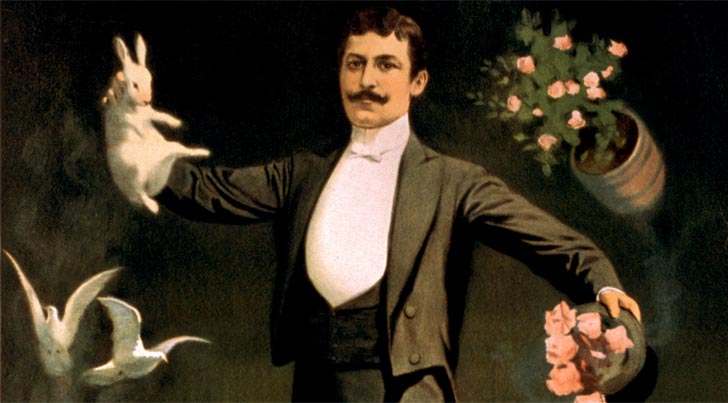
O’Flynn, Cavanaugh, and Weldon were prominent Tin Pan Alley songwriters, but their 1934 “Mr. Magician” does not appear to have inspired many recordings. It may have seemed outrageously corny even by the standards of the time (consider the lines of the refrain: “Hocus, pocus, Mr. Magician, won’t you bring my honey back to me?”). All the same, this melodramatic arrangement (complete with an anonymous carnival barker, with Sam Browne as a grandiose, boasting circus magician, and with Elsie Carlisle as an earnest girl who wants to “find [her] man somehow”) has a certain appeal. Elsie plays the Dorothy to Sam’s Great Oz with a comical insistence; the whole piece is cartoonish, funny, and sweet.

New York-based Sam Robbins and His Orchestra had done a catchy version of the song in January, 1934, followed by Ozzie Nelson and His Orchestra (with vocalists Ozzie Nelson and Harriet Hilliard) in February). In Britain Harry Roy and His Orchestra had recorded it with vocals by Bill Currie in mid-May; the latter version includes the following priceless exchange:

— “I say, Mr. Magician, won’t you bring my baby back to me?

— “Sorry, I need her for myself!”

“Seven Years with the Wrong Woman” (1933)

“Seven Years with the Wrong Woman.”  Words and melody by Bob Miller (1932).  Recorded by Maurice Winnick and His Orchestra, with vocals by Sam Browne and Elsie Carlisle, on May 16, 1933.  Panachord 25527.

Personnel: Maurice Winnick-vn dir. Charles Price-another-t / 2tb / Harry Hayes-Harry Turoff-as / Percy Winnick-cl-ts-o / Bert Whittam -p / Bill Herbert-g / Tiny Stock-sb / Stanley Marshall-d / Max Bacon-sp (possibly -d also)

Seven Years With The Wrong Woman – Maurice Winnick & his Orchestra 1933

Transfer and video by Peter Wallace (YouTube)

“Seven Years with the Wrong Woman,” a comic hillbilly waltz by Memphis-born but New York-based Bob Miller, is the lament of an unhappily married man.  The henpecked husband and the shrewish wife are perennial stock sources of mirth, and Miller’s encapsulation of the sentiments of the former attracted the attention of such American artists as Cliff Carlisle, Parker & Dodd, Frank Luther, Mac & Bob, and Jess Hillard.  The success of the song  is attested to by Miller’s having released a second song, “Seven Years with the Wrong Man,” a year later, in which he presented the same situation from the point of view of the fairer sex.

Sam Browne and Elsie Carlisle’s duet in Maurice Winnick’s recording of “Seven Years with the Wrong Woman” is an early example of the sort of song of bickering and vituperation for which they became well known (consider also the 1934 songs “What’s Good for the Goose Is Good for the Gander” and “I’m Gonna Wash My Hands of You”).  The verses of the song are interspersed with spoken comic vignettes.  The arrangement is whimsical, and it includes a bit of Rachmaninoff’s “Prelude in C Sharp Minor.”1  The comedy is at times rather dark (“Prisoner at the bar, you are accused of striking this woman with your fist.  Why did you strike her with your fist?”  “Because I couldn’t find a hammer”).  The third speaker is Ambrose drummer Max Bacon, who liked to do comedy in a stereotypical Jewish accent whenever the chance presented itself.2

In 1933 there were other British treatments of “Seven Years with the Wrong Woman” by Jimmy Campbell and His Paramount Band (in a medley, with vocals by the Three Ginx),  Roy Fox and His Band (with vocalists Jack Plant and Sid Buckman), Ray Noble and His Orchestra (with Al Bowlly), Billy Cotton and His Band (Alan Breeze, vocalist), Syd Roy and His R.K.Olians (with Ivor Moreton), and Jack Payne and His Band (with vocalists Billy Scott-Coomber, Bob Busby, Bob Manning, and Jack Payne himself).

Notes:

  1. For a considerably more elaborate British dance band treatment of Rachmaninoff’s prelude, listen to Teddy Joyce’s recording of a Bob Busby arrangement of the piece.
  2. Many thanks to Fred Finnigan for drawing my attention to Bacon’s considerable work as an independent comedian, and not just as Britain’s premier drummer.

“Sittin’ in the Dark” (1933)

“Sittin’ in the Dark.” Words by Harold Adamson, music by Jesse Greer (1933). Recorded by Sam Browne and Elsie Carlisle on March 3, 1933. Decca F-3504 mx. GB-5631-2.

Elsie Carlisle – “Sittin’ in the Dark” (1933)

“Sittin’ in the Dark” is a song that explores what goes on when young lovers are left to their own devices. The lyrics are basically a laundry list of romantic commonplaces interspersed with humming (“Mm-mmm…”) suggestive of kissing or even moaning:

First we start to kiss,
Then we sit and sigh,
Feeling very shy
Sittin’ in the dark….

and so on. Most commonly the words are delivered by a male singer playing a young man who has somehow arranged to “sit in the dark” with his girlfriend while her parents sleep upstairs. In this March 3, 1933 duet between Sam Browne and Elsie Carlisle, however, the measured pace of the piece is set by both boy and girl as they “sit and sigh” and do what lovers do (“Dee-doo-dee-doo-dee-doo!”).

The musical director made the clever choice to record the song as a little drama introduced by Elsie’s “pop,” who bids the “kids” goodnight, seems to be snoring later, and even interrupts the lovers, asking grumpily, “What, you still here?  I’m getting fed up with this!  What are you doing down there, anyway?” Sam Browne and Elsie Carlisle’s characters are actually referred to or addressed as “Sam” and “Elsie,” which makes the fictional romance between the two youthful celebrities somehow seem more immediate. Elsie speaks and sings in an intermittently odd voice, which may in fact be a failed, but exceedingly cute, attempt at sounding American.

I do not, however, mean to suggest that she could be trying to sound like American Louis Armstrong, who first recorded “Sittin’ in the Dark” in late January, 1933 in his own unique style (for an insightful discussion of that version, see the essay by Ricky Riccardi on The Wonderful World of Louis Armstrong). Armstrong’s is the only American recording I have run across, but the song was recorded quite a lot in 1933 in Britain, where there were versions by Bidgood’s Broadcasters (as “The Harvard Dance Club Aces,” with vocals by Tom Barratt and Phyllis Robins), the BBC Dance Orchestra (under the direction of Henry Hall, with Sam Browne as vocalist, in a Van Phillips arrangement), Harry Roy and His Orchestra (with vocals by Bill Currie and Harry Roy), and Jack Jackson and His Orchestra (Al Bowlly, vocalist). Only two days before Sam Browne and Elsie Carlisle recorded their Decca version of the song, Sam had done a duet for Regal Zonophone with either Billie Lockwood or Anona Winn (the woman’s identity is unclear, as this is one of the many Zonophone and Regal Zonophone records attributed simply to “Jack and Jill”). Sam and Elsie themselves would do another version only days later with Rudy Starita and His Band.

As the weeks progressed, there were more recordings of “Sittin’ in the Dark” by Jack Hylton and His Orchestra (with vocalist Pat O’Malley, in a Peter Yorke arrangement), Jimmy Campbell and His Paramount Band (with Tom Barratt & Phyllis Robins), Pete Lowe and the “Scottish Daily Express” Band, and Jay Wilbur and His Band (in a medley with vocals by the Jackson Harmony Trio).

The songwriters of “Sittin’ in the Dark” are comparatively obscure, although Harold Adamson would contribute to some notable lyrics for  movies and television in the 1950s, such as “When Love Goes Wrong (Nothing Goes Right)” in the Marilyn Monroe musical comedy Gentlemen Prefer Blondes and the theme song to I Love Lucy (whose words are admittedly seldom ever heard).

"The Idol of the Radio." British dance band singer of the 1920s, 1930s, and 1940s.