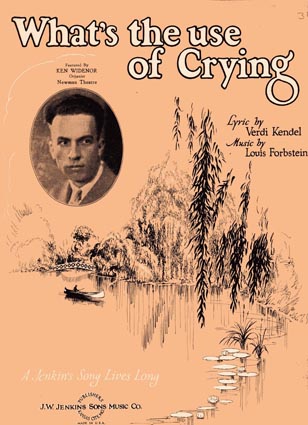
“What’s the Use of Crying?” Lyrics by Verdi Kendel, music by Louis Forbstein (1926). Recorded by Elsie Carlisle, accompanied by violin and piano (the latter played by Arthur Young), on August 22, 1927. HMV B2579 mx. Bb11403-2.
This song’s lyricist is comparatively obscure; its composer, Louis Forbstein, would later change his surname to Forbes and gain some amount of fame as musical director for David O. Selznick films (including “Gone with the Wind”). “What’s the Use of Crying?” is a song of unrequited love that begins in a rather moody register but quickly becomes more upbeat as the tempo is twice ratcheted up and the singer professes to have acquired a spirit of resignation in the face of her troubles, asking, “What’s the use of crying just for someone like you?”
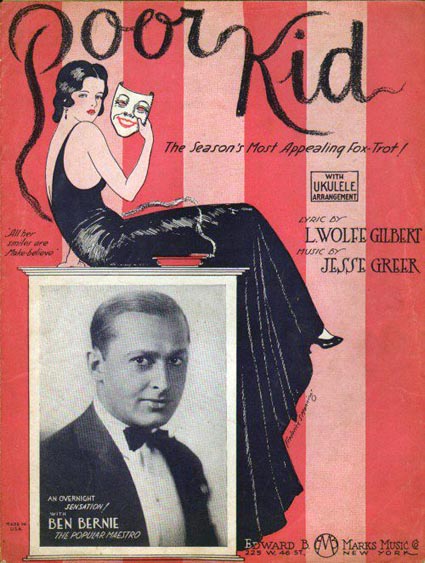
“Poor Kid.” Music by Jesse Greer, lyrics by L. Wolfe Gilbert. Recorded in London by Elsie Carlisle in August 1931 under the musical direction of Jay Wilbur. Imperial 2532 mx. 5770-2.
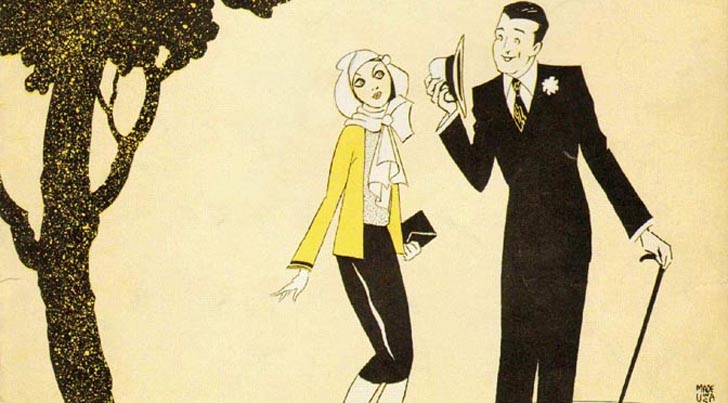
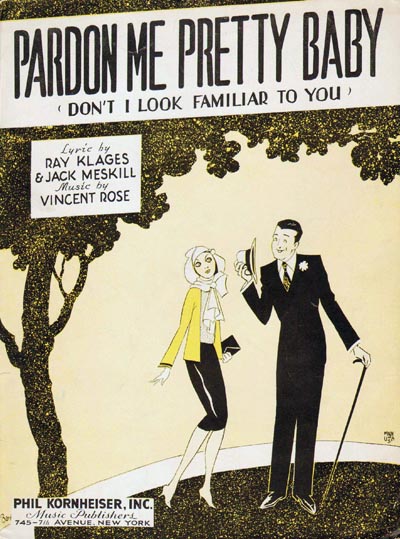
“Pardon Me, Pretty Baby.” Words by Ray Klages and Jack Meskill, music by Vincent Rose. Recorded by Elsie Carlisle under the musical direction of Jay Wilbur in August 1931. Imperial 2532.
Elsie Carlisle recorded this version of the popular “Pardon Me, Pretty Baby” for the Imperial label in August 1931 under the musical direction of Jay Wilbur. It is a light song with a chatty patter representing a persistent but inept attempt at a pickup. The tune is catchy, but a trifle repetitive. Elsie makes the song exciting by alternating between playful singing and exaggerated conversational interjections, a technique which reminds one that she was a veteran of musical theater.
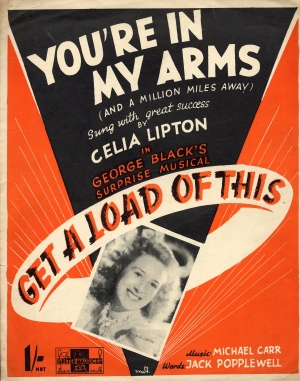
“You’re in My Arms (and a Million Miles Away)” is a beguine from the 1941 musical “Get a Load of This,” written by playwright and lyricist Jack Popplewell and composer Michael Carr. The song was introduced by 17-year-old Celia Lipton (daughter of bandleader Sidney Lipton) and saw treatments in 1941 by Jay Wilbur and His Band (with vocalist Pat O’Regan), Ambrose and His Orchestra (with Anne Shelton), Joe Loss and His Band (Chick Henderson, vocalist), Harry Roy and His Band (with Marjorie Kingsley – though Regal Zonophone rejected the take), and Carroll Gibbons and the Savoy Orpheans (with Anne Lenner). Vera Lynn was to record a version the next year.
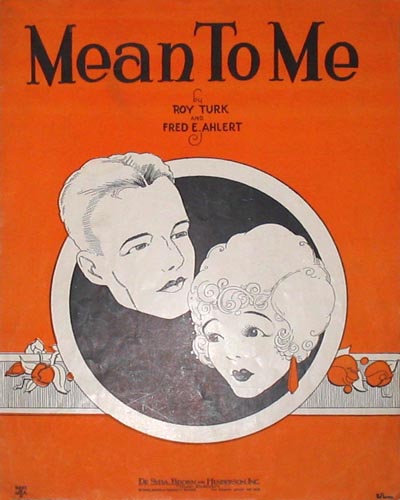
“Mean to Me.” Words by Roy Turk, music by Fred E. Ahlert (1929). Recorded by Elsie Carlisle, accompanied by Jay Wilbur and His Orchestra (uncredited) c. late June 1929. Dominion A-168.
Personnel: Laurie Payne-Jimmy Gordon-cl-as-bar / George Clarkson-cl-as-ts / Norman Cole-vn / vn / vn / Billy Thorburn-p /Dave Thomas or Bert Thomas-bj-g /Harry Evans-sb / Jack Kosky-d
The torch song “Mean to Me” is perhaps the most familiar of the many pieces resulting from the collaboration of composer Fred E. Ahlert and lyricist Roy Turk. Whereas many dance bands’ versions of this comparatively morose song are paradoxically upbeat, Elsie Carlisle’s version is marked by considerable pathos and fidelity to the sentiments of the lyrics. As is often the case with Elsie’s renditions of popular music, there is a dramatic element present in her “Mean to Me” that sets it aside from other recordings.
“Mean to Me” notably appears in the 1932 Betty Boop cartoon Minnie the Moocher (listen for it at 2:53, although be sure not to skip Cab Calloway’s remarkable dancing at the beginning of the short).
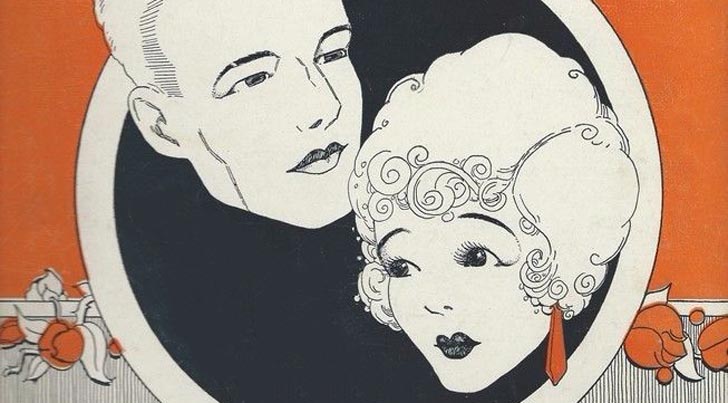
“Mean to Me” sheet music
"The Idol of the Radio." British dance band singer of the 1920s, 1930s, and 1940s.