Videos

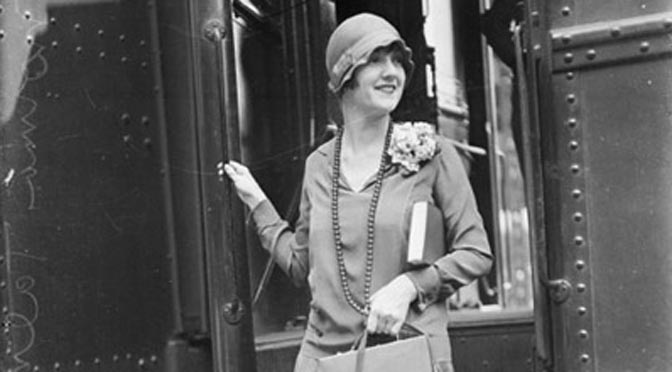
“My Cutey’s Due at Two-to-Two Today” (1926)

“My Cutey’s Due at Two-to-Two Today.” Music by Albert Von Tilzer, lyrics by Leo Robin (1926). Recorded by Elsie Carlisle with piano and vocal accompaniment by Carroll Gibbons in London on October 6, 1926. Zonophone 2815.

My Cutey’s Due At Two-To-Two To-Day – Elsie Carlisle

Video by David Weavings (YouTube)

Von Tilzer and Robin’s “My Cutey’s Due at Two-to-Two Today,” an example of the “train song” genre, is a light composition that makes up for a fundamental lack of profundity by being ridiculously catchy, almost addictive. It speaks primarily of faithfulness in one’s lover’s absence and of the giddy anticipation of reunion. Elsie Carlisle brings to it the requisite frantic, girlish enthusiasm and applies her vaguely conversational style of delivery to the song’s rhythmical patter with great effectiveness. She is accompanied on this record, not only by Carroll Gibbon’s piano playing, but also by his voice; he engages in a muted antiphony with Elsie for part of the song.

“My Cutey’s Due” was recorded in America in 1926 by Sam Lanin and His Orchestra (as the Missouri Jazz Band), Ted Weems (Park Gibbs, vocalist), the Happiness Boys (Billy Jones and Ernest Hare), The Clevelanders (with vocals by Tom Stacks), and the Little Ramblers (with vocalist Ed Kirkeby). In Britain there were 1926 versions by Bert Firman’s Dance Orchestra, Don Parker and His Band, Victor Sterling and His Band, Van Straten and His Riviera Dance Orchestra (with vocals by Harry Fay). In early 1927 there were recordings made by Alfredo’s Band and by the Picadilly Revels Band.
“Stop the Sun, Stop the Moon” (1932)

“Stop the Sun, Stop the Moon.” Words and music by Hartwell “Harty” Cook, W. Mercer Cook, and J. Russel Robinson. Recorded by Ray Starita and His Ambassadors with vocalist Elsie Carlisle on September 1, 1932. Four-in-One 6 mx. S2557-2.

Personnel: Ray Starita-reeds dir. Nat Gonella-t / tb / prob. Chester Smith-reeds / Nat Star-reeds / George Glover-reeds-vn / George Hurley-vn / George Oliver-g / Arthur Calkin-sb / Rudy Starita-d-vib-x1

Ray Starita and His Ambassadors (w. Elsie Carlisle) – “Stop the Sun, Stop the Moon” (1932)

“Stop the Sun, Stop the Moon (My Man’s Gone)”2 is a 1932 composition by Harty Cook, Mercer Cook, and J. Russel Robinson (the latter two also produced the popular “Is I in Love? I Is” that same year). In this song, the singer makes almost Biblical demands for the powers of nature — and technology, for that matter — to cease their usual operations, for she has lost her man. This sort of theme was suited to Elsie Carlisle’s dramatic manner of delivery, and in this recording her impassioned complaint serves as a fitting summation to the pulsating instrumental interpretation of the tune by Ray Starita and His Ambassadors’ Band. They would do another take of the song that day with Elsie, and it appears on Sterno 1028.

There were recordings of “Stop the Sun, Stop the Moon” in America that year by Joel Shaw and His Orchestra (with vocals by Dick Robertson), Dick Robertson and His Orchestra (with vocalist Chick Bullock), the Dorsey Brothers’ Orchestra (with the Boswell Sisters), Chick Bullock and His Levee Loungers (with Chick Bullock singing), the Ted Dahl Orchestra, and Paul Whiteman and His Orchestra (with vocalist Mildred Bailey).

In addition to the two record sides made by Ray Starita with Elsie Carlisle, there was a 1932 British version of “Stop the Sun, Stop the Moon” by Ambrose and His Orchestra (with vocalist Sam Browne).

Notes:

  1. According to Brian Rust and Sandy Forbes, British Dance Bands on Record (1911-1945) and Supplement (1989), p. 1021.
  2. The subtitle of the song is also found as “My Gal’s Gone” when the singer is a man.

“The Spring Don’t Mean a Thing” (1934)

“The Spring Don’t Mean a Thing.” Composition usually attributed to Lane Leighton; on this disc “Kennedy” is given the credit. Recorded by Elsie Carlisle on August 23, 1934. Decca F. 5173 mx. TB1498-2.

Elsie Carlisle – “The Spring Don’t Mean a Thing” (1934)

This exceedingly melancholy tune describes a love relationship that began in the spring. The affair’s dissolution has, for the speaker of the lyrics, stripped that season of its usual happy associations. Elsie Carlisle, ever the torch singer, draws out the deep pathos of the music in this violin-dominated arrangement.

“The Spring Don’t Mean a Thing to Me” (for that is the song’s full title) was also recorded in 1934 by Billy Cotton and His Band (with vocalist Alan Breeze), Harry Roy and His Orchestra (with vocals by Sam Browne), and Teddy Joyce and His Orchestra (with Eve Becke):

Teddy Joyce and His Orchestra (with Eve Becke) – “The Spring Don’t Mean a Thing to Me” (1934)

“The Spring Don’t Mean a Thing to Me” was included in Charlie Kunz’s “Piano Medley No. 14” (on Sterno). It can also be heard in the background in the 1945 British movie Waterloo Road (at 57:55).

“A Place in Your Heart” (1934)

“A Place in Your Heart.” Words and music by Sam Coslow. Recorded by Elsie Carlisle with orchestral accompaniment on June 14, 1934. Decca F-5071 mx. TB-1320-2.

Elsie Carlisle – “A Place in Your Heart” (1934)

“A Place in Your Heart” is a comparatively conventional love song whose lyrics feature the singer’s professed wish to inhabit a metaphorical dwelling place in her lover’s heart (“Some secret little corner where I’d stay, / Lock the door and throw the key away….”). The tune is pleasant and catchy, but the strongest point of Elsie Carlisle’s version of the song is her passionate yet sincere interpretation of its themes. The extent to which she made the song her own can be gauged by comparing her version to that of composer Sam Coslow himself.

“A Place in Your Heart” was also recorded that year in Britain by Ambrose and His Orchestra (with vocalist Sam Browne), the BBC Dance Orchestra (under the direction of Henry Hall, with vocals by Les Allen, in a Van Phillips arrangement — at a recording session which also featured vocals by composer Sam Coslow himself, singing another of his songs, “Cupid”), The Masterkeys (vocals by Leslie Douglas), Jack Payne and His Band (with Ronnie Genarder), and Louis Freeman and His Playhouse Band.

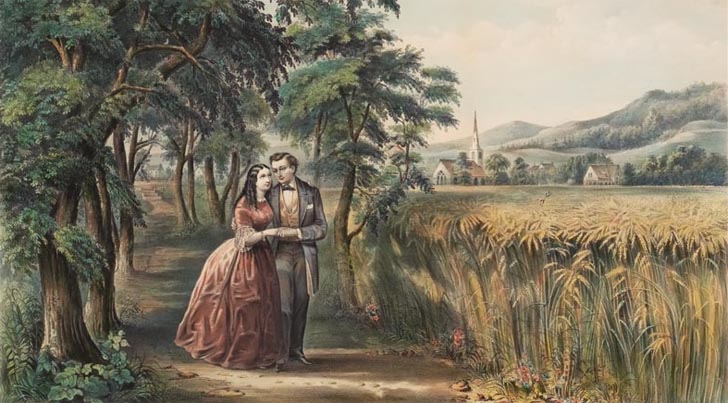
“Coming Thro’ the Cornfield” (1926)

“Coming Thro’ the Cornfield.” Words and music by Horatio Nicholls (a.k.a. Lawrence Wright). Recorded by Elsie Carlisle with piano accompaniment  by Carroll Gibbons on June 21, 1926 at the Gramophone Company’s Studio B at Hayes in Middlesex. Zonophone 2772 mx. Yy8563-2.

Elsie Carlisle – “Coming Thro’ the Cornfield” (1926)

Elsie Carlisle sang “Coming Thro’ the Cornfield” at her second recording session for what was to be her second record, accompanied by pianist Carroll Gibbons, who would soon become the famed director of the Savoy Hotel Orpheans. The song was written by performer, music publisher, impresario, and composer Lawrence Wright, who tended to use the pseudonym “Horatio Nicholls” on his own original compositions. Elsie handles this effusive expression of love in a rustic setting with her usual sweetness, and the pairing with “I Love My Baby” on the other side of the record allows her to adopt the personae of two very different girls in love.

“Coming Thro’ the Cornfield” was recorded two days later by the Savoy Havana Band, in late July 1926 by Bert Firman’s Dance Orchestra, and again in late September by Bert Firman’s band (as “Newton Carlisle’s Dance Orchestra” on Homochord and as “Dan Frederick and His Dance Orchestra” on Sterno).

"The Idol of the Radio." British dance band singer of the 1920s, 1930s, and 1940s.