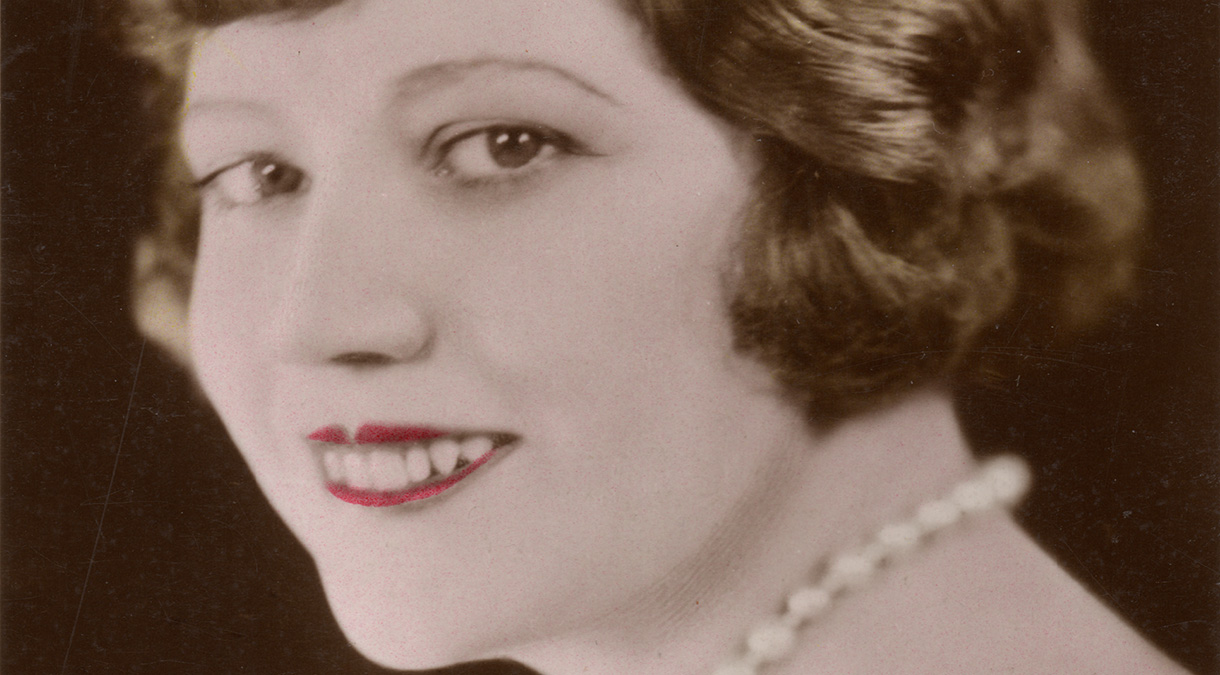
“I Love My Baby (My Baby Loves Me).” Words by Bud Green, music by Harry Warren (1925). Recorded by Elsie Carlisle with piano accompaniment by Carroll Gibbons on May 25, 1926. Zonophone 2772 mx. Bb-8426-2.
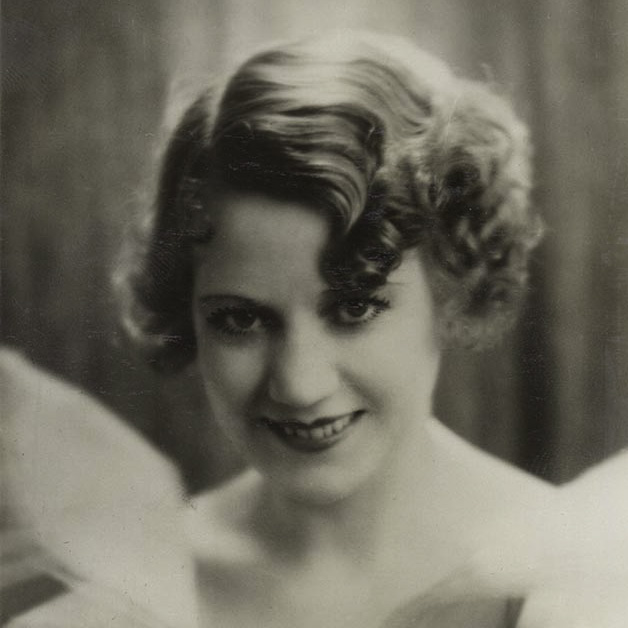
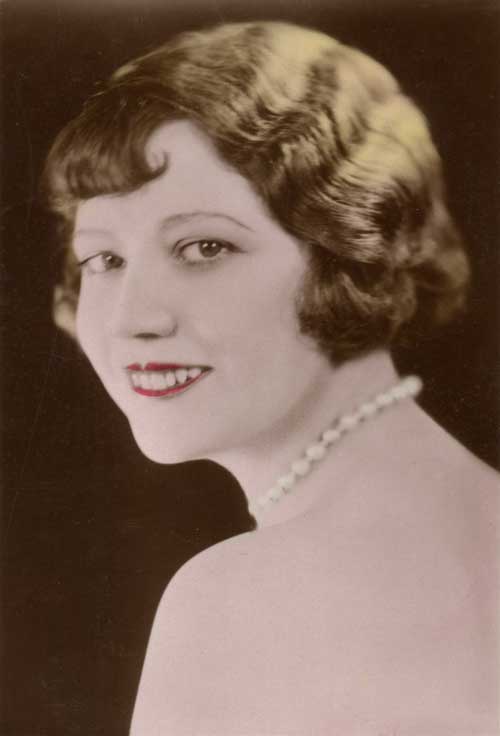
Elsie Carlisle made her first commercially successful recording one hundred years ago today. Already an accomplished thirty-year-old actress, she had made her radio broadcasting debut on March 1, 1926. After May 25, 1926, Carlisle would go on to enjoy a fifteen-year recording career, and it is through her records that we still appreciate her artistry.
May 25, 1926, was not actually the first time that she had entered a studio at the Gramophone Company’s facilities in Hayes, Middlesex, to record a song: on March 7, 1918, she had made a test recording of “Some Girl Has Got to Darn His Socks,” but it was never issued as a commercial record, and it remains unclear if a pressing survives. If it seems strange that Carlisle’s first attempt at recording did not result in an issued record, we must remember how greatly technology changed between 1918 and 1926. In 1918, the only way to record sound was using acoustic methods. Carlisle’s talents may simply not have shone under those circumstances. Beginning in 1925, electrical processes rapidly took over the industry, and soon afterwards the crooners emerged, vocal artists who could exploit the microphone’s sensitivity to quiet, intimate singing—something the acoustic horn had never permitted. As a stage actress of that era, Carlisle must have had a powerful voice, but perhaps we can be grateful that her career took off at a time when her softer, subtler efforts could be captured on shellac.
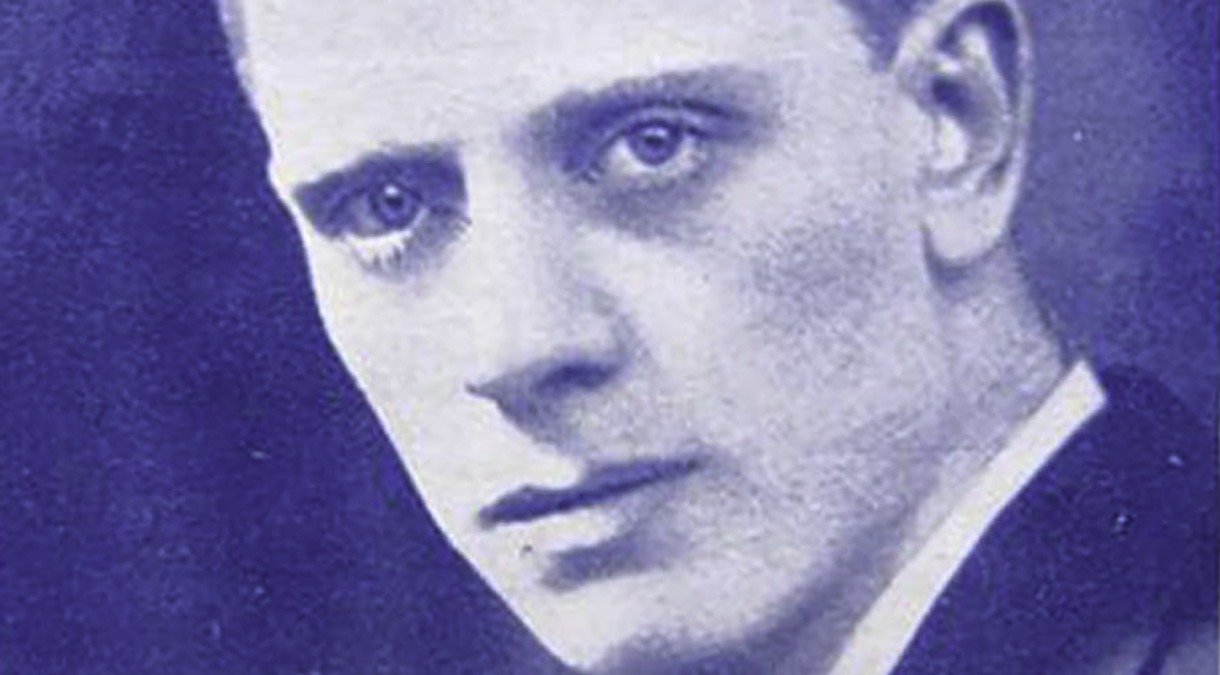
On May 25, then, Carlisle was joined at the Gramophone Company’s B Studio by Carroll Gibbons, who was to be her piano accompanist; he was not yet the famed director of the Savoy Hotel Orpheans. Ralph Graves, in his 1938 journalistic paean to Elsie Carlisle (“Radio Sweetheart No. 1”), recounts how the two first met:
Now for another scene.
This time not a swank lunch, but a very informal party.
Elsie was asked to sing. No, she hadn’t her music, but a quiet, bespectacled young man at the piano knew all the latest numbers, and could instantly transpose into any key Elsie wanted.
She sang several numbers which went down well, but the outstanding thought in Elsie’s mind was what a good accompanist this young man was. And when he played some piano solos on his own afterwards her opinion of him went up.
She asked who he was.
“That chap at the piano? Oh, he’s a Mr. Gibbons. Just come over from the States with Rudy Vallee, you know. Carroll Gibbons I believe his name is….”
That was in the days when Carroll was striving to make a name for himself.
Elsie and Carroll used to meet quite often after that party, as they held each other in mutual esteem. Well, now here’s a secret. Even his best friends will admit that Carroll has a “queer” voice. Those melodious deep tones, so very “Southern” are a characteristic. His announcements are fun, but you can’t imagine him as a singer, can you!
Yet it is a fact that Carroll and Elsie not only made gramophone records together, but on at least one of them Carroll sang part of the vocals! Yes, that vocalist is a fine pianist!1
At this particular session Gibbons did not sing, but his piano accompaniment is flawless, as it would continue to be throughout their collaboration that year.
The pairing of songs recorded that day seems prescient, in retrospect: Harry Warren’s “I Love My Baby” has as its reverse “So Is Your Old Lady,” whose lyrics were penned by Al Dubin—the man now most associated with Warren by lovers of 1930s musical films. The two had collaborated on at least one successful song by 1926, but their celebrated partnership as Warner Bros.’ signature songwriters lay years ahead.
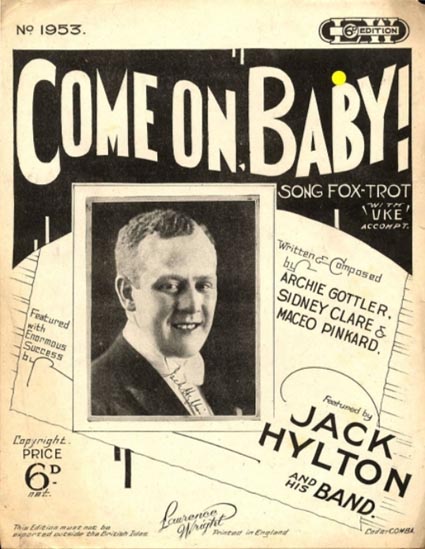
“I Love My Baby” expresses the enthusiasm of giddy young lovers at an insistent tempo that is entirely infectious and is as redolent of the decade of its composition as “The Charleston.” Elsie Carlisle sings the lyrics with a chatty, dramatic delivery, and she adds color with vocal effects such as her husky second repetition of the refrain (most reminiscent, perhaps, of the versions recorded a few months earlier by Aileen Stanley and Lee Morse). The persona Carlisle takes on is one familiar from her later work, an example of brilliant, brainless fun such as we hear in her 1929 “Come On, Baby” with the Rhythm Maniacs. Carlisle would appear on the sheet music for “I Love My Baby” that year.
Noteworthy early American recordings of “I Love My Baby (My Baby Loves Me)” date from the autumn and winter of 1925–26, and include those of Aileen Stanley, Mike Speciale and His Orchestra (v. Jimmy Flynn), Sam Lanin’s Dance Orchestra (v. Irving Kaufman), The University Six (v. Ed Kirkeby), Bailey’s Lucky Seven (v. Arthur Fields), The Little Ramblers, Esther Walker (with the piano accompaniment of Rube Bloom), Lee Morse, Isham Jones, Owen Fallon and His Californians, Peggy English (with Rube Bloom on the piano), Sally Freeman, and Jack Glassner and His Colonial Inn Orchestra.
Other British 1926 versions of the song are those of the New Princes’ Toronto Band (dir. Hal Swain; v. Les Allen) and Don Parker and His Band; Frances White recorded it for HMV with the Kit-Cat Band, but it went unissued.
- Ralph Graves, “Radio Sweetheart No. 1,” Radio Pictorial, no. 251, November 4, 1938, 8. The boldface is Graves’s and typical of the bombastic editorial style of the magazine. Graves is presumably referring to Gibbons’s faint but endearing antiphony in the 1926 “Ya Gotta Know How to Love” (Zonophone 2815), another composition by Bud Green and Harry Warren, as well as in the song on its reverse side, “My Cutey’s Due at Two-to-Two Today”. Gibbons’s “queer” voice (to use Graves’s term) was, I understand, his way of coping with an extreme stutter. Gibbons actually sang quite a bit, but perhaps more so in the period after Graves wrote his piece; I think particularly of “Too Romantic” (1940), “I L-L-Love You So” (1941), and “Elmer’s Tune” (1942). ↩︎