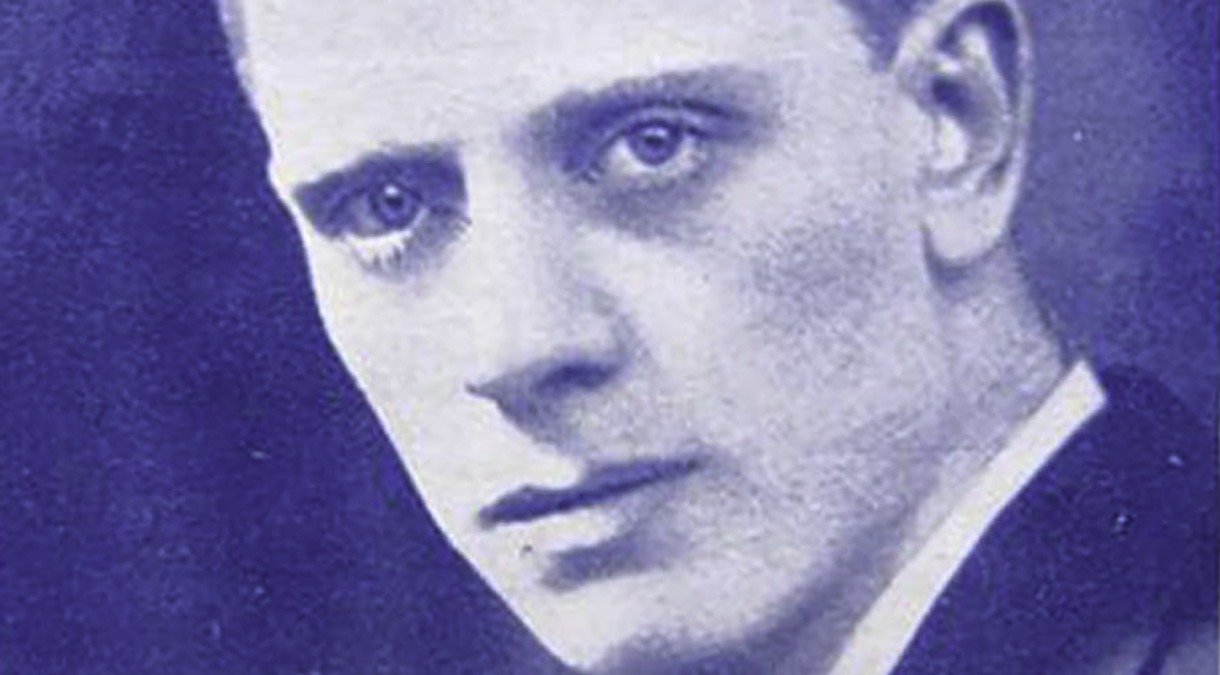
Jay Wilbur, Solo Recordings

“More Than You Know” (1930)

“More Than You Know.” Lyrics by Billy Rose and Edward Eliscu, music by Vincent Youmans (1929). Composed for the film Great Day (unreleased). Recorded by Elsie Carlisle with Jay Wilbur and His Orchestra (uncredited) in London in late September 1930. Imperial 2362 mx. 5510-1.

Personnel: Laurie Payne-Jimmy Gordon-cl-as-bar / George Clarkson-cl-ts / Norman Cole-George Melachrino-vn / Billy Thorburn or Pat Dodd-p / Bert Thomas-g / Harry Evans-bb-sb / Jack Kosky-d-chm / Wag Abbey-x / Len Fillis-bj

Elsie Carlisle – “More Than You Know” (1930)

In “More Than You Know” we have one of those eminently successful, perennial standards that originated in a Broadway flop (one might compare “Exactly Like You,” also recorded by Elsie Carlisle). It was introduced in the musical Great Day, set in the American Deep South, which saw only 36 performances over the course of a single month. The Vincent Youmans score was so catchy, though, that Metro-Goldwyn-Mayer planned and almost completed a 1930 movie version starring Joan Crawford. Crawford was so personally disappointed with the results (including with her own acting) that she convinced the studio to rewrite and reshoot the greater part of the film and to release it in 1931, but this never happened, and a 1934 attempt starring Jeanette MacDonald also never came to fruition. The legacy of these failed shows, then, is in the songs “Without a Song” and “More Than You Know.”

“More Than You Know” shares the structure of many Broadway tunes of its time, consisting of an introduction that is melodically quite different from the verses. Its intro is even more melancholy than the rest of the song, which is sad in tone but which encapsulates an effusive expression of love for a man without respect to any flaws he might have. Elsie Carlisle’s version fully embraces the gushing quality of the lyrics while maintaining a sense of credibility and sincerity. One might compare it to her recording of “What Is This Thing Called Love?” (which she had introduced on the London stage the previous year); in both, she evokes innocence and vulnerability of a sort that is immediately attractive to the listener. It is worth noting that the Imperial label of the disc on which “More Than You Know” is recorded mentions the film Great Day; there must have still been a keen expectation of the release of the film and a corresponding need for a tie-in.

“More Than You Know” was recorded in 1929 in America by Helen Morgan, Ruth Etting, Libby Holman, and Carmel Myers. It was recorded in London in 1930-1931 by Zaidee Jackson, The Million-Airs (Arthur Lally dir., v. Maurice Elwin), Ambrose and His Orchestra (v. Sam Browne), The New Mayfair Dance Orchestra (Ray Noble dir.; in a medley), Jack Payne and His BBC Dance Orchestra (v. Val Rosing; also in a medley), Gwladys Stanley, and Bert Maddison and His Dance Orchestra (Nat Star dir., v. Dan Donovan; in a medley).

Jay Wilbur, Solo Recordings

“Wasn’t It Nice?” (1930)

“Wasn’t It Nice?” Words by Joe Young, music by Seymour Simons (1930). Recorded by Elsie Carlisle with Jay Wilbur and His Band (uncredited) in London c. October 1930. Imperial 2362 mx. 5509-1.

Personnel: Laurie Payne-Jimmy Gordon-cl-as-bar / George Clarkson-cl-ts / Norman Cole-George Melachrino-vn / Billy Thorburn or Pat Dodd-p / Bert Thomas-g / Harry Evans-bb-sb / Jack Kosky-d-chm / Wag Abbey-x / Len Fillis-bj

Elsie Carlisle – “Wasn’t It Nice?” (1930)

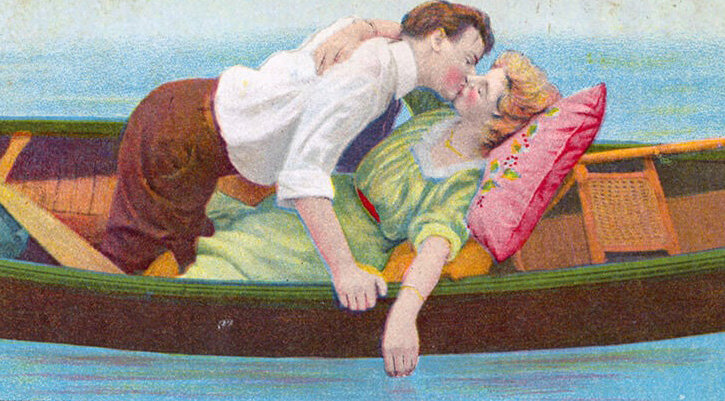
The lyrics of “Wasn’t It Nice?” describe an idyllic romantic relationship. They consist of fond recollections of the early days of that relationship and of the ensuing marriage (the refrain for each reminiscence is “Gee, dear, wasn’t it nice?”). There is a notable description of “canoedling” (cuddling in a boat, a common occupation in the years before motorcars were common enough to provide young couples with privacy). The lyrics also mention a wedding at which not only is the familiar rice thrown, but also shoes (an older practice) — one of which is nonsensically said to still have a foot in it. This last detail provides a suitable ending for a fundamentally goofy song.

Elsie Carlisle’s version of “Wasn’t It Nice?” is noteworthy for its evocation of a certain sort of almost infantile femininity. Elsie perfectly captures a mood of youthful glee which is nevertheless worlds away from the squeaky protestations of her also childlike persona in the rather sinister “Dada, Dada” (but it is worth noting that Elsie would have recorded one of her three versions of “Dada, Dada” at the same session as “Wasn’t It Nice?”) Particularly delightful is the primal girlish giggle that she emits at 2:09. The use of the chimes in the middle of the song adds to an overall feeling of simplicity and innocence, insofar as they recall the sounds of nursery toys.

“Wasn’t It Nice?” was recorded in America in 1930 by Marion Harris, Tom Clines and His Music (v. Jack Carney), The Charleston Chasers, and Aileen Stanley. Other British groups who recorded it in 1930 were Arthur Lally and the Million-Airs (v. Maurice Elwin), the Arcadians Dance Orchestra (dir. John Firman), Van Phillips and His Band (v. Billy Milton), Nat Star and His Dance Orchestra (twice: once with vocalists Fred Douglas and Jack Hodges, in a medley, and again with Fred Douglas), and one more time by Arthur Lally and the Million-Airs (v. Fred Douglas).

Arthur Lally

“When My Dreams Come True” (1929)

“When My Dreams Come True.” Composed by Irving Berlin for the Marx Brothers film The Cocoanuts (1929). Recorded by Philip Lewis and His Orchestra (a.k.a. the Rhythm Maniacs) under the musical direction of Arthur Lally with vocalist Elsie Carlisle in London on September 14, 1929. Decca F-1539 mx. DJ-49-1.

Personnel: Arthur Lally cl-bas-bsx dir. Sylvester Ahola-t / Danny Polo-cl-as-ss / Johnny Helfer-ts / Claude Ivy-p / Joe Brannelly-g / Max Bacon-d-vib

The Rhythm Maniacs (v. Elsie Carlisle) – “When My Dreams Come True” (1929)

When I first heard The Rhythm Maniacs’ recording of “When My Dreams Come True,”1 it came as quite a surprise: here was Elsie Carlisle singing a vocal part mistakenly attributed to the male singer Maurice Elwin by Rust and Forbes’s British Dance Bands on Record (a.k.a “The Bible”). Indeed, this side has been overlooked by the discographies covering Elsie’s recording career, and Elsie’s role in this Rhythm Maniacs session has been noted in print only by Dick Hill2.

“When My Dreams Come True” is the leitmotiv of Paramount’s 1929 The Cocoanuts, the first Marx Brothers feature. The song is introduced by Oscar Shaw and Mary Eaton but performed throughout by a number of characters (including twice by Harpo, on clarinet and harp). The Cocoanuts is a successful comedy, but it suffers from the awkwardness of other early sound films, which struggled with the novel problem of trying to integrate song-and-dance routines with non-musical material.

Elsie Carlisle’s recording with the Rhythm Maniacs lacks any such awkwardness: she sings with confidence and ebullience, especially when we compare her singing on this record to her excellent but admittedly slightly flawed first session with the same band. In the first takes of “Come On, Baby” and “He’s a Good Man to Have Around,” Elsie even hits a couple of false notes! In contrast, Elsie’s 38-second delivery of the refrain of “When My Dreams Come True” is nearly flawless, and Elsie makes the mental “Spanish castle” of the lyrics sound like an invitingly happy place.

“When My Dreams Come True” was recorded in America in 1929 by Franklyn Baur, Paul Whiteman and His Orchestra (with vocalist Jack Fulton), Hal Kemp and His Orchestra (with vocals by Skinnay Ennis), and Phil Spitalny’s Music (with the Pauli Sisters). It was made popular in Britain in 1929 by Bidgood’s Broadcasters (as Al Benny’s Broadway Boys, with vocalist Cavan O’Connor), The Gilt-Edged Four (with vocals by Norah Blaney), Betty Bolton, and by Stanley Kirkby and Rene Valma. In March 1930 it was recorded by Harry Hudson’s Radio Melody Boys (with vocalist Sam Browne).

"When My Dreams Come True." Original sheet music (1929).

  1. On the YouTube channel of David Weavings (a.k.a. “jackpaynefan”), where you may find other rare Elsie Carlisle songs. ↩︎
  2. Silvester Ahola: The Gloucester Gabriel, “Discography,” especially pp. 151-155 (Metuchen, New Jersey, 1993). My thanks to John Wright and Barry McCanna for referring me to this fascinating volume. ↩︎