Jack Payne

“Ten Cents a Dance” (with Jack Payne and His Orchestra; 1931)

“Ten Cents a Dance.” Music by Richard Rodgers, lyrics by Lorenz Hart (1930). Recorded by Jack Payne and His BBC Dance Orchestra, with vocals by Elsie Carlisle. London, March 31, 1931. Columbia CB-249 mx. CA-11275-5.

Personnel: Jack Payne dir. Jack Jackson-Tommy Smith-t / Jesse Fuller-tb-bar / Dave Roberts-cl-ss-as-bar / Frank Johnson-Phil Trix-cl-as-o / William Taylor-cl-as-vn / Bob Eason-cl-ts / Eric Siday-vn / Bert Powell-vl / Bob Busby-p-a / Billly Scott-Coomber-g / Charlie Asplin-bb-sb / Bob Manning-d-x

Jack Payne and His BBC Dance Orchestra (w. Elsie Carlisle) – “Ten Cents a Dance” (1931)

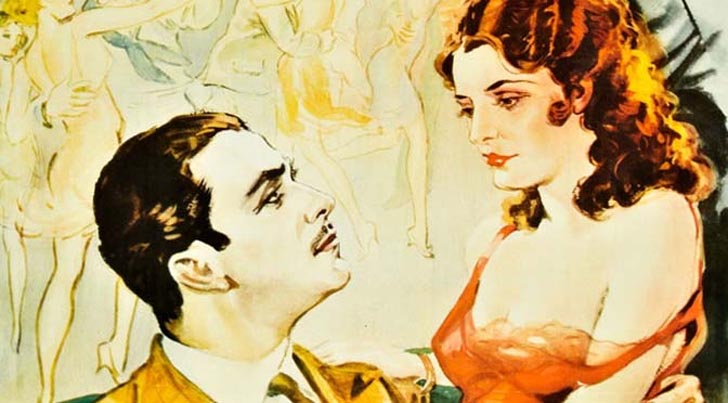
“Ten Cents a Dance” was composed for the 1930 musical “Simple Simon” and was originally supposed to be sung by Lee Morse, but she is said to have shown up drunk to the premiere, and producer Florenz Ziegfeld, Jr. replaced her with Ruth Etting. “Ten Cents a Dance” is the lament of a taxi dancer, a female “dance instructor” who would dance with a male patron in exchange for a ten-cent ticket that he would buy and for which she would earn a small commission. The song inspired the March 1931 film of the same name starring Barbara Stanwyck. Elsie Carlisle recorded two takes of it with Jack Payne that same month that appeared on different issues of Columbia CB249 (Jack Payne did a version with Betty Bolton in between Elsie’s two takes, but it was rejected). The next month Elsie made a solo recording on Imperial 2469.

The song was recorded in America in 1930 by Ruth Etting, The High Hatters (with vocal by Welcome Lewis), June Pursell (listed as “Moya Mack” on Panachord), and Grace Hayes. German singer Greta Keller recorded a noteworthy version in Berlin in October 1930; she would produce yet another the next year in London.

In 1931, in addition to the Jack Payne versions, there were British versions of the song recorded by Roy Fox and His Band (with vocalist Betty Bolton, in a Spike Hughes arrangement), Jerry Hoey and His Band, Jack Hylton and His Orchestra (with vocals by Pat O’Malley)Harry Hudson’s Radio Rhythm Boys (with vocalist Sam Browne), Nat Star and His Dance Orchestra (as Louis Ramel and His Band, with singer Tom Barratt), Jay Wilbur and His Band (with Betty Bolton), and Clive Erard’s Dance Band.

Jay Wilbur

“Let’s Do It — Let’s Fall in Love” (1929)

“Let’s Do It — Let’s Fall in Love.” Composed by Cole Porter for C. B. Cochran’s Wake Up and Dream (1929). Recorded by Elsie Carlisle under the musical direction of Jay Wilbur in London c. May 1929. Dominion A-125 mx. 1252-2.

Personnel: ?Max Goldberg-t / ?Tony Thorpe-tb / Laurie Payne-Jimmy Gordon-cl-as-bar / George Clarkson-cl-as-ts / Norman Cole-vn / Billy Thorburn-p / Dave Thomas or Bert Thomas-bj-g / Harry Evans-sb / Jack Kosky-d

Elsie Carlisle – “Let’s Do It — Let’s Fall in Love” (1929)

Cole Porter’s “Let’s Do It — Let’s Fall in Love” was originally introduced by Irène Bordoni and Arthur Margetson in the 1928 Broadway musical Paris. It was also included in the original London production of Wake Up and Dream, where it was sung by Leslie “Hutch” Hutchinson. It was in Wake Up and Dream that Elsie Carlisle introduced the song “What Is This Thing Called Love?” which is included on the reverse side of Dominion A. 125.

A “list” song,” “Let’s Do It” catalogues the various nationalities of the world, along with the species of animals, and suggests that if all of them “do it,” so should we. The ambiguous expression “do it” is allowed to play two roles, that of the sexual activity that some of the animals are patently engaging in as well as the more socially acceptable gloss provided by the song itself: “Let’s Fall in Love.” One should note that Elsie sings the original lyrics of the song, which include two racial slurs that  Cole Porter must have intended to be shockingly funny at the time but which he himself would eventually change to

Birds do it, bees do it,
Even educated fleas do it...

For my part, I find the momentary occurrence of the two crude racial demonyms regrettable. The way that Elsie sings “sweeet guinea pigs do it” is so exceedingly cute, however, that the recording will still occupy a place amongst my favorites.

“Let’s Do It” was recorded in America in late 1928 and early 1929 (in response to the Broadway production Paris) by Irving Aaronson (with vocalists Phil Saxe and Irving Aaronson), Meyer Davis, Rudy Vallée and His Yale Men, and the Dorsey Brothers Orchestra (with vocals by Bing Crosby).

When Wake Up and Dream opened in London in the spring of 1929, there followed recordings by Jack Hylton and His Orchestra (with vocals by Sam Browne, Jack Hylton, and a third singer), Jay Wilbur and His Orchestra (with vocals by Tom Barratt and chorus), Bidgood’s Broadcaster’s (again with Tom Barratt), Nat Star and His Dance Orchestra (as The Troubadours, once again with Tom Barratt as vocalist), Arthur Roseberry and His Kit-Cat Dance Band (as Will Perry’s Orchestra, with vocals by Len Lees), and Percival Mackey’s Band (with singer Fred Douglas). “Let’s Do It” was also recorded as a part of “Wake Up and Dream” medleys by the New Mayfair Dance Orchestra (Carroll Gibbons dir.) and Bert and John Firman’s London Orchestra.

Jay Wilbur

“What Is This Thing Called Love?” (1929)

“What Is This Thing Called Love?” Composed by Cole Porter and introduced by Elsie Carlisle in C. B. Cochran’s Wake Up and Dream (1929). Recorded by Elsie Carlisle under the musical direction of Jay Wilbur in London c. May 1929. Dominion A-125 mx. 1251-4.

Personnel: ?Max Goldberg-t / ?Tony Thorpe-tb / Laurie Payne-Jimmy Gordon-cl-as-bar / George Clarkson-cl-as-ts / Norman Cole-vn / Billy Thorburn-p / Dave Thomas or Bert Thomas-bj-g / Harry Evans-sb / Jack Kosky-d1

Elsie Carlisle – “What Is This Thing Called Love?” (1929)

On March 27, 1929, a revue opened at the London Pavilion, C. B. Cochran’s Wake Up and Dream, which had words and lyrics by Cole Porter. One of the numbers was exotic and featured Tilly Losch and Toni Birkmayer dancing to the sound of a tom-tom beat in front of an African idol2 (the choreography, while credited to Losch, appears to have been arranged by George Balanchine).3

As they danced, Elsie Carlisle, a ten-year veteran of the London stage, introduced the world to what would become one of Porter’s best-remembered songs, “What Is This Thing Called Love?” Stephen Citron describes how Elsie, “the show’s languorous torch singer, leaned against the proscenium arch and intoned the refrain. The song…created a palpable sexuality and became the hit of the show.”4 Cole Porter is said to have personally requested that Elsie introduce the song,5 and she was billed simply as “The Girl.”

About a month later Elsie committed the song to the rather gravelly shellac of Dominion Records, with whom she had a recording contract. Dominion’s musical director was Jay Wilbur, who would oversee so many of Elsie’s recordings both early and late in her career, and the studio personnel were members of his dance band. Their throbbing accompaniment must recall the drumbeat of the stage show.

Elsie’s rendition of the song showcases her well-known talent in delivering torch songs. It is a particularly good example of her technique of allowing her voice to quaver, to falter, almost to break, thereby creating an impression of vulnerability. Elsie is so often remembered as a funny, witty, naughty singer that it would be possible to overlook how, in her torch songs and in her other love songs, she evokes such pathos that we do not even stop to question her sincerity.

Some British bands that recorded “What Is This Thing Called Love?” around the time of its opening in London and into that summer were Jack Payne and His BBC Dance Orchestra (vocals by Jack Payne), Jack Hylton and His Orchestra (with vocalist Sam Browne),  Arthur Roseberry and His Kit-Cat Dance Band (with vocal by Len Lees), Philip Lewis and His Dance Orchestra (a.k.a the Rhythm Maniacs, under the direction of Arthur Lally, with vocals by Maurice Elwin), and Harry Hudson’s Melody Men (with Eddie Grossbart); the song also occurred in medleys derived from Wake Up and Dream recorded by the New Mayfair Dance Orchestra (directed by Carrol Gibbons) and John Firman’s London Orchestra.

  1. According to Richard J. Johnson in Elsie Carlisle:  A Discography, Aylesbury, 1994, p. 8. ↩︎
  2. Stephen Citron, Noel & Cole: The Sophisticates, 81. ↩︎
  3. George Balanchine Catalogue 91. Wake Up and Dream! ↩︎
  4. Stephen Citron, ibid. ↩︎
  5. Richard J. Johnson, “Elsie Carlisle (with a different style). Part Two.” Memory Lane 175 (2012): 40. ↩︎