Ambrose

“My Kid’s a Crooner” (1935)

“My Kid’s a Crooner.” Composed by Marion Harris and Reg Montgomery. Recorded by Ambrose and His Orchestra, with Elsie Carlisle as vocalist, on January 3, 1935. Decca F-5393 mx. GB-6845-2.

Personnel: Bert Ambrose dir. Max Goldberg-t-mel / Harry Owen-t / t / Ted Heath-Tony Thorpe-tb / Danny Polo-Sid Phillips-Billy Amstell-reeds / Joe Jeannette-as / Ernie Lewis-Reg Pursglove-others?-vn / Bert Barnes-p / Joe Brannelly-g / Dick Ball-sb / Max Bacon-d

Elsie Carlisle – My Kid’s A Crooner (1935)
Video by Clive Hooley (YouTube)

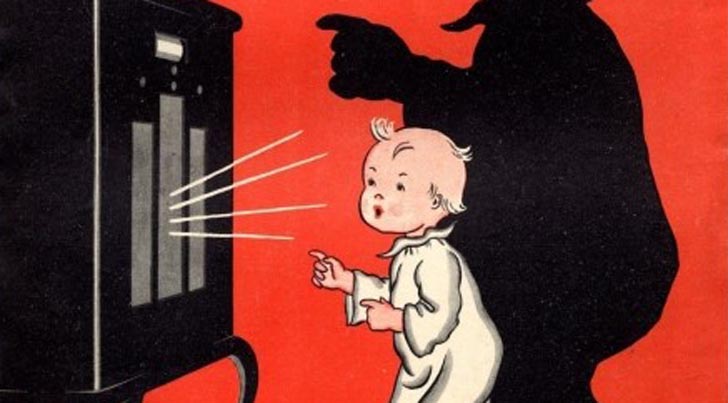
“My Kid’s a Crooner,” a song whose subtitle is, naturally, “(Boo-Boo-Boo-Boo),” was written by British composer Reg Montgomery and American songstress Marion Harris, who had relocated to London in the early 1930s and had retired there. It involves a mother who is concerned about her infant child’s future, seeing as he mostly makes the sound “boo-boo-boo-boo” (and occasionally “ah-cha-cha!”). Concluding that he aspires to be a crooner, she resolves to contact Bing Crosby for advice. Elsie Carlisle takes this song, which is inherently very silly, and makes it even funnier by sounding almost genuine in her mock-maternal concern — yet not so much so as to let her quavering voice overwhelm her rather cute, moderately infantile, and decidedly Crosbyesque boo-boo-booing.

“My Kid’s a Crooner” was also recorded in London in December 1934 by Pat Hyde (accompanied by Edgar Jackson and His Orchestra) and in early 1935 by Harry Roy and His Orchestra (with vocals by Harry Roy himself), the New Mayfair Dance Orchestra under the direction of Carroll Gibbons (with vocals by Frances Day and five-year-old Sybil Jackson, the latter of whom is surprisingly not that bad), Lou Preager and His Romano’s Restaurant Dance Orchestra (with Pat Hyde), and Billy Cotton and His Band (with vocalist Harold “Chips” Chippendall). There were other 1935 recordings by Phyllis Robins, Kitty Masters, and Eve Becke, and an apparently unissued take of Helen Raymond singing “My Kid’s a Crooner” is extant.
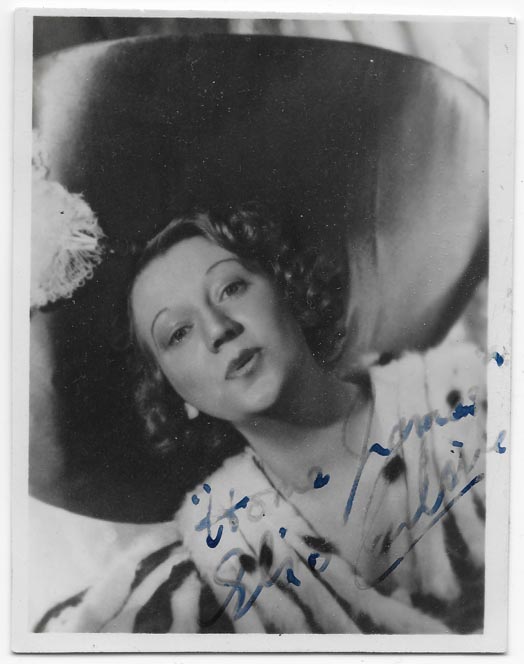
Ambrose

“Home, James, and Don’t Spare the Horses” (1934)

“Home, James, and Don’t Spare the Horses.” Words and music by Fred Hillebrand (1934). Recorded by Ambrose and His Orchestra with Elsie Carlisle as vocalist on December 11, 1934. Decca F-5371 mx. GB-6806-2 (also F-6926; Brunswick A-81929).

Personnel: Bert Ambrose dir. Max Goldberg-t-mel / Harry Owen-t / t / Ted Heath-Tony Thorpe-tb / Danny Polo-Sid Phillips-Billy Amstell-reeds / Joe Jeannette-as / Ernie Lewis-Reg Pursglove- others?-vn / Bert Barnes-p / Joe Brannelly-g / Dick Ball-sb / Max Bacon-d

Ambrose & His Orchesta (w. Elsie Carlisle) – “Home, James, and Don’t Spare the Horses” (1934)

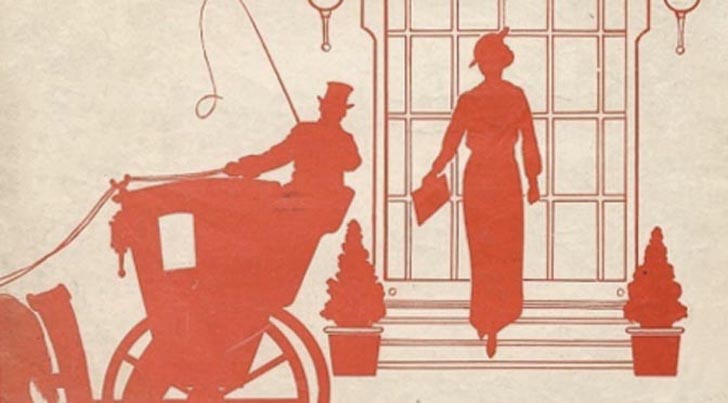
“Home, James, and Don’t Spare the Horses” is an expression of pressing urgency that goes back to the mid-nineteenth century, but the statistics on its recorded use skyrocket around the time that Elsie Carlisle recorded the song with Ambrose and His Orchestra. Like the other comedy waltz “No! No! A Thousand Times No!” that Elsie had recorded the previous month (in November 1934), this song is set in the nineteenth century and is rather cartoonish. In it Elsie tells a funny story about a classy lady rebuffing a lover who has paid too much attention to other women. “Home, James, and Don’t Spare the Horses!” she declares at various points in the story as she dashes off in anger. Elsie’s recitative is delivered in an exaggerated upper-crust accent with many a trilled  “r” as she describes the heroine and her footman kicking the penurious former lover’s posterior. Elsie would record other such comic songs about high society in the following year, such as Cole Porter’s “Thank You So Much Mrs. Lowsborough-Goodby” and “Algernon Whifflesnoop John.”

The popularity of “Home, James” is attested to by its being mentioned as particularly successful on the backs of 1934 and 1935 cigarette cards. Elsie would issue a record of medleys in late 1937 that featured “Home, James” along with its comedy waltz partner “No, No, a Thousand Times No!” (HMV BD-476).

Other versions of “Home, James” were recorded in Britain in late 1934 and early 1935 by Jay Wilbur and His Band (with vocalist Bertha Willmott), Charlie Kunz’s Casani Club Orchestra, Jack Jackson and His Orchestra, the Debroy Somers Band (with vocals by Bertha Willmott), Billy Cotton and His Band (with Alan Breeze as vocalist), and Harry Roy and His Orchestra (with singing by Bill Currie and chorus).

I discuss this song in greater detail in my article “Elsie Carlisle’s Top Hits, Then and Now” in the December 2014 issue of the Discographer Magazine.

Ambrose, Sam Browne

“I’m Gonna Wash My Hands of You” (1934)

“I’m Gonna Wash My Hands of You.” Words by Eddie Pola, with music by Franz Vienna (a.k.a. Franz Steininger). Recorded by Ambrose and His Orchestra, with vocal chorus by Sam Browne and Elsie Carlisle on November 20, 1934. Decca F-5318 mx. GB-6777-1.

Personnel: Bert Ambrose dir. Max Goldberg-t-mel / Harry Owen-t / t / Ted Heath-Tony Thorpe-tb / Danny Polo-reeds / Sid Phillips-reeds / Joe Jeannette-as / Billy Amstell-reeds / Bert Barnes-p / Joe Brannelly-g / Dick Ball-sb / Max Bacon-d

Ambrose & His Orchestra (w. Sam Browne & Elsie Carlisle) – “I’m Gonna Wash My Hands of You” (1934)

This foxtrot of vituperation is particularly suited to Sam Browne and Elsie Carlisle, who had convincingly played the part of the bickering couple in “Seven Years With the Wrong Woman” in 1932. “I’m Gonna Wash My Hands of You” has lyrics by Eddie Pola, who co-wrote other songs that Elsie recorded, such as “My Canary Has Circles Under His Eyes,” “I Wish I Knew a Bigger Word Than Love,” and “Till the Lights of London Shine Again.” As the flip side to “No! No! A Thousand Times No!” “I’m Gonna Wash My Hands of You” is a suitably dramatic complement. It involves somewhat more genuine singing and somewhat less booming, mock-thespian declamation; moreover, it includes more opportunities for the instrumental excellence of Ambrose’s band to be heard. For this author, however, the high point of the song is when Elsie sings  “You cheat, you!  I wish you were a gong so I could beat you!” and Sam replies “You wanna beat me, huh?” This song’s excellence lies in its fundamental goofiness.

Nat Gonella made a particularly “hot” recording of “I’m Gonna Wash My Hands of You” in January 1935, and Billy Cotton followed suit the following month (with Teddy Foster as vocalist). The French group “Patrick et son orchestre de danse” (directed by Guy Paquinet, with Django Reinhardt on the guitar) turned out a pretty version in June 1935, with suitably sinister-sounding vocals by Maurice Chaillou. That year Pathé released a film short of “The Radio Three,” a female close-harmony group made up of Joy Worth, Kay Cavendish, and Ann Canning, singing a version of “I’m Gonna Wash My Hands of You” that recalls the style of the Boswell sisters.