Ambrose, Sam Browne

“Let’s Make Love” (1934)

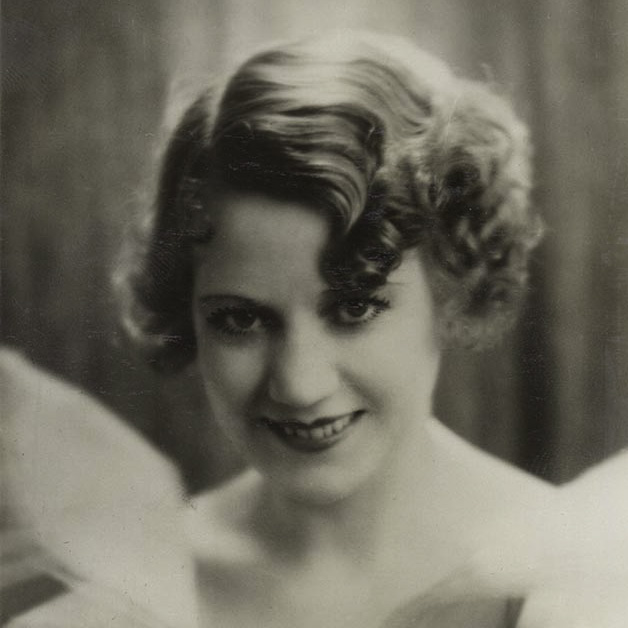
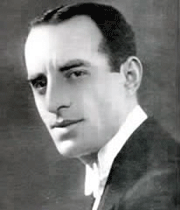
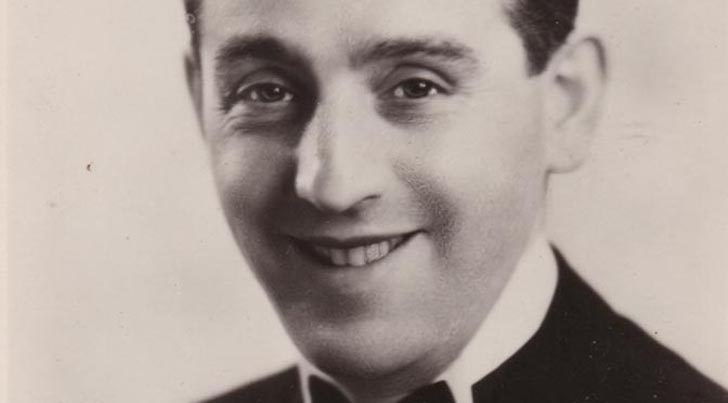
“Let’s Make Love.” Words By Stanley J. Damerell, music by Tolchard Evans (1934). Recorded by Ambrose and His Orchestra with vocals by Sam Browne and with Elsie Carlisle in a speaking role on November 1, 1934. Decca F-5297 mx. TB-1704-1.

Personnel: Bert Ambrose dir. Max Goldberg-t-mel / Harry Owen-t / Ted Heath-Tony Thorpe-tb / Danny Polo-reeds / Sid Phillips-reeds / Joe Jeannette-as / Billy Amstell-reeds / Ernie Lewis-Reg Pursglove-others?-vn / Bert Barnes-p / Joe Brannelly-g / Dick Ball-sb / Max Bacon-d

Ambrose & His Orchestra (w. Sam Browne & Elsie Carlisle) – “Let’s Make Love” (1934)

“Let’s Make Love (In Spring, Summer, Autumn and Winter)” is a light waltz written by British songwriters Stanley J. Damerell and Tolchard Evans, who collaborated on such notable songs as “Lady of Spain” (1931) and “If (They Made Me a King)” (1934). There seems to be a general rule that whenever Damerell and Evans have collaborated on a song, Elsie Carlisle ends up with a speaking role.  That would appear to be the case in the Ambrose recording of “Hyde Park Corner” (Hargreaves-Damerell-Evans; 1933), in which Sam Browne sings and Elsie and drummer Max Bacon have speaking parts, as well as in the Maurice Winnick version of “Da-Dar-Da-Dar” (also Hargreaves-Damerell-Evans; 1933), in which Sam Browne sings and Elsie is a mere interlocutor. So it is in this Damerell-Evans piece, “Let’s Make Love.”

Jack Payne and His Band had made, in late October 1934, a version of “Let’s Make Love” that relied for its entertainment value largely on comical Northern and Cockney voices provided by Jack Payne and Charlie Asplin; there was yet another version of “Let’s Make Love” in November by Jay Wilbur and His Band, with Fred Latham on the vocals. After an impressive instrumental introduction, the Ambrose recording has Sam Browne sing just the refrain and the first verse of the song. He then proceeds repeatedly to try to sing the first few words of the refrain (or something like them) in foreign accents which are intentionally abysmally done. His try at a Russian accent (“Letsky makesky loveskevitch”) is perhaps the least embarrassing.  I cannot say whether his announcing the Russian lover a second time and then correcting himself to “a Spanish lover” is a feigned mistake or a real one. The cannibalistic Zulu with his war cry “Yum, yum, yum!” is awkward at best, as is the shivering Eskimo.

Elsie Carlisle, for her part, merely interjects on occasion that Sam’s “impressions are lousy,” or the like. Sam and Elsie had already played bickering lovers in the 1933 Maurice Winnick recording of “Seven Years with the Wrong Woman,” and it was only weeks after recording “Let’s Make Love” that they would berate each other in “I’m Gonna Wash My Hands with You” with Ambrose and His Orchestra.  In “Let’s Make Love,” by contrast, it is not apparent that Sam really means it when he repeatedly sings “Let’s Make Love” to Elsie, nor that her rebuffing of him is anything more than a negative review of his talent.  What is clear is that this song is one of the silliest things Sam and Elsie ever collaborated on in their years of working for Ambrose.
Ambrose

“You’ve Got Me Crying Again” (1933)

“You’ve Got Me Crying Again.”  Words by Charles Newman, music by Isham Jones (1933).  Recorded by Ambrose and His Orchestra with vocal refrain by Elsie Carlisle in London on May 5, 1933.  Brunswick 01523 mx. GB-5852-2.

Personnel: Bert Ambrose dir. Max Goldberg-Harry Owen-t / Ted Heath-tb / Danny Polo-cl-as-bar / Joe Jeannette-cl-as / Harry Hayes-as / Billy Amstell-cl-ts / Ernie Lewis-Teddy Sinclair-Peter Rush-vn / Bert Read-p / Joe Brannelly-g / Don Stutely-sb / Max Bacon-d

You’ve got me crying again – Ambrose with Elsie Carlisle
Transfer by Julian Dyer (YouTube)

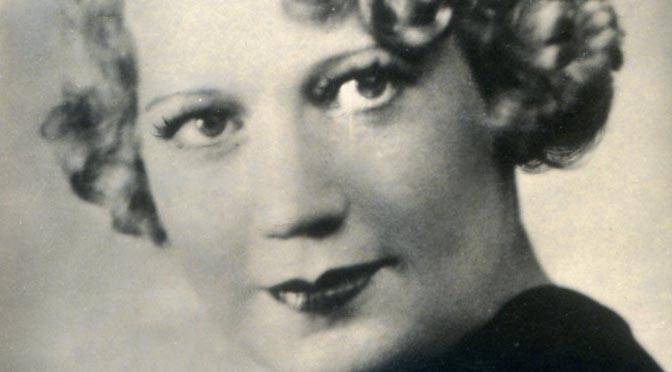
“You’ve Got Me Crying Again” is a particularly good torch song, or “plaintive onion-ballad of the better type,”1 if you prefer.  It is an example of a genre that Elsie Carlisle had mastered (compare her renditions of “Mean to Me,”“Body and Soul,”“He’s My Secret Passion,”“Poor Kid,” and “Have You Ever Been Lonely”), and she handles this Isham Jones piece with dramatic dexterity, combining pathos with utter cuteness.  The lyrics are the words of a person frustrated by the vicissitudes of a love relationship, but the complaints are really rather generic, and so it is impressive that Elsie is able, in the 45 seconds allotted to her, to impart character to what is fundamentally just a snippet of a speech. She outdoes herself in this recording, but she is matched by the mesmerizing instrumentals of an arrangement outstanding even by the high standards one expects of Ambrose.

Elsie Carlisle would go on to perform “You’ve Got Me Crying Again” again in the film Radio Parade (1933), where she is accompanied by a number of Ambrose’s instrumentalists.2 That performance gives one a sense of Elsie’s acting abilities; she was, after all, a lauded stage performer admired by Cole Porter, no less.  The song would make another 1933 film appearance in a performance by Ruth Etting in the short Knee Deep in Music.  But perhaps more recent audiences will be familiar with Elsie’s Ambrose version of “You’ve Got Me Crying Again” from its inclusion in Dennis Potter’s 1978 television series Pennies From Heaven, where it is mimed by actress Cheryl Campbell in lieu of Psalm 35!

In America, “You’ve Got Me Crying Again” was first recorded on February 9, 1933 by Bing Crosby.  On Valentine’s Day it was recorded by its composer, Isham Jones, with vocals by Joe Martin, and by Adrian Rollini and His Orchestra (as The Rhythm Aces), with Dick Robertson as vocalist.  That spring versions were issued by the Dorsey Brothers and Their Orchestra (Lee Wiley, vocalist), Ruth Etting, and Judy Rogers.

The same year saw British recordings by the BBC Dance Orchestra (in an arrangement by director Henry Hall, with vocals by Les Allen), Harry Roy and His Orchestra (Ivor Moreton, vocalist), Scott Wood and His Orchestra (with Sam Browne), Jack Hylton and His Orchestra (with vocals by Pat O’Malley, in a Peter Yorke arrangement), Syd Lipton and His Grosvenor House Band (as Ben Fields and His Band, with singer Cyril Grantham), The Blue Mountaineers (with vocals by Sam Browne and Nat Gonella), and Ray Noble and His Orchestra, in a Daily Herald Contest Record medley.

  1. The Gramophone, edd. Sir Compton MacKenzie and Christopher Stone.  London, UK, v. 48, p. 1371. ↩︎
  2. Peter Wallace was able to identify for me Bert Read at the piano and Max Goldberg on the trumpet. ↩︎
Ambrose

“Thank You So Much, Missus Lowsborough-Goodby” (1935)

“Thank You So Much, Missus Lowsborough-Goodby.” Words and music by Cole Porter (1934). Recorded by Ambrose and His Orchestra with Elsie Carlisle on February 6, 1935. Decca F-5448 mx. GB-6936-2.

Personnel: Bert Ambrose dir. / Max Goldberg-t-mel / Harry Owen-t / Ted Heath-Tony Thorpe-Lew Davis-tb / Danny Polo-cl-as-bar / Sid Phillips-cl-as-bar / Joe Jeanette-as / Billy Amstell-cl-ts / Ernie Lewis-Reg Pursglove-vn / Bert Barnes-p / Joe Brannelly-g / Dick Ball-sb / Max Bacon-d

Ambrose and His Orchestra – Thank You So Much, Mrs. Lowsborough-Goodby – 1935
Video by Martin Schuurman (YouTube)

“Thank You So Much,  Missus Lowsborough-Goodby” is a 1934 Cole Porter composition whose lyrics convey sarcasm dished up by a dissatisfied high-society house guest.The speaker fantasizes about the sort of thank-you letter that the host deserves to receive after a weekend of apparently sub-par entertaining; there follows an epistolary monologue “thanking” her by way of backhanded compliments for what are presumably overstated deficits in her hospitality (e.g. “For the ptomaine I got from your famous tinned salmon, / For the fortune I lost when you taught me backgammon…”). Cole Porter recorded the song himself on October 26, 1934, accompanying himself on the piano, and published the music in December. It is likely that “Missus Lowsborough-Goodby” was originally written for the 1934 hit musical Anything Goes, as a typescript of it was found amongst other material discarded from that project.1

Ambrose’s February 1935 version of the song benefits from an arrangement whose orchestral component highlights the musical merits of the piece independent from the funny acerbity of its lyrics. Elsie Carlisle’s contribution is the impersonation of a particularly snarky lady of the smart set. In the Decca recording, Elsie has just over two minutes in which to introduce and develop her character, and the result is a perfect picture of ridiculous ill will. A comparable mocking of the presumably petty concerns and silly pretensions of high society can be heard in her versions of “Home James, and Don’t Spare the Horses” and “Algernon Whifflesnoop John,” both recorded with Ambrose at around the same time.

“Thank You So Much, Mrs. Lowsborough-Goodby” had been recorded in late January by Carroll Gibbons and the Savoy Hotel Orpheans, with Brian Lawrance as their vocalist. There was also a version by Lew Stone and His Band, with Lew Stone doing the singing himself, in his own arrangement of the songJohn Tilley recorded it as a “Humorous Monologue” spoken, not sung, over slight piano accompaniment; Fred Astaire would give it a similar treatment a quarter of a century later on television with considerable comic success.

  1. The Complete Lyrics of Cole Porter, ed. Robert Kimball, p. 274. ↩︎