Latest posts

Ambrose

“Fare Thee Well, Annabelle” (1935)

“Fare Thee Well, Annabelle.”  Words by Mort Dixon, music by Allie Wrubel (1934).  Recorded on June 20, 1935 by Ambrose and His Orchestra, with vocals by Donald Stewart, Elsie Carlisle, and the Rhythm Brothers.  Decca F-5590 mx. GB-7245-1.

Personnel: Bert Ambrose dir. Max Goldberg-t-mel / Harry Owen and 1 unknown-t / Ted Heath-Lew Davis-tb / Danny Polo-cl-as-bar / Sid Phillips-cl-as-bar / Joe Jeannette-as / Billy Amstell-cl-ts / Ernie Lewis-Reg Pursglove-vn / Bert Barnes-p /Joe Brannelly-g /Dick Ball-sb /Max Bacon-d

Ambrose and his Orchestra – “Fare Thee Well, Annabelle” (1935)
Transfer by Charles Hippisley-Cox

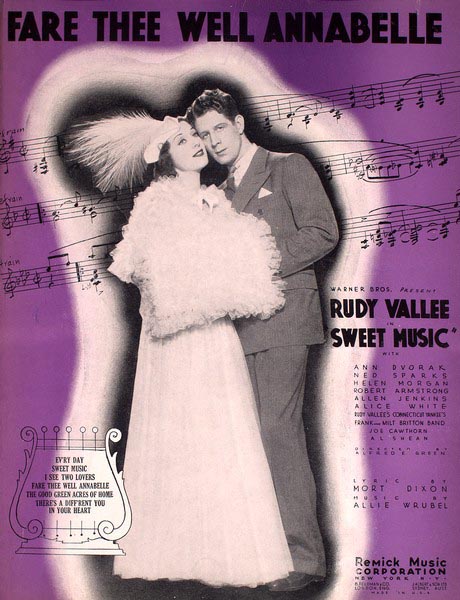
Mort Dixon and Allie Wrubel wrote “Fare Thee Well, Annabelle” in 1934; it was introduced in 1935 by Rudy Vallée and Ann Dvorak in the film Sweet Music.  The Ambrose Orchestra’s version does justice to this admirable example of the “train song” genre; it lacks the lollapalooza tap dancing sequence of the film, but its simulated train sounds evoke the original context of the song nicely, and Donald Stewart and Elsie Carlisle make suitable stand-ins for the movie actors.

Notable Americans to record “Fare Thee Well, Annabelle” that year were Glen Gray and the Casa Loma Orchestra (with Pee Wee Hunt as vocalist), Charlie Barnet (with singer Marion Nichols), Ted Fio Rito and His Orchestra (with vocals by Muzzy Marcellino and The Debutantes), Chick Bullock and His Levee Loungers, Wingy Manone, and the Boswell Sisters (recording in London).

In 1935 Britain would hear other recordings of “Fare Thee Well, Annabelle” by the Debroy Somers Band (with Brian Lawrance as vocalist), Billy Merrin and His Commanders (Ken Crossley, vocalist), Harry Roy and His Orchestra (Bill Currie, vocalist), Sidney Kyte and His Piccadilly Hotel band (with Norman Phillips singing), and Joe Loss and His Radio Band.

Solo Recordings

“Mama, I Long for a Sweetheart” (1935)

“Mama, I Long for a Sweetheart.” Music by Ramón Collazo; original Spanish lyrics by Roberto Fontaina; English translation by Carol Raven. Recorded by Elsie Carlisle with orchestral accompaniment on June 20, 1935. Decca F-5586 mx. GB-7241-1.

“Mama, I Long for a Sweetheart” – Elsie Carlisle (1935)
Video by Brighton Rock (YouTube)

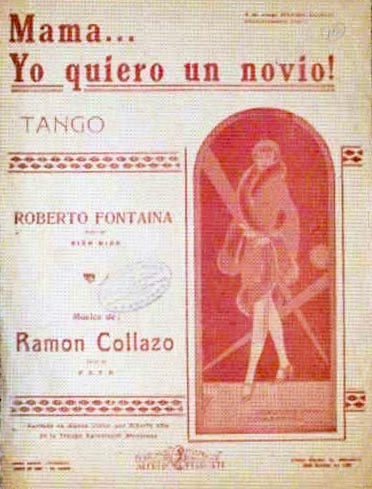
This popular 1928 tango by Uruguayan composer Ramón Collazo saw new life in a 1934 English translation by American lyricist Carol Raven. It was recorded that year by the Dorsey Brothers Orchestra, whose version was distributed on both sides of the Atlantic. Elsie Carlisle is not usually associated with the tango genre, but she executes the piece convincingly. It is, perhaps, worth comparing the overall effect of her version to the 1929 recording of the Spanish-language original by the Orchestra Argentina Bachicha.

Ray Starita

“Let That Be a Lesson to You” (1932)

“Let That Be a Lesson to You.”  Words and music by Isham Jones (1932).  Recorded by Ray Starita and His Ambassadors with vocals by Elsie Carlisle on June 15, 1932.  Sterno 985 mx. S-2478-3.

Personnel: Ray Starita-cl-ts dir. Sid Buckman-Nat Gonella-t / tb / ?Chester Smith-cl-as-bar-o / Nat Star-cl-as / George Glover-cl-ts-vn / George Hurley-vn / Harry Robens-p / George Oliver-bj-g / Arthur Calkin-sb / Rudy Starita-d-vib-x

Let That Be a Lesson to You – Ray Starita and his Ambassadors (w. Elsie Carlisle)
Transfer by Charles Hippisley-Cox

“Let That Be a Lesson to You” has a long instrumental introduction that is mellow but catchy, and one might almost expect it to lead up to a conventional love song. The vocal refrain, however, consists of Elsie Carlisle scolding her love for being unfaithful and returning to her in disgrace. In spite of this theme, the sound of the piece somehow fits in nicely with Elsie’s other work with Ray Starita’s band in 1932, the only year of their collaboration. It is light and dreamy; one might compare its atmosphere to “Leave Me Alone With My Dreams” or “On a Dreamy Afternoon.”

In 1932 “Let That Be a Lesson to You” was recorded in America by the Isham Jones Orchestra and by the Coon-Sanders Orchestra.  In Britain, in addition to the Starita recording with Elsie Carlisle, there were versions by the Savoy Hotel Orpheans (with Chick Endor and Charlie Farrell as vocalists), by Jay Wilbur and His Band (with vocals by Tom Barratt), and by Sam Browne and Eve Becke (under the pseudonyms “Jack and Jill”).