Jay Wilbur

“Oh! Johnny, Oh! Johnny, Oh!” (1940)

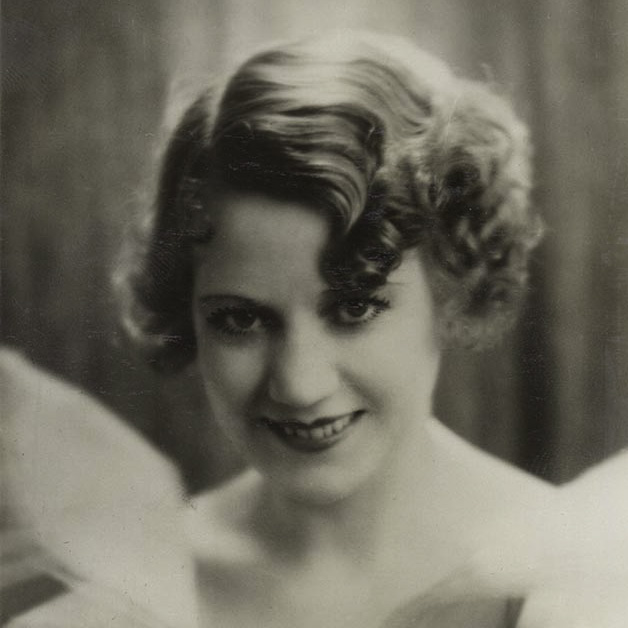
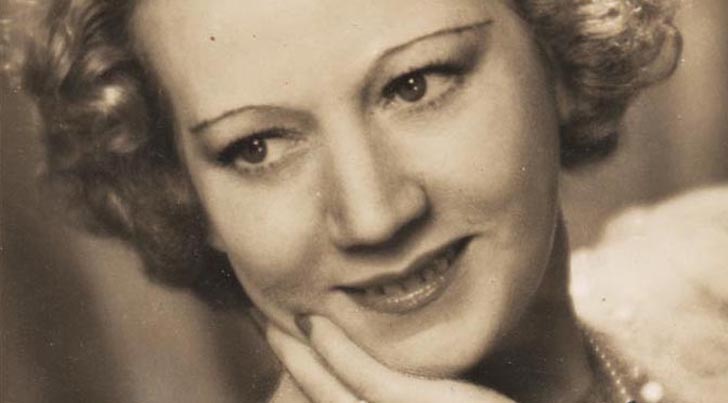
“Oh! Johnny, Oh! Johnny, Oh!” Words by Ed Rose, music by Abe Olman (1917). Recorded by Elsie Carlisle with orchestral accompaniment on February 12, 1940. Rex 9724 mx. R-4325-1.

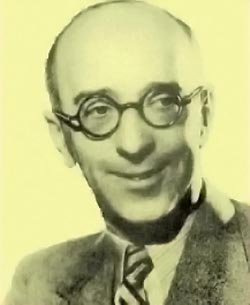
Personnel: Jay Wilbur dir. Alfie Noakes-Harry Owen-t / Bill Mulraney-Bill Boatwright-Joe Cordell-tb / Frank Johnson-Cyril Grantham-cl-as / Sid Phillips-cl-as-bar / Brian Wicks-cl-ts / Bob Busby-p / Jack Simmons-g / Joe Gibson-sb / Tom Webster-d

Elsie Carlisle, Oh! Johnny, Oh! Johnny, Oh!
Transfer by Mick Johnson (YouTube)

 “Oh! Johnny, Oh! Johnny, Oh!” is a 1917 composition that has proved itself long-lived, no doubt because it is catchy and because its lyrics have the perennial topic of a young woman’s passionate infatuation as their theme.  It is said that Ed Rose wrote the lyrics about two college friends who were absurdly in love; Rose then collaborated with his Tin Pan Alley colleague Abe Olman, who put the words to music. In 1917, Columbia issued a 10-inch disc with Howard Kopp and Frank Banta playing the song on the drum and piano, and there is a Blue Amberol wax cylinder of the Premier Quartet singing it with lyrics altered in light of America’s having entered the First World War; by the end of the song, the Quartet is telling Johnny to enlist: “Go, Johnny! Go, Johnny! Go!”

“Oh! Johnny, Oh! Johnny, Oh!” was revived in November 1939, with recordings by the Andrews Sisters, Dick Robertson and His Orchestra, Orrin Tucker and His Orchestra (with vocalist Bonnie Baker), Benny Goodman and His Orchestra (with vocals by Mildred Bailey, and Glenn Miller (with Marion Hutton), and in January 1940 Ella Fitzgerald would broadcast the song from the Savoy Ballroom. These versions naturally have a lot more swing in them than the 1917 versions, but the renditions are fairly faithful to the original concept, which is to say that they portray a young girl desperately in love in words that are funny and unproblematic.

In her February 1940 version of the song, by contrast, Elsie Carlisle starts out in a state of excitement, whimpers a bit as she describes her feelings for “Johnny” and then continues to ratchet up the effect as the song progresses. Something happens about two minutes into the song when Elsie sings (I should say squeals)

When I sit on your knee,
Oh, what you do to me!
I just
Oh, Johnny!
No, Johnny!
Oh, you have...

Whatever is going on, it appears to lead to talk of marriage, as the song ends with Elsie exclaiming “You’re so full of ideas / For the next fifty years,” along with more “Oh, Johnny”ing. The overall effect is very funny, and Elsie brings out a potential for ribald humor missed by other singers.

Other British versions of “Oh, Johnny! Oh Johnny, Oh!” were recorded in 1939 and 1940 by Jack Hylton and His Orchestra (with singer Dolly Elsie), Joe Loss and His Band (with vocals by Shirley Lenner), Arthur Young and the Hatchet Swingtette (with vocalist Beryl Davis, and Stéphane Grapelli on the violin), Harry Roy’s Tiger Ragamuffins and Phyllis Robins.
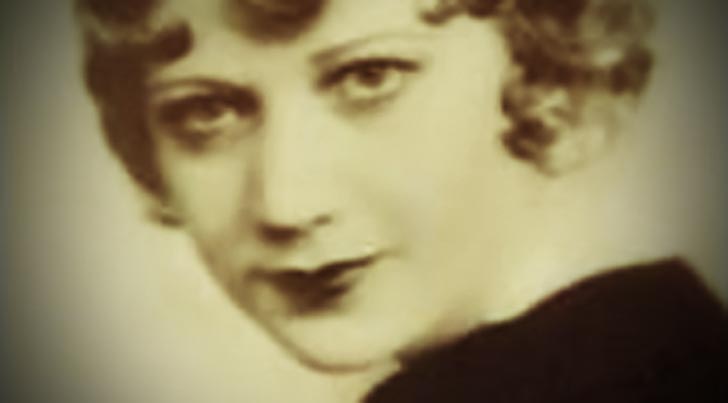
Jay Wilbur

“Dreaming of Tomorrow” (1929)

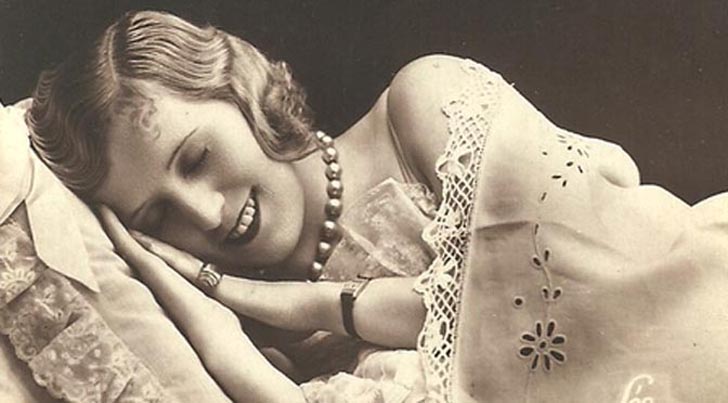
“Dreaming of Tomorrow.” Words and music by Eddie Pola and Phil Cardew. Recorded by Elsie Carlisle under the musical direction of Jay Wilbur in London c. March 1929. Dominion A-83 mx. 1147-3.

Personnel: Jay Wilbur dir. Max Goldberg-Bill Shakespeare-t / Tony Thorpe-tb / Laurie Payne-Jimmy Gordon-George Clarkson-reeds / Norman Cole-vn / Billy Thorburn-p / Dave Thomas or Bert Thomas-bj-g / Harry Evans-bb-sb / Jack Kosky-d-x

Elsie Carlisle – “Dreaming of Tomorrow”

The “Dreaming of Tomorrow” that Elsie Carlisle recorded c. February 1929 is sometimes incorrectly identified as the 1925 composition of the same name by Benny Davis and Joe Sanders (of the Coon-Sanders Original Nighthawk Orchestra, who recorded the earlier song). Elsie’s song was actually composed in 1928 by Eddie Pola and Phil Cardew (the latter a prolific arranger for the BBC Dance Orchestra, amongst other things). It is a song that starts out melancholy but eventually becomes rather upbeat. The title and, for that matter, the lyrics, are apt to be misinterpreted as some form of optimism for the future (so common a theme in the songs of the decade to come), when really they express an intense happiness and satisfaction with the present. The singer contrasts her past infelicity with the bliss that she has found in a new relationship:

It seems to me my dreams
Will all materialize,
Since I got a glimpse
Of the love in your eyes.

Dreaming of tomorrow,
Why should I be blue?
When I know tomorrow's
Gonna give me you?

The song is a suitable vehicle for Elsie’s technique of vocally representing a character in very little time and in few words, and she she expresses her sweet sentiments in an appropriately dreamy way.

“Dreaming of Tomorrow” had been recorded before in November 1928 by Bert and John Firman’s Arcadians Dance Orchestra, with Maurice Elwin as the vocalist. It was also recorded by Philip Lewis and His Dance Orchestra (a.k.a. the Rhythm Maniacs), under the direction of Arthur Lally, in November 1929, again with Maurice Elwin, but that take was rejected by Decca.

Jay Wilbur

“Body and Soul” (1930)

“Body and Soul.”  Lyrics by Edward Heyman, Robert Sour, and Frank Eyton, with music by Johnny Green (1930).  Recorded by Elsie Carlisle under the musical direction of Jay Wilbur in London c. March 1930.  Dominion C-307 mx. 1713-1.

Elsie Carlisle – “Body and Soul” (1930)

In 1929, American composer Johnny Green got together with lyricists Edward Heyman, Robert Sour, and Frank Eyton to write a number of songs for British actress Gertrude Lawrence to sing on the London stage.  One of them, “Body and Soul,” was to become a jazz standard par excellence.  Lawrence, to her credit, recognized the inherent merit of the song and bought a share in it before going on to introduce it on the London stage and sing it on the radio, where it was heard by British dance band greats Jack Hylton and Bert Ambrose.  Their renditions caught the attention of the public and of bandleaders, singers, and instrumentalists alike.  After a spring fever of “Body and Soul” in London, recording of the infectious tune subsided for the summer and then resurged in America.  In mid-October the song appeared as part of the Broadway revue Three’s a Crowd and was performed and later recorded by Libby Holman.

Elsie Carlisle sang many torch songs early in her recording career; unrequited love was a theme as much in vogue then as it is now, and Elsie’s delicate, sometimes quavering voice was a suitable vehicle for conveying pathos.  Her March 1930 “Body and Soul” stands out from the rest because of her especially touching rendering of its mesmerizingly sad motifs.  It might seem amusing that this recording is paired on its flip-side with the ribald “My Man O’ War,” which is a sort of sublime, extended series of sexual double entendres, but there is something a little gritty, too,  about the lyrics of “Body and Soul” and the intensity with which Elsie expresses them.

“Body and Soul” had been recorded in early February 1930 by Jack Hylton and His Orchestra (with vocalist Pat O’Malley, in a Billy Ternent arrangement).  Later that month Hylton’s group would do a longer “concert arrangement” of “Body and Soul,” also with O’Malley.  Soon after, Ambrose and His Orchestra recorded two takes of the song with Sam Browne; Ambrose and Browne would go on to issue two more versions of “Body and Soul” in 1933.  The Four Bright Sparks made a recording with singer Betty Bolton that was never issued, but their take with Lou Abelardo was.  Other February versions were done by Arthur Roseberry and His Dance Band (Harry Bentley, vocalist) and Bidgood’s Broadcasters (with vocalist John Thorne).

In March, in addition to that of Elsie Carlisle, there were British renditions of “Body and Soul” by Spike Hughes, Jack Payne and His Band (an unissued take with vocalist Jack Plant), Hal Swain and His Band, Marie Burke, Herman Darewski and His Famous Melody Band, and Gracie Fields.  As the spring went on, versions were made by Pete Mandell and His Rhythm Masters (three takes, including two with Jack Plant), Carroll Gibbons (on the piano, accompanied by violin and saxophone), Nat Star (as Bert Maddison and His Dance Orchestra, with vocalist Sam Browne), Jack Leon’s Dance Band (Jimmy Allen, vocalist), and Alfredo’s Band (with Sam Browne).

From America, starting in September 1930, we have an unissued take of “Body and Soul” by Helen Morgan.  Leo Reisman appears to have been quite fond of the song, and issued three recordings, one with Don Howard, one with Frank Luther and horn player Bubber Miley, and one with Frances Maddux. There were also records by Fred Rich and His Orchestra, Ruth Etting, Annette Hanshaw, Ozzie Nelson and His Orchestra, Louis Armstrong and His Sebastian New Cotton Club Orchestra, Paul Whiteman and His Orchestra (with vocalist Jack Fulton), Seger Ellis, Libby Holman, and Vee Lawnhurst (accompanying herself on the piano, of course).