Jay Wilbur

“Yes, My Darling Daughter” (1941)

“Yes, My Darling Daughter.” Words and music by Jack Lawrence and Albert Sirmay (1939). Recorded by Elsie Carlisle under the musical direction of Jay Wilbur on May 22, 1941. Rex 9989 mx. R-5781-2.

Personnel: Jay Wilbur dir. Alfie Noakes-Chick Smith-t / Paul Fenoulhet or Ted Heath or George Rowe-tb / Frank Johnson-Frank Weir-cl-as / George Smith or Cliff Timms-ts / Matt Heft-p / Jack Simmons-g / Billy Bell-sb / Jack Simpson-d

“Yes, My Darling Daughter” – Elsie Carlisle (1941)

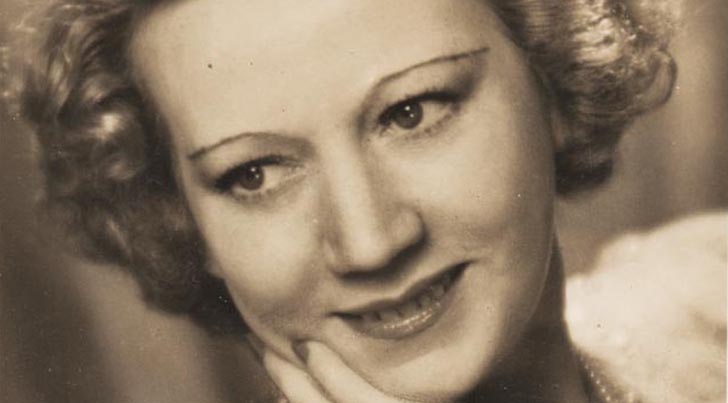
“Yes, My Darling Daughter” was written in New York by American songwriter Jack Lawrence and Albert Sirmay (or Szirmai), a former Hungarian operetta composer who had become an editor for Chappell Music. The tune has its roots, however, in a Ukrainian folk song that dates back to the early nineteenth century, if not earlier, and the modern composition retains a somewhat traditional atmosphere.  The lyrics describe the stages of a love relationship by way of an antiphonal, rapid-fire mother-daughter conversation, with both sides of the argument often delivered by the same singer. Such is the case with Elsie Carlisle, here in the last few months of her recording career. Elsie deftly conveys both sweet innocence on the daughter’s part and mature experience on that of the mother without seeming to take a pause.

“Yes, My Darling Daughter” was introduced to the public in 1940 as a duet between Dinah Shore and Eddie Cantor on the latter’s radio show, and the record she released soon afterwards helped to launch her career. The song was also recorded in America in 1940 by Gene Krupa and His Orchestra (with vocals by Irene Daye), Glenn Miller and His Orchestra (with vocalist Marion Hutton), and Benny Goodman and His Orchestra (with vocalists Helen Forrest, Cootie Williams, and Benny Goodman himself). At the beginning of 1941 there were versions by the Andrews Sisters and Bob Chester and His Orchestra.

There followed British versions by Ambrose and His Orchestra (with vocalists Anne Shelton and Doreen Villiers), Geraldo and His Orchestra (with Dorothy Carless),  Billy Cotton and His Band (with vocals by Alan Breeze), Carroll Gibbons and the Savoy Hotel Orpheans (Anne Lenner, vocalist), Harry Leader and His Band (in a Paul Jones medley), The Witley Court Music Box (with Joyce Head and Joan Bush), and Nat Gonella and His Georgians (with vocalist Stella Moya).
Jay Wilbur

“Let’s Do It — Let’s Fall in Love” (1929)

“Let’s Do It — Let’s Fall in Love.” Composed by Cole Porter for C. B. Cochran’s Wake Up and Dream (1929). Recorded by Elsie Carlisle under the musical direction of Jay Wilbur in London c. May 1929. Dominion A-125 mx. 1252-2.

Personnel: ?Max Goldberg-t / ?Tony Thorpe-tb / Laurie Payne-Jimmy Gordon-cl-as-bar / George Clarkson-cl-as-ts / Norman Cole-vn / Billy Thorburn-p / Dave Thomas or Bert Thomas-bj-g / Harry Evans-sb / Jack Kosky-d

Elsie Carlisle – “Let’s Do It — Let’s Fall in Love” (1929)

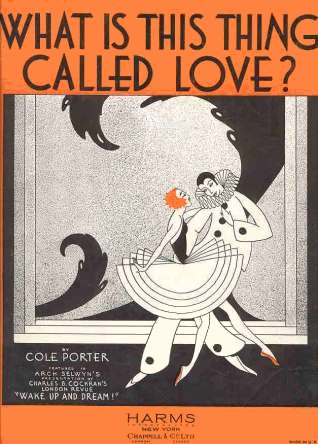
Cole Porter’s “Let’s Do It — Let’s Fall in Love” was originally introduced by Irène Bordoni and Arthur Margetson in the 1928 Broadway musical Paris. It was also included in the original London production of Wake Up and Dream, where it was sung by Leslie “Hutch” Hutchinson. It was in Wake Up and Dream that Elsie Carlisle introduced the song “What Is This Thing Called Love?” which is included on the reverse side of Dominion A. 125.

A “list” song,” “Let’s Do It” catalogues the various nationalities of the world, along with the species of animals, and suggests that if all of them “do it,” so should we. The ambiguous expression “do it” is allowed to play two roles, that of the sexual activity that some of the animals are patently engaging in as well as the more socially acceptable gloss provided by the song itself: “Let’s Fall in Love.” One should note that Elsie sings the original lyrics of the song, which include two racial slurs that  Cole Porter must have intended to be shockingly funny at the time but which he himself would eventually change to

Birds do it, bees do it,
Even educated fleas do it...

For my part, I find the momentary occurrence of the two crude racial demonyms regrettable. The way that Elsie sings “sweeet guinea pigs do it” is so exceedingly cute, however, that the recording will still occupy a place amongst my favorites.

“Let’s Do It” was recorded in America in late 1928 and early 1929 (in response to the Broadway production Paris) by Irving Aaronson (with vocalists Phil Saxe and Irving Aaronson), Meyer Davis, Rudy Vallée and His Yale Men, and the Dorsey Brothers Orchestra (with vocals by Bing Crosby).

When Wake Up and Dream opened in London in the spring of 1929, there followed recordings by Jack Hylton and His Orchestra (with vocals by Sam Browne, Jack Hylton, and a third singer), Jay Wilbur and His Orchestra (with vocals by Tom Barratt and chorus), Bidgood’s Broadcaster’s (again with Tom Barratt), Nat Star and His Dance Orchestra (as The Troubadours, once again with Tom Barratt as vocalist), Arthur Roseberry and His Kit-Cat Dance Band (as Will Perry’s Orchestra, with vocals by Len Lees), and Percival Mackey’s Band (with singer Fred Douglas). “Let’s Do It” was also recorded as a part of “Wake Up and Dream” medleys by the New Mayfair Dance Orchestra (Carroll Gibbons dir.) and Bert and John Firman’s London Orchestra.

Jay Wilbur

“What Is This Thing Called Love?” (1929)

“What Is This Thing Called Love?” Composed by Cole Porter and introduced by Elsie Carlisle in C. B. Cochran’s Wake Up and Dream (1929). Recorded by Elsie Carlisle under the musical direction of Jay Wilbur in London c. May 1929. Dominion A-125 mx. 1251-4.

Personnel: ?Max Goldberg-t / ?Tony Thorpe-tb / Laurie Payne-Jimmy Gordon-cl-as-bar / George Clarkson-cl-as-ts / Norman Cole-vn / Billy Thorburn-p / Dave Thomas or Bert Thomas-bj-g / Harry Evans-sb / Jack Kosky-d1

Elsie Carlisle – “What Is This Thing Called Love?” (1929)

On March 27, 1929, a revue opened at the London Pavilion, C. B. Cochran’s Wake Up and Dream, which had words and lyrics by Cole Porter. One of the numbers was exotic and featured Tilly Losch and Toni Birkmayer dancing to the sound of a tom-tom beat in front of an African idol2 (the choreography, while credited to Losch, appears to have been arranged by George Balanchine).3

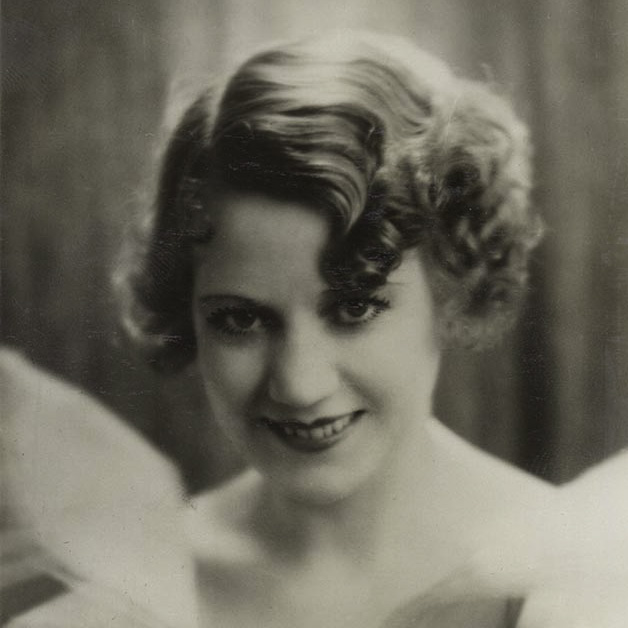
As they danced, Elsie Carlisle, a ten-year veteran of the London stage, introduced the world to what would become one of Porter’s best-remembered songs, “What Is This Thing Called Love?” Stephen Citron describes how Elsie, “the show’s languorous torch singer, leaned against the proscenium arch and intoned the refrain. The song…created a palpable sexuality and became the hit of the show.”4 Cole Porter is said to have personally requested that Elsie introduce the song,5 and she was billed simply as “The Girl.”

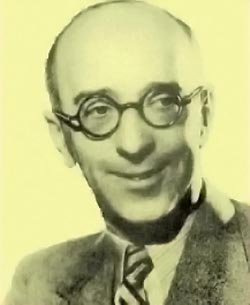
About a month later Elsie committed the song to the rather gravelly shellac of Dominion Records, with whom she had a recording contract. Dominion’s musical director was Jay Wilbur, who would oversee so many of Elsie’s recordings both early and late in her career, and the studio personnel were members of his dance band. Their throbbing accompaniment must recall the drumbeat of the stage show.

Elsie’s rendition of the song showcases her well-known talent in delivering torch songs. It is a particularly good example of her technique of allowing her voice to quaver, to falter, almost to break, thereby creating an impression of vulnerability. Elsie is so often remembered as a funny, witty, naughty singer that it would be possible to overlook how, in her torch songs and in her other love songs, she evokes such pathos that we do not even stop to question her sincerity.

Some British bands that recorded “What Is This Thing Called Love?” around the time of its opening in London and into that summer were Jack Payne and His BBC Dance Orchestra (vocals by Jack Payne), Jack Hylton and His Orchestra (with vocalist Sam Browne),  Arthur Roseberry and His Kit-Cat Dance Band (with vocal by Len Lees), Philip Lewis and His Dance Orchestra (a.k.a the Rhythm Maniacs, under the direction of Arthur Lally, with vocals by Maurice Elwin), and Harry Hudson’s Melody Men (with Eddie Grossbart); the song also occurred in medleys derived from Wake Up and Dream recorded by the New Mayfair Dance Orchestra (directed by Carrol Gibbons) and John Firman’s London Orchestra.

  1. According to Richard J. Johnson in Elsie Carlisle:  A Discography, Aylesbury, 1994, p. 8. ↩︎
  2. Stephen Citron, Noel & Cole: The Sophisticates, 81. ↩︎
  3. George Balanchine Catalogue 91. Wake Up and Dream! ↩︎
  4. Stephen Citron, ibid. ↩︎
  5. Richard J. Johnson, “Elsie Carlisle (with a different style). Part Two.” Memory Lane 175 (2012): 40. ↩︎