
Latest posts

Sam Browne

“Won’t You Stay to Tea?” (1933)

“Won’t You Stay to Tea?” Words by Mack Gordon, music by Harry Revel (1932). Recorded in London on March 3, 1933 by Elsie Carlisle and Sam Browne with orchestral accompaniment. Decca F. 3510 mx. GB-5633-1.

Elsie Carlisle and Sam Browne – “Won’t You Stay to Tea?” (1933)

Prolific songwriters Mack Gordon and Harry Revel turned out a great many successful tunes in the 1930s, particularly for Hollywood movies, and three of them made it into Elsie Carlisle’s discography. “Did You Ever See a Dream Walking?” (1933) and “With My Eyes Wide Open I’m Dreaming” (1934) were both written for Paramount films and were recorded by artists on both sides of the Atlantic. Elsie’s other Gordon-Revel song, “Won’t You Stay to Tea?” only saw treatments in Britain (as far as I know), no doubt because of its culturally specific premise.

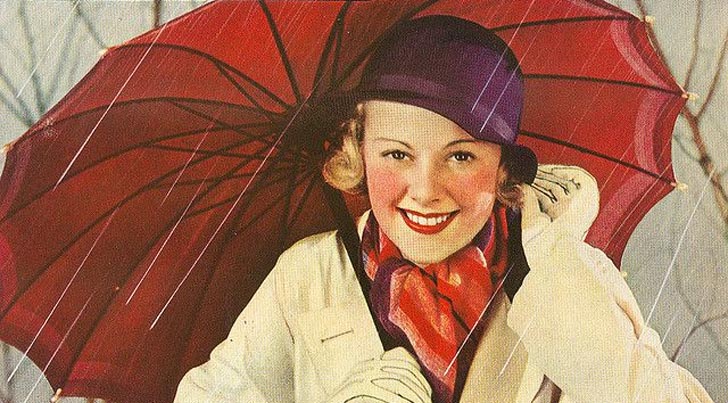
The question “Won’t You Stay to Tea?” is an amusingly pedestrian suggestion, but Gordon and Revel turn it into the occasion for a somewhat awkward romantic encounter. The impending rainstorm that prompts the social invitation transforms itself straightway into what the singer or singers describe as an indoor shower of “the loveliest love.” In this Sam Browne/Elsie Carlisle version of the song, the drama is allowed to play itself out fully, with Elsie lightly rejecting Sam’s various advances long enough that the outdoor weather actually improves — and yet she agrees to stay to tea anyway, signalling her genuine affection for him.

Other versions of “Won’t You Stay to Tea?” were recorded in 1933 by Lew Stone and the Monseigneur Band (v. Al Bowlly), Harry Roy and His Orchestra (v. Bill Currie), The Blue Mountaineers (v. Tom Barratt and Phyllis Robins), Ray Noble and His Orchestra (with vocalists Ace Roland and Frances Day, the latter of whom does an impressive Helen Kane-style warble at one point), and Syd Liption’s New Grosvenor House Band (v. Cyril Grantham).

Jay Wilbur

“Little White Lies” (1930)

“Little White Lies.”  Music and words by Walter Donaldson (1930).  Recorded in London in September 1930 by Elsie Carlisle under the musical direction of Jay Wilbur. Imperial 2346 mx. 5473-2.

Personnel: probably Jack Miranda-cl-ts / Eric Siday-vn / vn / Harry Jacobson-p-cel / Len Fillis-g

Elsie Carlisle – “Little White Lies” (1930)

Prolific composer Walter Donaldson, also known for such jazz standards as “Makin’ Whoopee,” “My Baby Just Cares for Me,” and “My Blue Heaven,” published “Little White Lies” in 1930, and it became an instant hit.  Initially recorded by Fred Waring’s Pennsylvanians, the song saw countless American recordings within months, including by such noted female vocalists as Marion Harris, Lee Morse, and Annette Hanshaw (“That’s all!”).

“Little White Lies” saw equal attention that year in Britain.  Notable recordings were made by the Rhythmic Eight and the Rhythm Maniacs (both with Maurice Elwin as vocalist), Harry Hudson’s Radio Melody Boys (Sam Browne, vocalist), Jack Hylton and His Orchestra (Pat O’Malley, vocalist), Bert Madison’s Dance Orchestra (directed by Nat Star, with Cavan O’Connor as vocalist), and Jay Wilbur and His Band (vocals by Jack Plant).  Jay Wilbur was, of course, the musical director at Imperial at the time, so he would have overseen Elsie Carlisle’s recording the previous month.

Sir Paul McCartney has reported that “Little White Lies” was John Lennon’s favorite childhood song, and that this was a fondness that they shared, but it is assumed that it was the 1947 Dick Haymes version that they were familiar with.

Durium Dance Band

“Why Waste Your Tears?” (1932)

“Why Waste Your Tears?” Words and Music by Valerie “Val” Holstius (arranged by Lynn Vaughan). Recorded by the Durium Dance Band with vocalist Elsie Carlisle in London, September or October 1932. Durium EN-34.

Personnel: Peter Rush-cl-as dir. Max Goldberg-t / Charlie Price or Jack Warne-t / Tony Thorpe-tb / Bill Rogers-as / Alf Zafer-ts / Ernest Wilson-p / Bill Tringham-g / Dave Axford-bb / Maurice Zafer-d-x

The Durium Dance Band (v. Elsie Carlisle) – “Why Waste Your Tears” (1932)

Durium records were made of cardboard coated on one side with durium acetate resin. These inexpensive vehicles for frequently excellent recordings sold at newsstands between 1930-1933 and usually had two recordings on their one playable side.  On this disc, Elsie Carlisle’s “Why Waste Your Tears?” is paired with Sam Browne’s “The Night Shall Be Filled with Music,” and the list of personnel includes such well-known Ambrose men as Max Goldberg and Tony Thorpe.

Songwriter Valerie “Val” Holstius was the wife of writer Edward Nils Holstius. “Why Waste Your Tears?” appears to be her sole composition, but it is a good one. It takes the form of a response to, or even of a negation of, a torch song. It advises its addressee not to waste his or her tears on a lost love, but rather to move on. The arrangement used by the Durium studio band is decidedly upbeat, and Elsie uses her allotted 48 seconds of singing to deliver the song’s argument in a form that is light, bright, and memorable.

“Why Waste Your Tears?” has lyrics that can be altered to suit a male or female singer, and in addition to Elsie Carlisle’s recording with the Durium Dance Band there were versions by Nat Star (Tom Barratt, vocalist), Terry Mack and His Boys (with vocalist Jack Plant), and Lew Stone and the Monseigneur Band (with Al Bowlly).