Latest posts

Sam Browne

“Gee, Oh Gosh, I’m Grateful!” (1934)

“Gee, Oh Gosh, I’m Grateful!” Words by Michael Carr, music by Max and Harry Nesbit (1934). Recorded by Sam Browne and “Girl Friend” (i.e. Elsie Carlisle), accompanied on the piano by Eddie Carroll and Slim Wilson, in London on March 2, 1934. Regal Zonophone MR-1254 CAR-2593-1 mx. CAR-2593-1.

Sam Browne & Elsie Carlisle – “Gee, Oh Gosh, I’m Grateful!” (1934)

“Gee, Oh Gosh, I’m Grateful!” was a collaboration between composer Michael Carr, who wrote other songs that Elsie Carlisle recorded, including “The Little Boy That Santa Claus Forgot” and “You’re in My Arms,” and the music hall comedian brothers Max and Harry Nesbit. In this 1934 Regal Zonophone recording, the song is a duet between “Sam Browne & Girl Friend.” The identification of “Girl Friend” as Elsie Carlisle is universally accepted on the strength of aural evidence, and the pair performs “What’s Good for the Goose is Good for the Gander” on the other side of the record.

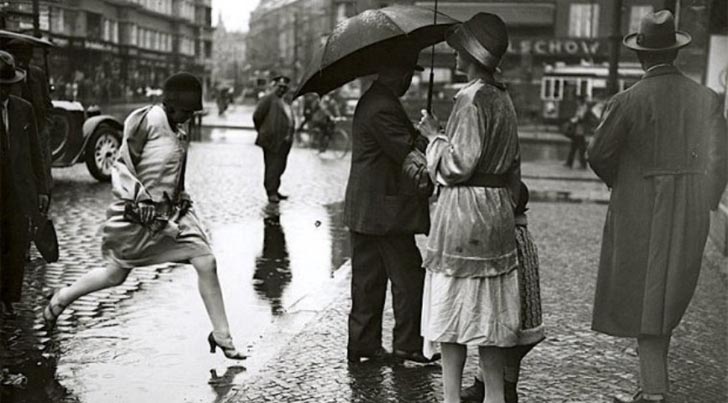
The scenario laid out in the lyrics of “Gee, Oh Gosh, I’m Grateful!” is a light and simple one: a bachelor and a single woman are out walking when their sudden attraction to one another coincides with a rainy downpour. No sooner has the chivalrous man shared his umbrella with the woman than…they are married with a house and baby — a quick and amusing transition. A comparable use of weather to bring potential lovers together can be found in the following year’s “Isn’t This a Lovely Day (To Be Caught in the Rain)?” sung by Fred Astaire in the Irving Berlin musical film Top Hat.

“Gee, Oh Gosh, I’m Grateful” was recorded soon afterwards by Ambrose and His Orchestra (v. Sam Browne) and by Roy Fox and His Band, with Denny Dennis as vocalist.

Solo Recordings

“Have You Ever Been Lonely?” (1933)

“Have You Ever Been Lonely?” Music by Peter De Rose, lyrics by Billy Hill (using the pseudonym George Brown; 1932). Recorded by Elsie Carlisle in London on February 14, 1933. Decca F-3435 mx. GB-5586-1.

Elsie Carlisle – “Have You Ever Been Lonely?” (1933)

In the 1933 song “Have You Ever Been Lonely?” one can detect the musical sensibilities of composer Peter De Rose, who would write “Deep Purple” to great acclaim the following year. The lyricist deserves attention, too; it was Billy Hill who collaborated with Harry Woods to produce “The Clouds Will Soon Roll By,” which Elsie Carlisle recorded twice in 1932, and which for modern listeners might be her trademark song, in no small part due to Dennis Potter’s Pennies from Heaven television series. “The Clouds Will Soon Roll By,” however, seems very much bound to the era of its composition and has inspired few interpretations by artists since the 1930s, whereas “Have You Ever Been Lonely?” has been recorded frequently and qualifies as a standard. Perhaps it is the latter song’s simple, timeless theme which makes it so attractive to different musical treatments.

Elsie Carlisle brings to this comparatively light torch song her talent for evoking pathos with a voice that quavers selectively and whose timbre (especially around the high notes) suggests an attractive vulnerability. Her delivery is dramatic but precise: when at 2:20 she asks “How can I go on living / Now that we’re apart?” there is the faintest hint of a mournful gulp when she pronounces the word “how.” The languid pace of the recording suits her melancholy interpretation (one might compare the excellent Ray Noble/Al Bowlly version for an example of a faster-paced, generally more upbeat rendition of the tune).

“Have You Ever Been Lonely was recorded in America in 1933 by Ted Lewis and His Band, Adrian Rollini and His Orchestra (with vocals by Dick Robertson), and Chick Bullock and His Orchestra. The song was more prolifically recorded by British bands, including Maurice Winnick and His Band (with vocalist Louis Spiro), Ray Noble and His Orchestra (with Al Bowlly), Jack Hylton and His Orchestra (with Pat O’Malley as vocalist, in a Billy Ternent arrangement), Henry Hall’s B.B.C. Dance Orchestra (with a vocal trio including Sam Browne, in a Sid Phillips arrangement), Sam Browne and Billie Lockwood (as “Jack and Jill”), Harry Roy and His Orchestra (Ivor Moreton, vocalist), Syd Roy and His R.K. Olians (with vocals by Sam Browne), Jack Payne and His Band (with a vocal trio of Billy Scott-Coomber, Bob Busby, and Bob Manning), and Jay Wilbur and His Band (with vocalist Val Rosing). “Have You Ever Been Lonely?” also appeared in medleys by Phil Green’s Studio Orchestra, Jimmy Campbell and His Paramount Band, and Ray Noble and His Orchestra (on a Daily Herald Contest Record).

Solo Recordings

“I Wish I Knew a Bigger Word Than ‘Love’” (1933)

“I Wish I Knew a Bigger Word Than ‘Love.’” Words and music by Eddie Pola and Melville Gideon (1933). Recorded on February 14, 1933 in London by Elsie Carlisle. Decca F-3435 mx. GB-5585-2.

Elsie Carlisle – “I Wish I Knew a Bigger Word Than ‘Love'” (1933)

A collaboration of American expatriates Eddie Pola and Melville Gideon, “I Wish I Knew a Bigger Word Than ‘Love’” compares the depth and complexity of human affection with that four-letter word “l-o-v-e” and finds the latter wanting. This is a light song, an uncomplicated conceit with repetitive lyrics and a catchy tune attached. Elsie Carlisle’s rendition of it conveys a fair amount of innocent enthusiasm, but one gets the feeling that she is in on the fundamental silliness of the piece when she begins, about halfway through, to speak the lyrics in an exaggeratedly thoughtful way.

“I Wish I Knew a Bigger Word Than ‘Love’” had been recorded during the previous four weeks by Billy Cotton and His Band (with Sam Browne as vocalist), Carroll Gibbons and the Savoy Hotel Orpheans (with vocals by Maurice Elwin), Harry Roy and His Orchestra (with vocalists Harry Roy and Binnie Barnes), and Jack Hylton and His Orchestra (with Pat O’Malley).  In March Jay Wilbur and His Band did a version with vocals by Sam Browne and Billie Lockwood. In August 1933 British Pathé would release a short film of Melville Gideon himself singing his composition at the piano:

Melville Gideon (1933)
Video by British Pathé (YouTube)