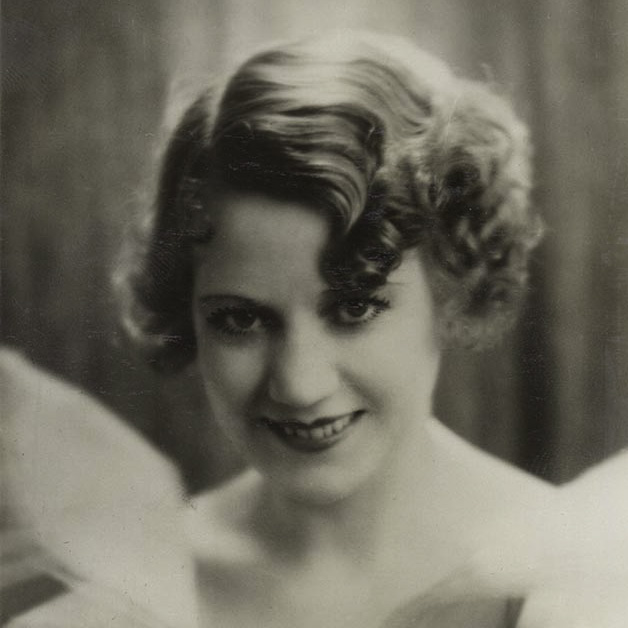
Ray Starita

“Leave Me Alone with My Dreams” (1932)

“Leave Me Alone with My Dreams.” Written by Joseph George Gilbert (1932). Recorded by Ray Starita and His Ambassadors, with Elsie Carlisle as vocalist, on March 2, 1932. Sterno 923 mx. S-2274-3.

Personnel: Ray Starita-cl-ts dir. Sid Buckman-Nat Gonella-t / tb / probably :- Chester Smith-cl-as-bar-o / Nat Star-cl-as / George Glover-cl-ts-vn / George Hurley-vn / Harry Robens-p / George Oliver-bj-g / Arthur Calkin-sb / Rudy Starita d-vib-x1

Ray Starita – “Leave Me Alone With My Dreams”
Transfer by Mick Johnson (YouTube)

1932 was the year of Elsie Carlisle’s collaboration with Ray Starita’s Ambassadors’ Band; their output includes “Let That Be a Lesson to You,” “I Heard,” and “On a Dreamy Afternoon.” Even though she only sings for 46 seconds in their recording of “Leave Me Alone with My Dreams,” she adds a memorably wistful touch to this mellow foxtrot. In the lone verse allotted to her she alludes to the loving affection she hopes to enjoy in a fantasy world into which she has retreated. The conceit is simple yet poignant.

The music and lyrics were written by Joseph George Gilbert, who is better known for his collaborations (as lyricist) with Lawrence Wright (who often went under the pseudonym “Horatio Nicholls”). “Leave Me Alone with My Dreams” was also recorded in April 1932 by the New BBC Dance Orchestra (directed by Henry Hall, with vocals by Val Rosing, in a Douglas Brownsmith arrangement), and by Arthur Lally (Sam Brown, vocalist).

  1. Brian Rust and Sandy Forbes, British Dance Bands on Record (1911-1945) and Supplement, p. 1020. ↩︎
Sam Browne

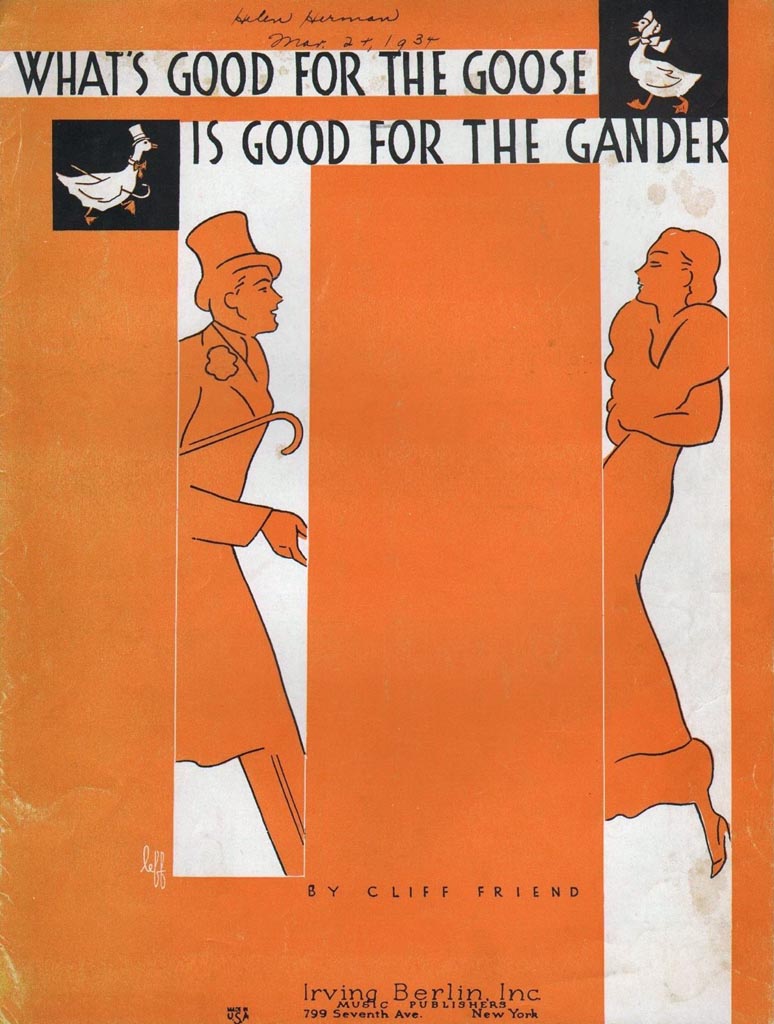
“What’s Good for the Goose Is Good for the Gander” (1934)

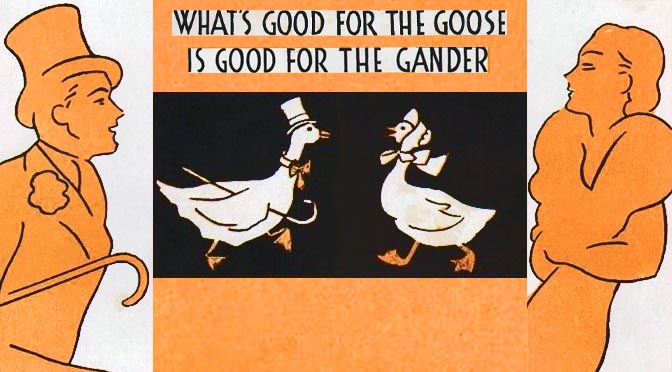
“What’s Good for the Goose Is Good for the Gander.” Lyrics and music by Cliff Friend (1934). Recorded by Sam Browne and “Girl Friend” (i.e. Elsie Carlisle) with piano accompaniment by Eddie Carroll and Slim Wilson in London on March 2, 1934. Regal Zonophone MR-1254 mx. CAR-2594-1.

Sam Browne & Elsie Carlisle – “What’s Good for the Goose Is Good for the Gander” (1934)

In “What’s Good for the Goose Is Good for the Gander,” Sam Browne and Elsie Carlisle take on the roles of a man and a woman who clearly have a history together. As each contemplates the possibility that the other is seeing other people, they begin to engage in an extended threat of tit-for-tat reciprocity by way of commonplace expressions, many involving barnyard animals (“What’s good for the goose is good for the gander”; “the little red hen”; “till the cows come home”). Sam and Elsie were famed for their songs of vituperation during this period (compare “I’m Gonna Wash My Hands of You”), leading the comedian B. C. Hilliam (“Mr. Flotsam”) to write in Radio Magazine

A crooner named Elsie Carlisle
Is a girl with a very nice stisle;
But the cheek that she gets
From Sam Browne in duets --
Now how can this chap be so visle?"

Songwriter Cliff Friend was a productive Tin Pan Alley composer remembered particularly for “My Blackbirds Are Bluebirds Now” and “The Merry-Go-Round Broke Down,” which provided the theme for Looney Tunes.

“What’s Good for the Goose” was recorded in February 1934 in New York by Chick Bullock, by Ozzie Nelson (as Owen Fallon and His Californians, with vocals by Ozzie Nelson and Harriet Hilliard), and by Dick Robertson. In London there were also versions done by the B.B.C. Dance Orchestra under the direction of Henry Hall (with vocals by Len Burmon), Harry Roy and His Orchestra, Jack Jackson and His Orchestra, and Howard Flynn and His Orchestra.