Latest posts

Jay Wilbur

“When the Blackbird Says ‘Bye-Bye'” (1940)

“When the Blackbird Says ‘Bye-Bye’ (and the Bluebird Says ‘Hello’).” Words and music by Art Noel and Don Pelosi (1940). Recorded by Elsie Carlisle with orchestral accompaniment under the musical direction of Jay Wilbur on December 31, 1940. Rex 9904 mx. R-5204-1.

Elsie Carlisle – “When the Blackbird Says ‘Bye-Bye'”

British songwriters Art Noel and Don Pelosi co-wrote a good number of Elsie Carlisle’s later songs: “Little Drummer Boy,” “Kiss Me Goodnight, Sergeant Major,” “A Mother’s Prayer at Twilight,” and “Nursie, Nursie” are among them (and Art Noel made still further contributions to Elsie’s songbook). “When the Blackbird Says ‘Bye-Bye'” is a particularly beautiful representation of what the British music industry could turn out even during the dark months of the Blitz. The song’s theme of blackbirds departing and the apparently preferable bluebirds appearing does not appear to me to refer to ornithological facts about changing seasons. It is, rather, to musical tradition that we must look for the roots of this upbeat theme of better times and happy reunion, to the 1920s songs “Bye Bye, Blackbird” and “My Blackbirds Are Bluebirds Now,” which also use breeds of birds to represent changing moods and fortunes.

The incredible sweetness of Elsie Carlisle’s later recording voice comes through nicely on this Rex record, which suffers from somewhat less “crackle” than the label was famous for. It is is quite satisfying to aficionados to hear Elsie reprise her famous theme of “The Clouds Will Soon Roll By” at 1:26. The orchestra is not identified on the label and the precise personnel is unknown, but the violin is particularly memorable.

“When the Blackbird Says ‘Bye-Bye'” was also recorded in 1940 by the New Mayfair Dance Orchestra (under the direction of Ronnie Munro, with vocals by Sam Browne), Geraldo and the Savoy Hotel Orchestra (with vocalist Jackie Hunter), Lew Stone and His Band (with Sam Browne), and Joe Loss and His Band (in a “Quick-Step Medley”).
Solo Recordings

“Honey-Coloured Moon” (1935)

“Honey-Coloured Moon.”  Words by Desmond Carter, music by Mabel Wayne. Composed for the British film Music Hath Charms (1935). Recorded by Elsie Carlisle with orchestral accompaniment on November 29, 1935. Decca F-5818 mx. GB-7527-1.

Elsie Carlisle – “Honey-Coloured Moon” (1935)

“Honey-Coloured Moon” was introduced in the 1935 British film Music Hath Charms. This movie appears to have consisted primarily of vignettes loosely held together by the fact that the various characters all listen to the BBC Dance Orchestra. In one scene, a woman in a parlor room begins to sing “Honey-Coloured Moon,” but the action suddenly changes to a broadcast studio, where Henry Hall is directing his orchestra and American cabaret singer Hildegarde is doing the singing. There is a quick transition to a cruise ship as the band plays on, followed by a courtroom scene, where the judge, lawyers, and jury all seem to be taking a break from serious matters by listening to Hildegarde on the radio. When two people apparently opposed to one another in the lawsuit begin to spoon, the case is dismissed.

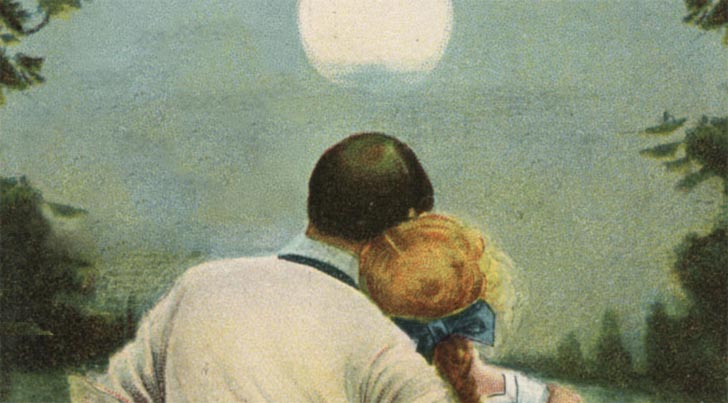
The words of “Honey-Coloured Moon” convey a recollection of the beginning of a romantic relationship with its attendant circumstances: sea and moonlight. Elsie Carlisle brings to this song a mellifluous vocal sweetness to match its entrancing lyrics. It is worth comparing this recording to other Mabel Wayne songs that Elsie recorded in 1934-1935 (“Little Man, You’ve Had a Busy Day”; “Who Made Little Boy Blue”; “His Majesty the Baby”). There is a similar sentimentality in all of these Wayne compositions that almost requires Elsie’s vocal style, insofar as she can deliver the tone of sincerity that makes listeners withhold judgment. With “Honey-Coloured Moon,” it is vital that the audience get honey and not treacle, and Elsie  delivers.

Other versions of “Honey-Coloured Moon” were recorded in Britain in 1935 by the BBC Dance Orchestra (under the musical direction of Henry Hall, with vocals by Hildegarde, in a Ben Frankel arrangement), Maurice Winnick and His Orchestra (with vocals by Sam Costa), Jay Wilbur and His Band (vocalist Gerry Fitzgerald), the New Mayfair Dance Orchestra (directed by Carroll Gibbons, with vocalist Brian Lawrance), Tommy Kinsman and His Band, Lou Preager and His Romano’s Restaurant Dance Orchestra (with singer Ronnie Hill), and Billy Cotton and His Band (with vocals by Alan Breeze).

Ray Noble

“Cavalcade” (1931)

“Cavalcade.” Composed by various artists, including Noël Coward. Recorded under the direction of Ray Noble (uncredited) in London on November 24, 1931, with narration by Henry Oscar and with uncredited soloists (including Elsie Carlisle), full chorus, orchestra, and organ. HMV C-2330, matrices 2B-1546-2 and 2B-1547-1.

“Cavalcade” — Descriptive Record (1931)

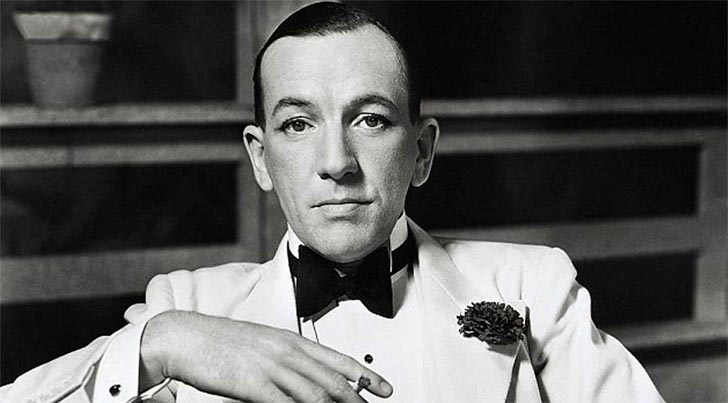
“Cavalcade (32 Years of England)” is derived from a stage play of the same name by Sir Noël Coward that was enormously successful in 1931 at the Theatre Royal, Drury Lane, with 405 performances. The play concerns the life of a British family and their servants and spans over the first three decades of the twentieth century. It was the inspiration for a 1933 Fox film.

The play “Cavalcade” includes music contemporary to each period it depicts that was either chosen by Noël Coward or even written by him (“Lover of My Dreams” and “Twentieth Century Blues” were both introduced in the drama). The musical revivals inspired a number of recordings, such as the HMV medley with Noël Coward as vocalist (side one and side two), one by The New Mayfair Orchestra (under the direction of Ray Noble, with prologue and epilogue spoken by Noël Coward), and medleys by Sam Greening’s Rhythmic Troubadours, Jack Hylton and His Orchestra (both in early November and in mid-December; you may hear side A and side B of the latter on YouTube), and Jay Wilbur and His Band.

The 1931 record labelled by HMV as “‘Cavalcade’–Descriptive Record (’32 Years of England’)” credits prolific British actor Henry Oscar as narrator, but leaves the “soloists, full chorus, orchestra, and organ[ist]” unnamed. Ray Pallett has identified Ray Noble as the leader and arranger and Max Goldberg as one of the trumpet players,1

but it is the audible presence of Elsie Carlisle as soloist (and presumably also as ensemble member) that interests me most.

The numbers performed on the record include

  • Soldiers of the Queen
  • Has Anyone Seen a German Band?
  • Knocked ‘Em in the Old Kent Road
  • I Do Like to Be Beside the Seaside
  • The Merry Widow Waltz
  • It’s a Long Way to Tipperary
  • I’ll Make a Man of You
  • Our God, Our Help in Ages Past
  • Rhapsody in Blue
  • Twentieth-Century Blues
  • Pomp and Circumstance

Elsie takes the solos in “I’ll Make a Man of You” (5:29-5:58) and “Twentieth-Century Blues” (7:44-8:22). The former is a reprise of a WWI recruiting song that encourages young men to enlist by suggesting that they will get more dates. Elsie brightly sings out

On Sunday I walk out with a Soldier,
On Monday I'm taken by a Tar,
On Tuesday I'm out with a baby Boy Scout,
On Wednesday an Hussar;
On Thursday I gang out wi' a Scottie,
On Friday the Captain of the crew --
But on Saturday I'm willing, if you'll only take the shilling,
To make a man of any one of you!

Elsie’s great moment, though, comes just after an instrumental excerpt from that declaration of modernity, Gershwin’s Rhapsody in Blue. The music of Gershwin gives way to that of Noël Coward, and Elsie bursts out with

Blues!
Twentieth-century blues
Are getting me down!
Who’s
Escaped those dreary
Twentieth-century blues?
Why,
If there’s a God in the sky,
Why shouldn’t he grin?
High
Above this dreary
Twentieth-century din?

Elsie would record Coward’s music again one year later, with Mad About the Boy (recorded with Ray Starita and His Ambassadors).

Even though her role in this HMV recording is easily overlooked, Elsie distinguishes herself with gestures to music dating from the beginnings of her career as well as to current compositions. The brevity of her solos allows her to show her dexterity at summoning up a character at a moment’s notice. Bold, saucy, querulous, and comical, Elsie Carlisle shines as a talented singer on this strangely anonymous record.

  1. Liner notes to Elsie Carlisle (with a different style), a CD issued by Memory Lane in 2011. ↩︎