Sam Browne

“Sittin’ in the Dark” (1933)

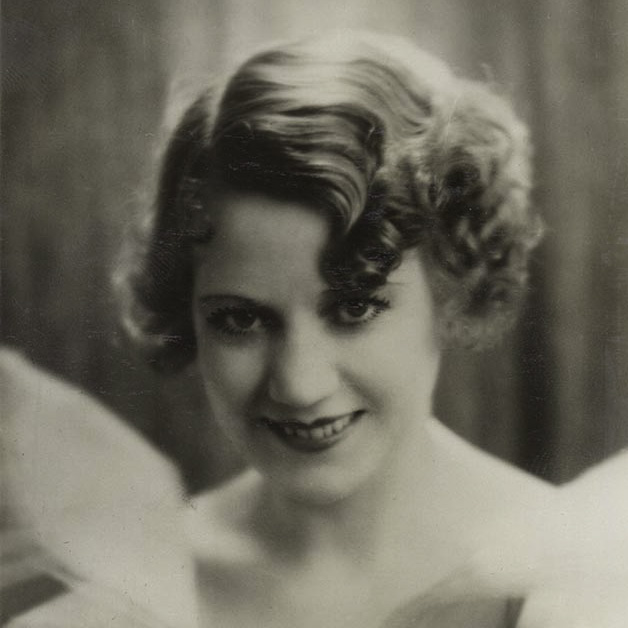
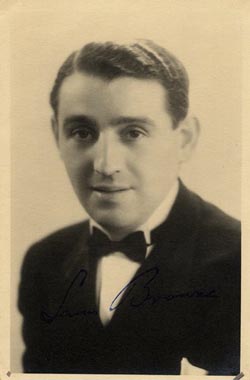
“Sittin’ in the Dark.” Words by Harold Adamson, music by Jesse Greer (1933). Recorded by Sam Browne and Elsie Carlisle on March 3, 1933. Decca F-3504 mx. GB-5631-2.

Elsie Carlisle – “Sittin’ in the Dark” (1933)

“Sittin’ in the Dark” is a song that explores what goes on when young lovers are left to their own devices. The lyrics are basically a laundry list of romantic commonplaces interspersed with humming (“Mm-mmm…”) suggestive of kissing or even moaning:

First we start to kiss,
Then we sit and sigh,
Feeling very shy
Sittin' in the dark....

and so on. Most commonly the words are delivered by a male singer playing a young man who has somehow arranged to “sit in the dark” with his girlfriend while her parents sleep upstairs. In this March 3, 1933 duet between Sam Browne and Elsie Carlisle, however, the measured pace of the piece is set by both boy and girl as they “sit and sigh” and do what lovers do (“Dee-doo-dee-doo-dee-doo!”).

The musical director made the clever choice to record the song as a little drama introduced by Elsie’s “pop,” who bids the “kids” goodnight, seems to be snoring later, and even interrupts the lovers, asking grumpily, “What, you still here?  I’m getting fed up with this!  What are you doing down there, anyway?” Sam Browne and Elsie Carlisle’s characters are actually referred to or addressed as “Sam” and “Elsie,” which makes the fictional romance between the two youthful celebrities somehow seem more immediate. Elsie speaks and sings in an intermittently odd voice, which may in fact be a failed, but exceedingly cute, attempt at sounding American.

I do not, however, mean to suggest that she could be trying to sound like American Louis Armstrong, who first recorded “Sittin’ in the Dark” in late January, 1933 in his own unique style (for an insightful discussion of that version, see the essay by Ricky Riccardi on The Wonderful World of Louis Armstrong). Armstrong’s is the only American recording I have run across, but the song was recorded quite a lot in 1933 in Britain, where there were versions by Bidgood’s Broadcasters (as “The Harvard Dance Club Aces,” with vocals by Tom Barratt and Phyllis Robins), the BBC Dance Orchestra (under the direction of Henry Hall, with Sam Browne as vocalist, in a Van Phillips arrangement), Harry Roy and His Orchestra (with vocals by Bill Currie and Harry Roy), and Jack Jackson and His Orchestra (Al Bowlly, vocalist). Only two days before Sam Browne and Elsie Carlisle recorded their Decca version of the song, Sam had done a duet for Regal Zonophone with either Billie Lockwood or Anona Winn (the woman’s identity is unclear, as this is one of the many Zonophone and Regal Zonophone records attributed simply to “Jack and Jill”). Sam and Elsie themselves would do another version only days later with Rudy Starita and His Band.

As the weeks progressed, there were more recordings of “Sittin’ in the Dark” by Jack Hylton and His Orchestra (with vocalist Pat O’Malley, in a Peter Yorke arrangement), Jimmy Campbell and His Paramount Band (with Tom Barratt & Phyllis Robins), Pete Lowe and the “Scottish Daily Express” Band, and Jay Wilbur and His Band (in a medley with vocals by the Jackson Harmony Trio).

The songwriters of “Sittin’ in the Dark” are comparatively obscure, although Harold Adamson would contribute to some notable lyrics for  movies and television in the 1950s, such as “When Love Goes Wrong (Nothing Goes Right)” in the Marilyn Monroe musical comedy Gentlemen Prefer Blondes and the theme song to I Love Lucy (whose words are admittedly seldom ever heard).
Sam Browne

“What’s Good for the Goose Is Good for the Gander” (1934)

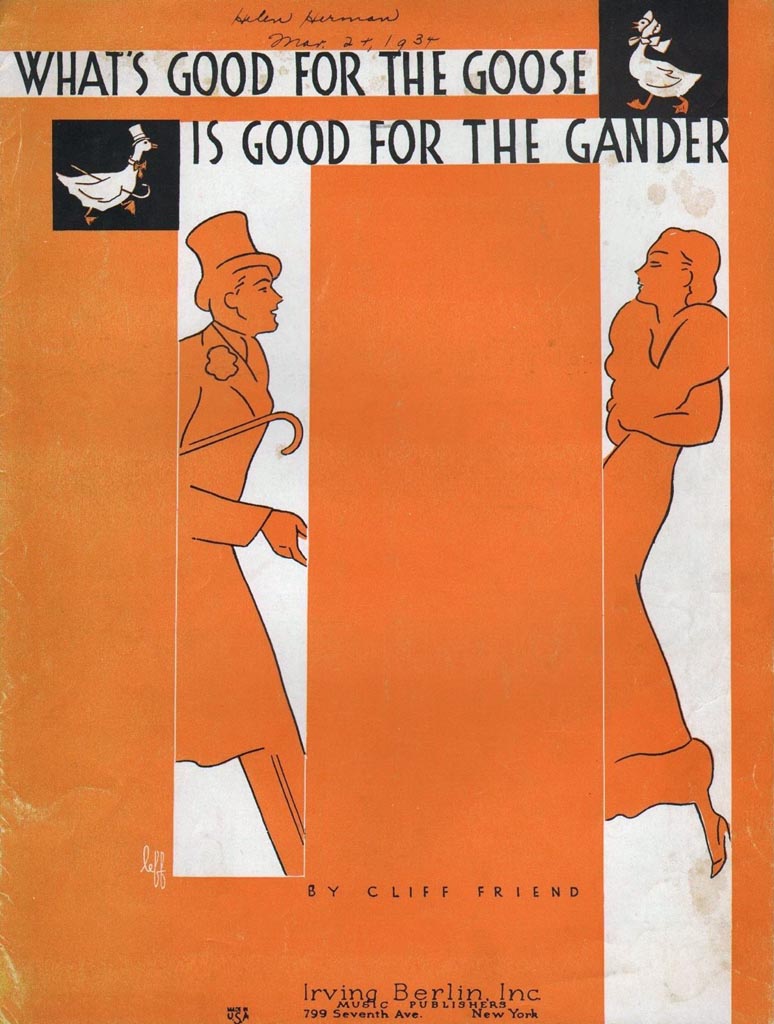
“What’s Good for the Goose Is Good for the Gander.” Lyrics and music by Cliff Friend (1934). Recorded by Sam Browne and “Girl Friend” (i.e. Elsie Carlisle) with piano accompaniment by Eddie Carroll and Slim Wilson in London on March 2, 1934. Regal Zonophone MR-1254 mx. CAR-2594-1.

Sam Browne & Elsie Carlisle – “What’s Good for the Goose Is Good for the Gander” (1934)

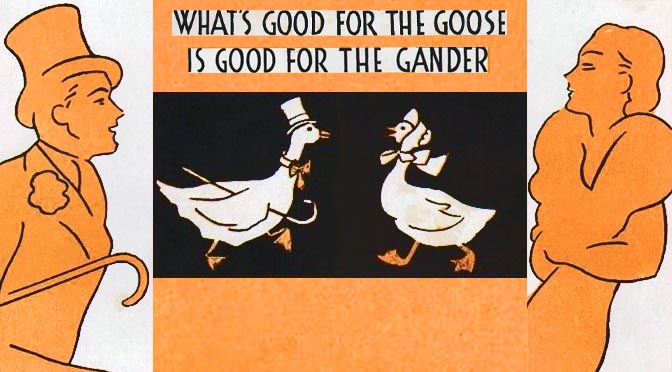
In “What’s Good for the Goose Is Good for the Gander,” Sam Browne and Elsie Carlisle take on the roles of a man and a woman who clearly have a history together. As each contemplates the possibility that the other is seeing other people, they begin to engage in an extended threat of tit-for-tat reciprocity by way of commonplace expressions, many involving barnyard animals (“What’s good for the goose is good for the gander”; “the little red hen”; “till the cows come home”). Sam and Elsie were famed for their songs of vituperation during this period (compare “I’m Gonna Wash My Hands of You”), leading the comedian B. C. Hilliam (“Mr. Flotsam”) to write in Radio Magazine

A crooner named Elsie Carlisle
Is a girl with a very nice stisle;
But the cheek that she gets
From Sam Browne in duets --
Now how can this chap be so visle?"

Songwriter Cliff Friend was a productive Tin Pan Alley composer remembered particularly for “My Blackbirds Are Bluebirds Now” and “The Merry-Go-Round Broke Down,” which provided the theme for Looney Tunes.

“What’s Good for the Goose” was recorded in February 1934 in New York by Chick Bullock, by Ozzie Nelson (as Owen Fallon and His Californians, with vocals by Ozzie Nelson and Harriet Hilliard), and by Dick Robertson. In London there were also versions done by the B.B.C. Dance Orchestra under the direction of Henry Hall (with vocals by Len Burmon), Harry Roy and His Orchestra, Jack Jackson and His Orchestra, and Howard Flynn and His Orchestra.

Sam Browne

“Gee, Oh Gosh, I’m Grateful!” (1934)

“Gee, Oh Gosh, I’m Grateful!” Words by Michael Carr, music by Max and Harry Nesbit (1934). Recorded by Sam Browne and “Girl Friend” (i.e. Elsie Carlisle), accompanied on the piano by Eddie Carroll and Slim Wilson, in London on March 2, 1934. Regal Zonophone MR-1254 CAR-2593-1 mx. CAR-2593-1.

Sam Browne & Elsie Carlisle – “Gee, Oh Gosh, I’m Grateful!” (1934)

“Gee, Oh Gosh, I’m Grateful!” was a collaboration between composer Michael Carr, who wrote other songs that Elsie Carlisle recorded, including “The Little Boy That Santa Claus Forgot” and “You’re in My Arms,” and the music hall comedian brothers Max and Harry Nesbit. In this 1934 Regal Zonophone recording, the song is a duet between “Sam Browne & Girl Friend.” The identification of “Girl Friend” as Elsie Carlisle is universally accepted on the strength of aural evidence, and the pair performs “What’s Good for the Goose is Good for the Gander” on the other side of the record.

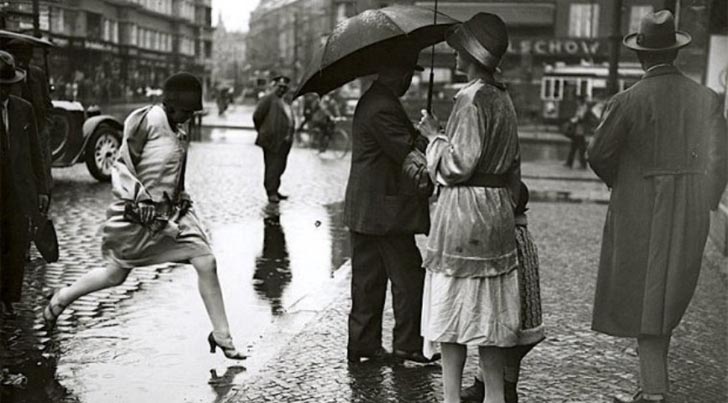
The scenario laid out in the lyrics of “Gee, Oh Gosh, I’m Grateful!” is a light and simple one: a bachelor and a single woman are out walking when their sudden attraction to one another coincides with a rainy downpour. No sooner has the chivalrous man shared his umbrella with the woman than…they are married with a house and baby — a quick and amusing transition. A comparable use of weather to bring potential lovers together can be found in the following year’s “Isn’t This a Lovely Day (To Be Caught in the Rain)?” sung by Fred Astaire in the Irving Berlin musical film Top Hat.

“Gee, Oh Gosh, I’m Grateful” was recorded soon afterwards by Ambrose and His Orchestra (v. Sam Browne) and by Roy Fox and His Band, with Denny Dennis as vocalist.