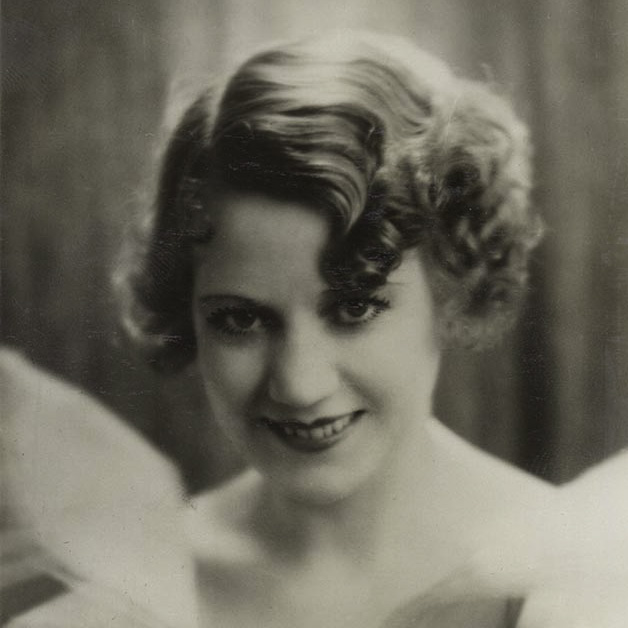
Solo Recordings

“Public Sweetheart No. 1” (1935)

“Public Sweetheart No. 1.” Lyrics by Graham John (pseudonym of Graham John Colmer), music by Martin Broones. Composed for the musical comedy Seeing Stars (1935). Recorded by Elsie Carlisle with orchestral accompaniment on November 29, 1935. Decca F-5818 mx. GB-7528-1.

Elsie Carlisle – “Public Sweetheart No. 1” (1935)

Martin Broones, who also wrote the tune for “I Can’t Get Over a Girl Like You (Loving a Boy Like Me)” (which Elsie sang in 1927), collaborated in 1935 with Graham John Colmer to produce a score for a musical comedy called “Seeing Stars,” which opened at the Gaiety Theatre in London. With a run of 236 performances, it could be considered a success, in spite of critics’ having difficulty discerning any real plot. This lack of a conventional storyline might help to explain why a show set in a modern hotel on the French Riviera has a bawdy song set during the time of the Crusades in it.

The singer tells the story of herself as an English lady left all alone by her husband, who has gone off fighting abroad. This simple premise is followed by a brazen account of her life on the home front:

War is war, and in war, I knew,
There was work that only girls could do.
...
And so, while the others were ballyhooing,
Night and day I was doing
Quiet little acts of charity,
And what do you think they called me?
...
'Public Sweeheart No. 1!'
Loved by every mother's son.
While my old man was away,
I did one good deed each day.

The greatest impediment to her practicing, not the world’s oldest profession, surely, but perhaps its oldest avocation, is a chastity belt whose awkwardness proves to be quite funny: “Have you ever tried to run / When your undies weighed a ton?” the lady asks. At any rate, Richard the Lion-Hearted has a master key, so the “fireworks” and shamelessness can continue. The nickname “Public Sweetheart No. 1” is most likely a play on “Public Enemy No. 1,” the epithet given by the Chicago Police and later by the FBI to Al Capone, John Dillinger, and finally bank robber Pretty Boy Floyd in the years leading up to the opening of “Seeing Stars” in London.

Elsie Carlisle delivers the lyrics in a sort of parlando singing where natural English intonation often trumps the tune. One might be reminded of the recitatives of Rex Harrison, but whereas he appears to have been primarily motivated to sing thus by a very limited vocal range, Elsie’s leaning towards a more declamatory style has a very theatrical and comic effect. The overall sound of the song is closer to musical hall than dance band.

“Public Sweetheart No. 1” was also recorded in late 1935 by Billy Cotton and His Band (with vocalist Alan Breeze) and by Florence Desmond, who had introduced the song on stage in the first place.  It was also recorded as part of a “Seeing Stars” medley by the Debroy Somers Band, Somers having been the musical director for the stage production.
Gilt-Edged Four

“I Can’t Get Over a Boy Like You” (1927)

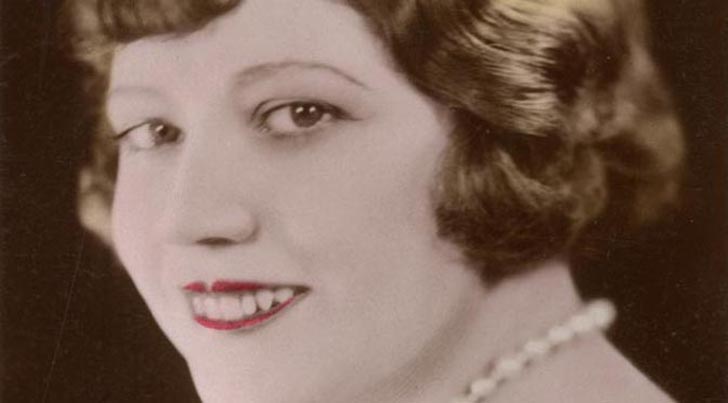
“I Can’t Get Over a Boy Like You.” Words by Harry Ruskin, music by Martin Broones.  Composed for LeMaire’s Affairs (1926). Recorded by Elsie Carlisle with the Gilt-Edged Four on February 7, 1927. Columbia 4275 mx. WA-4805-1.

Personnel: Al Starita-as / Ray Starita-t s/ Sid Bright-p-cel / Rudy Starita-d

I Can’t Get Over a Boy Like You – Elsie Carlisle
Video by David Weavings (YouTube)

This recording of Elsie Carlisle singing “I Can’t Get Over a Boy Like You” to the accompaniment of the Gilt-Edged Four is remarkable for two purely physical or material reasons. First, it is one of only four recordings that Elsie made that are meant to be played at 80 revolutions per minute, and of those only it and “Meadow Lark” were issued to the public. Columbia records were a holdout against the general tendency to standardize gramophone speeds at 78 rpm, and the company stuck to its proprietary speed of 80 rpm until late 1927. Second, these records were made using the special Columbia “New Process” of laminating cores of low-quality shellac with higher-quality compounds that reduce surface noise, and the resulting sound is impressively clear.

The Gilt-Edged Four was a Columbia studio band led by saxophonist Al Starita. This particular song features his playing and that of his brothers Ray and Rudy, with whose bands Elsie would go on to make noteworthy recordings in 1932-1933. The piano and celeste are played by Sid Bright, twin brother of bandleader Gerald Bright, better known as “Geraldo.”

The song “I Can’t Get Over a Girl Like You (Loving a Boy Like Me)” — for that is how the lyrics usually go, insofar as they are usually sung by men — originated in a revue named “LeMaire’s Affairs” (after producer Rufus LeMaire), which was quite popular when it was based in Chicago and starred Ted Lewis and Sophie Tucker. It apparently bombed after moving to Broadway when Sophie Tucker was replaced with Charlotte Greenwood. The song compares the ease with which one can “get over” all manner of ailments (e.g.”[m]easles, mumps, and whooping cough, / The flu, and housemaid’s knee…”) to the difficulty of “getting over” being the object of someone’s affections. Elsie injects upbeat, girlish fun into this catchy foxtrot and delivers its simple argument rather fetchingly.

“I Can’t Get Over a Girl Like You” was recorded in America in 1926 by Johnny Hamp’s Kentucky Serenaders (with vocals by Billy Murray), Abe Lyman and His Hotel Ambassador Orchestra, Ted Lewis and His Band, Aileen Stanley and Billy Murray, Adrian Schubert and His Salon Orchestra (with vocalist Arthur Hall), and the Arkansas Travelers (with Lem Cleg).

The song was recorded in Britain in late 1926 and early 1927 by Bert and John Firman’s Devonshire Restaurant Dance Band, Billy Mayerl and His “Vocalion” Orchestra (with vocals by Billy Mayerl), the Savoy Havana Band (with vocalists Rudy Bayfield Evans, Abe Bronson, and Reg Batten), the Edison Bell Dance Orchestra (with vocalist Tom Barratt), and Jack Payne and His Hotel Cecil Orchestra.


Solo Recordings

“Umbrella Man” (1939)

“Umbrella Man.” Words and music by James Cavanaugh, Larry Stock, and Vincent Rose (1938). Recorded by Elsie Carlisle with orchestral accompaniment under the musical direction of George Scott-Wood in Studio 2, Abbey Road, London on February 1, 1939. HMV BD-661 mx. 0EA-7517-1.

Umbrella Man – Elsie Carlisle
Video by David Weavings (YouTube)

“Umbrella Man” is a slow waltz whose lyrics describe a tinker who specializes in umbrella repair. When work is slow, he will fix other commonplace things, such as socks, clocks, and the occasional broken heart. How he accomplishes the latter is not explained; it is a mere assertion. Elsie Carlisle lends sincerity to this simple song with her imitation of the umbrella man’s intoned value proposition (“Um-BRELL-as!… Any umb-er-ellas to fix today?”).

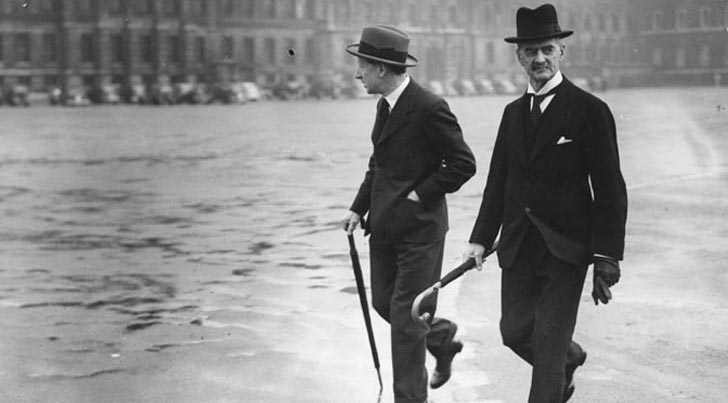
American Kay Kyser recorded his popular version of this song on September 1, 1938. By the end of that month, international attention focused on another Umbrella Man, British Prime Minister Neville Chamberlain, who was seldom photographed or even caricatured without his trademark umbrella. The doomed Munich Agreement signed with the Nazis had put Chamberlain in the international spotlight and may have revived interest in the song “Umbrella Man.” To be sure, many versions were recorded on both sides of the Atlantic, and by March, 1939 the Milwaukee Journal would report

The best selling [sic] song in the country today is “The Umbrella Man,” which owes a part of its popularity to British Prime Minister Chamberlain’s omnipresent umbrella… [D]ozens of cartoonists have used the song title as a text in describing the British statesman… Like many hits, no one wanted to publish it at first and it seemed destined for a pigeonhole until a bandleader got wind of it. Now “The Umbrella Man,” thanks to Neville Chamberlain, will yield its authors about $10,000 per man.

“Umbrella Man” was recorded in America in 1938-1939 by Kay Kyser and His Orchestra (with vocals by Harry Babbitt and Ginny Simms), Johnny Messner and His Orchestra (vocals by The Three Jacks), Swing and Sway with Sammy Kaye, Connee Boswell (accompanied by Woody Herman and His Orchestra), and the Benny Goodman Quintet.

In Britain it was recorded by Nat Gonella and His Georgians (v. Nat Gonella), Ambrose and His Orchestra (with vocals by Denny Dennis), Joe Loss and His Band (with vocalist Chick Henderson), Billy Cotton and His Band (with Alan Breeze, Jack Hylton and His Orchestra (with vocalist Sam Browne), Billy Thorburn’s The Organ, The Dance Band and Me (with vocals by George Barclay), Mantovani and His Orchestra (with Jack Plant), Josephine Bradley and Her Ballroom Orchestra (with Pat O’Regan singing), Harry Roy and His Orchestra (v. Harry Roy), Victor Silvester and His Ballroom Orchestra, and Maxwell Stewart’s Ballroom Melody. A notable version not done by a dance band is that of music hall comedians Flanagan and Allen.