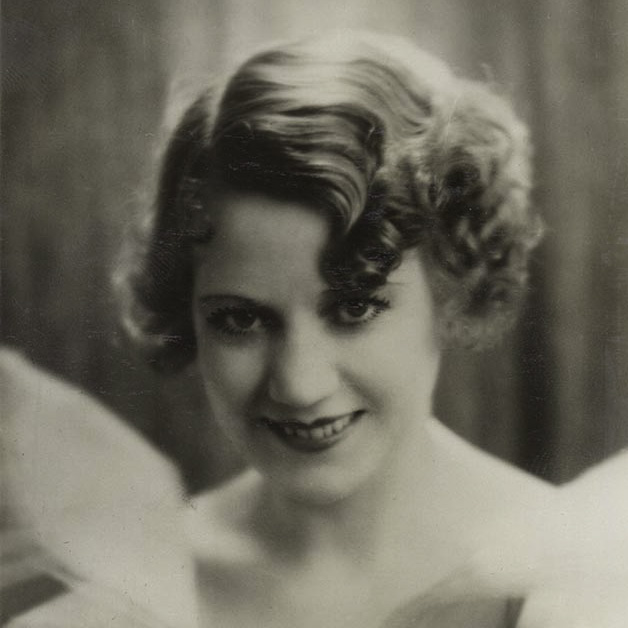
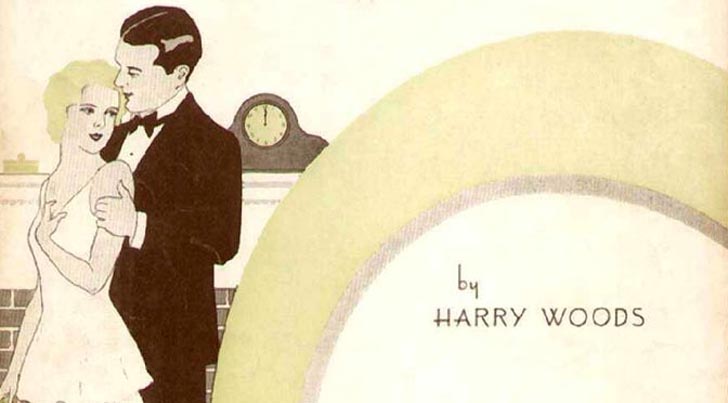
“We Just Couldn’t Say Goodbye.” Words and music by Harry Woods (1932). Recorded by Elsie Carlisle with an instrumental trio in Manchester on September 23, 1932. Decca F. 3193 mx. KB-134-1.
A light, romantic song about two lovers’ reconciliation, Harry Woods’s “We Just Couldn’t Say Goodbye” is noteworthy for its fanciful personification of pieces of furniture. When the couple is on the verge of parting, a chair and a sofa cry. A smiling clock expresses its feelings about the situation and brings the two people back together again, at which point the room in which everything happens sings and dances. Elsie Carlisle’s delivery of the lyrics is varied; it starts out somber, almost plodding, and becomes more upbeat as the relationship between the lovers improves. She engages in a sort of call and response with the clarinet at one point and almost whispers the final “I tell you confidentially.” Elsie’s is not exactly a lively take on the tune; it is, rather, a very deliberate interpretation of the sense of the lyrics, and of the other versions of the song recorded that year, it most closely resembles that of the American-born but London-based Layton and Johnstone.
In America in 1932 there were versions of “We Just Couldn’t Say Goodbye” recorded by Guy Lombardo and His Royal Canadians, Chick Bullock and His Levee Loungers (with vocals by Chick Bullock), Ralph Bennett and His Seven Aces, The Dorsey Brothers Orchestra (with the Boswell Sisters), Paul Whiteman and His Orchestra (Mildred Bailey, vocalist), and Freddy Martin and His Orchestra. Annette Hanshaw sang it on a record and August 1932 and would go on to sing it in a film (the 1933 Captain Henry’s Radio Show). Even Shirley Temple sang it, in the 1933 film Kid in Hollywood, which is as cute as it is cacophonous.
In Britain, 1932 saw recordings of “We Just Couldn’t Say Goodbye” by the Blue Mountaineers, the Savoy Hotel Orpheans (with vocals by Jack Plant), Ambrose and His Orchestra (Sam Browne, vocalist), Billy Cotton and His Band (Cyril Grantham, vocalist), Jack Hylton and His Orchestra (with vocals by Pat O’Malley), Nat Star (as Bernie Blake and His Band, with Les Allen as vocalist), Jay Wilbur and His Band (vocalist Tom Barratt), and Jack Plant (as Jack Gordon). Notable duets were recorded by, as I have noted, Layton and Johnstone, and also by Hardy and Hudson.