Solo Recordings

“Making Conversation” (1933)

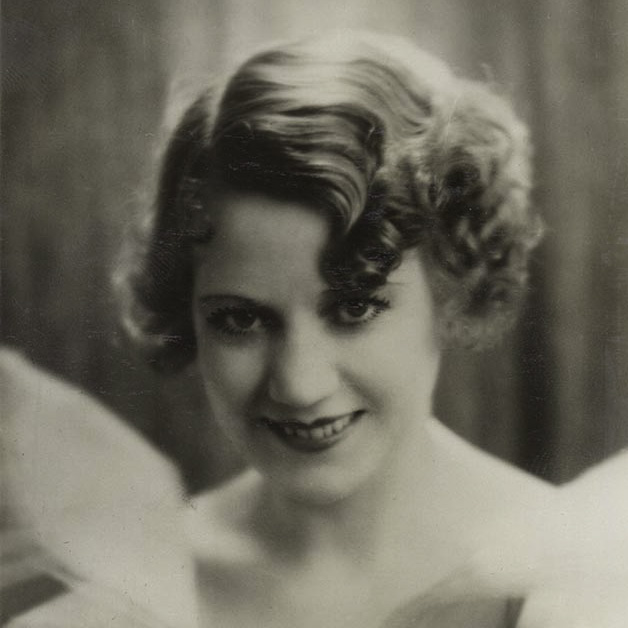
“Making Conversation.” Words by Fred Ritz and Harry Carlton, music by Harry Carlton (1933). Recorded by Elsie Carlisle with orchestral accompaniment in London c. November 8, 1933. Decca F-3737 mx. GB-6298-2.

Elsie Carlisle – “Making Conversation” (1933)

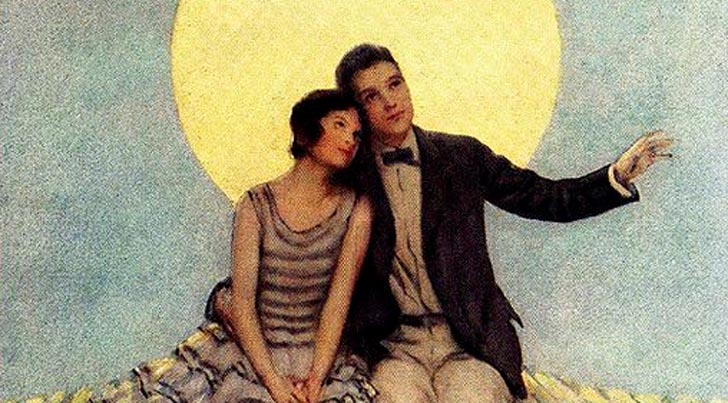
 “Making Conversation” is sometimes known by the longer title “Just Making Conversation (When We Ought To Be Making Love).” The composer, Harry Carlton, was well known for his 1928 “C-O-N-S-T-A-N-T-I-N-O-P-L-E” and his 1930 “Mickey Mouse”; Fred Ritz was a pseudonym of Frederick Wright, who also collaborated with Carlton on “Sundown in Old Waikiki” and “You’ve Got to Blow Your Own Trumpet.”1  Carlton is the only songwriter credited on Elsie Carlisle’s recording of the song, and the royalty stamp of “The Harry Carlton Music Co. Ltd.” appears on the label.

The song’s words play on the contrast between what is denoted by the expressions “making conversation” and “making love,” casting the former as pedestrian and the latter as vastly preferable. The lyrics serve as an invitation to convert acquaintance into amorous encounter. One might expect the repetitive simplicity of the underlying concept to be mildly annoying, and yet I find this song pleasantly infectious. Elsie Carlisle makes her version particularly noteworthy for an overall impression of sweetness and sincerity.

“Making Conversation” was also recorded in 1933 by the BBC Dance Orchestra (under the direction of Henry Hall), with vocalists Phyllis Robins, Les Allen, and Len Bermon, Ambrose and His Orchestra (with vocals by Sam Browne), Oscar Rabin and His Romany Band (with Dan Donovan), and Harry Leader and His Band (with vocalist Sam Browne).

  1. My thanks to Roger Corti for providing the true identity of his relative Frederick Wright. ↩︎
Solo Recordings

“Come Up and See Me Sometime” (1933)

“Come Up and See Me Sometime.” Words by Arthur Swanstrom, music by Louis Alter; composed for the motion picture Take a Chance (1933). Recorded by Elsie Carlisle with orchestral accompaniment in London on November 8, 1933. Decca F-3737 mx. GB-6297-2.

Elsie Carlisle – “Come Up and See Me Sometime” (1933)

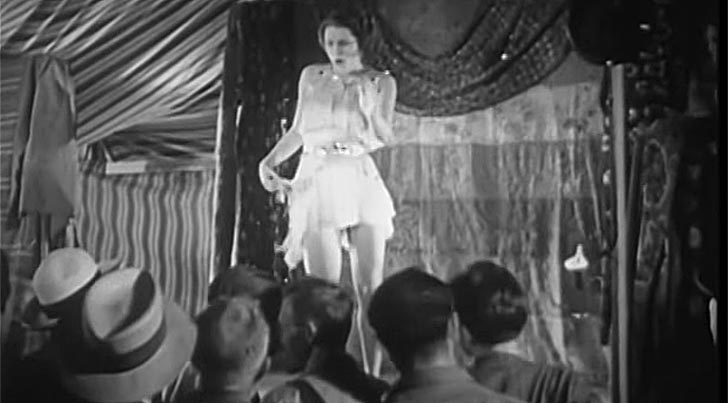
“Come Up and See Me Sometime” was written by Arthur Swanstrom and Louis Alter for Paramount’s 1933 musical comedy Take a Chance, based on the stage play of the same name. The movie apparently inherited little from the play other than a couple of songs, but it augmented what it did borrow with other, more memorable songs, including the perennial “It’s Only a Paper Moon.” “Come Up and See Me Sometime” is introduced by actress Lillian Roth, who sings it while performing a burlesque act. The title of the song presumably derives from a suggestive catchphrase of Mae West’s, which originally took the form “Why don’t you come up sometime and see me?” (in She Done Him Wrong [1933]), but which soon became the rhythmically preferable “Come up and see me sometime” (as it occurs in I’m No Angel [1933]).

Elsie Carlisle dishes out boldness in her version. The visual component of the movie’s burlesque scene is absent, but Elsie leaves no doubt as to the import of the song’s repetitive sultry invitations to get to know her better. As the song progresses, her intonation increasingly approaches that of the vamp, and her final “…any ti-i-i-IME!” finishes our impression of the self-consciously predatory showgirl.

“Come Up and See Me Sometime” was recorded in America in 1933 by Ramona Davies (on vocals and piano) and Cliff Edwards (a.k.a. Ukulele Ike). In March 1934 two versions were recorded by Ethel Waters.

In Britain in 1933 there were also recordings of “Come Up and See Me Sometime” by The BBC Dance Orchestra (directed by Henry Hall, with vocalist Phyllis Robins, in a striking Phil Cardew arrangement), Scott Wood and His Orchestra (with vocals by Sam Browne), the Casani Club Orchestra (directed by Charlie Kunz, with vocalist Cecile Petrie; the recording was never issued), and Joe Loss and His Band (with singer Annette Keith).